washingtonpost.com
Home   |   Register               Web Search: by Google
channel navigation
  Weekly Schedule
  Message Boards
  Transcripts
  Video Archive
Get New Responses

Automatically Update Page

Submit Question

Discussion Areas
  Politics
  Nation
  World
  Metro
  Business
  Washtech
  Sports
  Style
  Entertainment
  Travel
  Health
  Home & Garden
  Post Magazine
  Food & Wine
  Books & Reading
  Viewpoint
  WashingtonJobs

  About Live Online
  About The Site
  Contact Us
  For Advertisers

Mexican President Vicente Fox

Wole Soyinka
World Section
Talk: World news message boards
Live Online Transcripts
Subscribe to washingtonpost.com e-mail newsletters

African Culture and Politics
With Wole Soyinka
Nobel Laureate of Nigeria
Monday, April 2, 2001, 3 p.m. EST

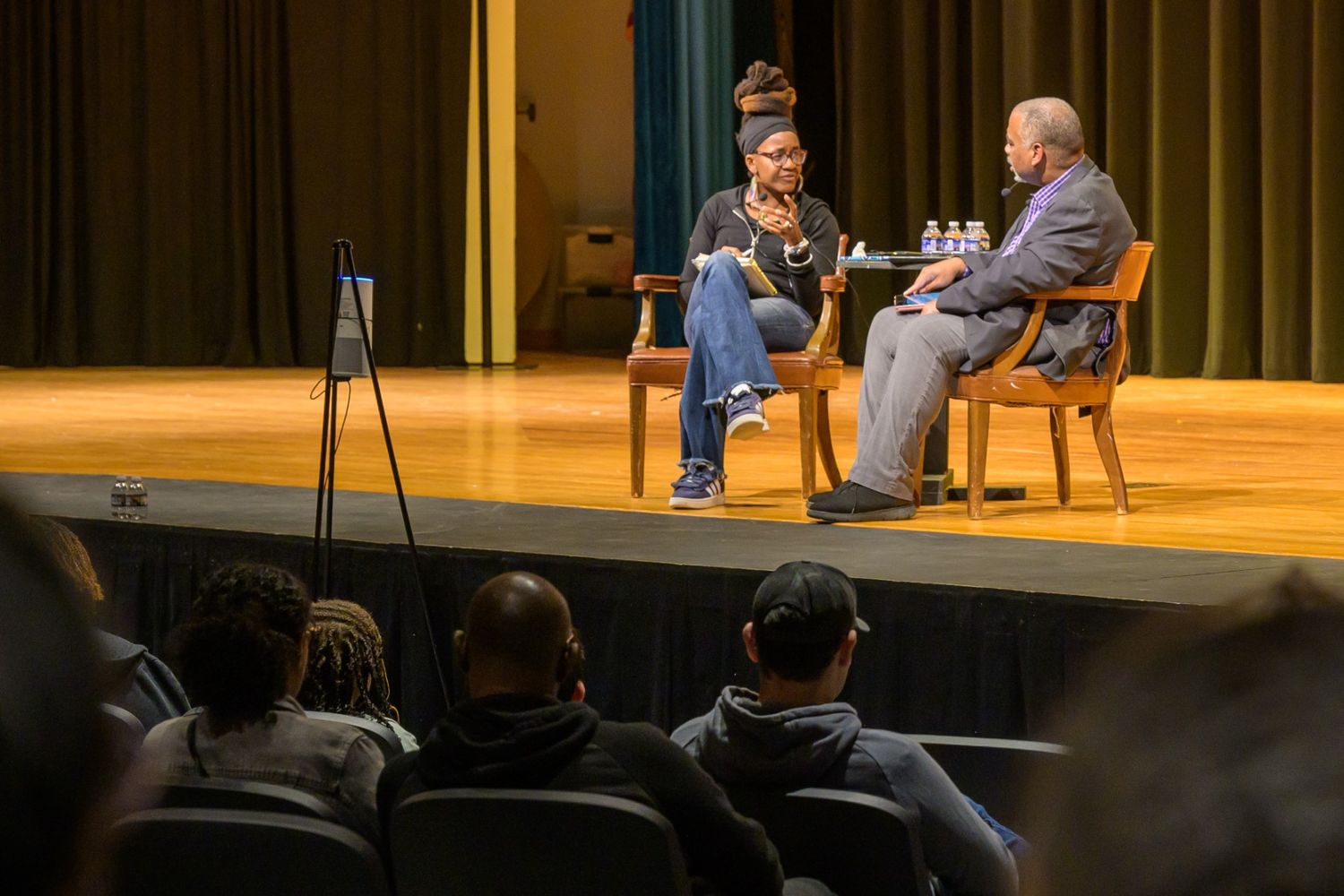
Wole Soyinka, the 1986 Nobel Prize Laureate of Nigeria, will be online to talk about African culture and politics. Soyinka, who is visiting St. Mary's College of Maryland for several days of lectures and readings, is internationally acclaimed as a playwright, poet and an essayist. His 1997 book, "The Open Sore of a Continent: A Personal Narrative of the Nigerian Crisis," strongly condemned Nigeria's military rulers as corrupt and undemocratic. In response, the government forced him to leave Nigeria and sentenced him to death sentence in absentia.

Submit your question now for Wole Soyinka.


washingtonpost.com: We are greatly honored to have Wole Soyinka with us today for a discussion of African politics and culture. Our first question comes from Arlington Texas.


Wole Soyinka: Quite recently I was obliged to send an open letter condemning Obasanjo's actions against the Ooduwa's people's Congress and police brutality. Before that I blasted him and his regime over the destruction of Odi, describing it as a crime against humanity. I have continued to criticise obasanjo's refusal to convene a Sovereign National Congerence etc. etc. etc Now where cometh 'filial piety'? Obasanjo is even too young to be my father. I am his elder!


Meshach Karanwi, Houston, Texas.: You have been charged with treason and been a political prisoner just about five years after the Nigerian independence. Now, you are a political exile. and even with the pseudo-democratic government now in place in Nigeria it is clear you can not live in Nigeria and have the freedom to speak. Several renown Nigerian activists have died or have been killed with the sproblem of Nigeria on their lips and it looks like people like you and Enahoro will spend your lives as 'activists for life' also, with no positive change in Nigeria. Nobody is in doubt that you know the problem with Nigeria and understand its roots, clearly, too. What is the remedy to the open sore that is Nigeria?

Wole Soyinka: Several courses are open to us in Nigeria - one of them is decentralisation of government, enabling the component parts to develop at their own pace,even competitively. That way we can even monitor the Human Rights records of each of us and challenge various malfeasances without the need of spurious national solidarity which is often a cover-up for high-place criminality. Etc. etc. etc. This of course is only a beginning. Above all, convene an open, all-comer National Conference to discuss our beginning and what we can envisage for the future.


Ankara, Turkey: Nigeria has a tremendous tradition of writers and artists taking progressive political stands and leading the opposition to corrupt military dictatorships. Could you comparatively assess the different approaches, relative levels of success or failure and different state responses to yourself, Fela Kuti and Ken Saro-Wiwa? Thank you very much.

Wole Soyinka: Difficult question. Creative people terrify governments. It is difficult to make the kind of assessment you request.


Washington D.C.: Have Nigeria's oil resources been good or bad for the Nigerian people? How have successive governments within Nigeria, and the governments and corporations of the West, dealt with this wealth?

Wole Soyinka:
On the whole, bad. I wish someone would insert a secret pipe under Nigeria's landmass and drain away the oil while we slept. That way we would be forced to retrieve other forms, former forms of economic sustenance. We have become a mono-economy. Unimaginative, idle leadereship has encouraged the people to rely on handouts while of course grabbing the lion's share of the petroleum royalties. Oil has been a curse. i would like to see Nigeria turn to the new Silicon Valley!


Duluth Mn.: Mr. Wole Soyinka: Please express your views on our present Cheney-Bush administration ---all viewed in respect to past Cheney involvements with Halliburton, Chevron, Shell; and their gross and brutal human rights violations against the Nigerian people. Thank you.

Wole Soyinka:
I am glad to see that the American people now have a PROBLEM!!!!


Annapolis, MD: Will the recent action of the US Supreme Court to allow Shell to be sued in New York for the torture and death of Nigerian environmental activists have any impact on the environmental basket case that the Delta has become? Do you see any solutions? Has the new governmnet acted responsibly?

Wole Soyinka:
The United States is a place of immense contradictions, I think that's why we are all so fascinated with this complex space. The decision of the Supreme Court for instance - it opens up such wide avenues of redress which may end up compensating for the short-sightedness of the U.S. and her multi-nationals in collaborating with some of the most cruel and unconscionable regimes in the Third World. Let's wait and see how this develops.


washingtonpost.com: A reader made reference to Ken Saro-Wiwa. Could you tell us about your relationship with him and the political struggle that he undertook? What is the relationship between Shell oil and Nigeria now?

Wole Soyinka:
It was a close relationship. Ken came to see me in my place - Abeokuta - at the beginning of the organised struggle in Ogoni. It was from his own hands that I ffirst received my copy of the Ogoni People's Bill of Rights. I gave it my full backing. I was in Auckland - together with his son - to urge the Commonwealth heads of States and their Ministers to intervene and warn Abacha against an obviously decided action. None of them believed us - they could not imagine that any national leader was desperate enough to defy the opinions of world leaders and execute nine human beings after an obvious kangaroo trial. Ken's death was an avoidable tragedy. The Ogoni struggle continues however, and , finally, most Nigerians now accept that it is a national struggle. It would be fair to say that the process of redressing a great and prolonged wrong is now being gradually effected.


Bowie, Maryland: In a recent book by Dr. Attiyah, he said that" some of the African nation-states are disintegrating". How would you respond to this statement? Also, how can Nigeria, the nation with the largest black population in the world, assert itself for leadership in Africa?

Wole Soyinka:
Let me begin with the latter question - how should Nigeria assert its leadership ? Well, should it? Is Nigeria a worthy leader? Size and resources are not all that qualify one for leadership. Idelogy, internal cohesion, progressive policies, a genuine sense of responsible leadership etc. etc. - these, in my view, are some of the prerequisites for the assumption of any leadership mantle.

Now, disintegration. We have to ask ourselves in all objectivity. Are many African states really viable nation spaces? Are they not the invention of colonial and imperial powers, created as convenient depots for supply of raw materials and then as extensions in the geo-politics of their own national centres? We need the Organisation of African Unity to convene and re-examine the viability of some - not all - but definitely some of these so-called African nations. I personally do not accept the decimation of millions of our peoples in order to preserve the fictions of the European world. If nations must die, let them, as long as peoples survive!


College Park, Maryland:
First and foremost I will like to say you are one of the most admirable men in Nigerian academic history. My question is how do we deal with the recent situation in Nigerian politics; with reference to the inability of the civilian government to change the economy, combat corruption and inflation. Could we safely say this government has failed or is it just a start of better things to come?

Wole Soyinka:

Thank you for boosting my morale. I shall believe you in entirety! Seriously though, I must confess that I am occasionally close to despair about the missed opportunities that we've seen under Obasanjo's regime. The battle against corruption has scored a few successes but, no, definitely it has not been a sustained battle that will lead to a culture of probity and full, open accountability. The obstacles are not to be denied. Some of those who should be targets have salted away enough to destabilise the nation several times over. This is one of the reasons why some of them oppose a National Conference where respresentativesd of the various group interests in the nation can bring these issues to the fore. Corruption in Nigeria has become indistinguishable fromthe power struggle. We are therefore speaking of a political approach to the problem. A new breed must somehow be found and assisted to take over power.


Mt. Rainier, MD: Sir, thank you very much for answering our questions. The one that has to be top of everybody's mind is, do you think Obasanjo's government can survive and can it bring Nigeria to greater freedom and democracy? Can the Muslims and Christians be brought to live in peace? Or is the nation flying apart?
I wish you all the best!

Wole Soyinka:
There are serious obstcles to the survival of Obasanjo in power. The major problem he has, I believe, is that there is a hegemony within Nigeria that believes - rightly or wrongly - that Obasanjo came to power only according to its will. That same clique, very well established and obscenely rich, is determined that if Obasanjo dores not carry out its will, he must be removed. It is a desperate group of individuals. That same clique is related to your second question -the issue of religion. Do you imagine that the introduction of the Sharia has anything to do with religion? No, it is a deliberate political ploy, introduced to destabilise the government and create a permanent state of insecurity.

My view has been amply expressed - those states which have introduced the Sharia into their laws have virtually seceded from the Nigerian corporate state. They have acted unconstitutionally, and the constitution is the set of protocols that define a nation - it is the setr of rules by which we've all agreed to stay together as one. Any section which flouts that set of rules has already opted out of the nation. Obasanjo vaccilated at a crucial moment in his duties, which was to ensure that he upheld the Nigerian constitution. in that sense, he is already presiding over two nations, not one.


washingtonpost.com: I'm wondering if you have followed events in Zimbabwe. Do you have any thoughts about the Mugabe government and the state of freedom of expression and political development there?

Wole Soyinka:
Robert Mugabe has disappointed many of us by resorting to the racist card in order to prolong his hold on power. Where has he been all these years of the reality of unequal land distribution? Only now that there is a strong, viable opposition among his citizens - including erstwhile comrdes in the liberation struggle - does he remember that there is a land problem. Africa is sick and tired - or should be - of these sit-tight leaders who simply do not recognise when their time is up. Mugabe, I regret to say, has joined the ranks of the Mobutu, the Sergeant Does, the Emperor Bokassas etc. His credentials as an African nationalist have been bargained away for a mess of power.


St. Mary's City, MD: How do you suppose the corruption in Nigeria and Africa on the whole can be tackled?

Wole Soyinka:
First, let us always remember that there is no spot on this glob where there is no culture of corruption within governemtns. The United States is riddled with corruption even within the judiciary that is supposed to be the ultimate arbiter bmong contending interests, - especially between the individual and the state. Italy, Greece, China.....have you followed the recent corruption scandalin France? So, Africa is not unique. The answer regarding a solution remains the same - a permanent state of public vigilance, and a political system which ensures openness, exposure, and change. The word of course is that great cliche - democracy. The authentic democracy, not the conspiracy of the elect4ed. It's a large subject. We can continue to offer prescriptions till the end of time. I don't quite understand it myself, but corruption appears to be built into the genes of humanity - most of it anyway.


Cheverly, Maryland: M. Soyinka do you think there is progress in Africa? I mean good political changes.

Wole Soyinka:

Well now, we must never forget even failed political experiments as that of Tanzania under Nyerere. That at least was a representative face of progress. And even more recently, when General Guei attempted to set back the clock in Ivory Coast, the people gave him a 'Yugoslave' lesson. We've witnessed the termination of the Leftist horror of Mengistu's Ethiopia, as well as the Rightist horrors of Bokassa's empire etc. etc. Its been a few steps forward and a few more backwards. South Africa offers to become a beacon of hope, but we must continue to watch, carefully. It is very difficult to define 'progress'.


St Mary's City, Md.: We are very honored to have you visiting our campus. The power of the pen is often very threatning and i admire you for speeking the truth on behalf of your fellow NIgerian citizens towards the corrupt and brutal leadership they are under. What do you think is lies in the future of African writers who struggle to bring the truth and bring about changes in their own countries?

washingtonpost.com: Perhaps in answering this question, you could share your thoughts with us about other African writers whose political and cultural expressions you admire?

Wole Soyinka:

Take a look at Algeria - now that is one very depressing zone when we consider the fate of the continent's writers and artists. Or Uganda under Idi Amin and even Milton Obote. When you consider the fate of writers in the former Soviet Union, or under apartheid South Africa, or indeed in Iran even under the current liberalisation, you come to recognise the sad fact that the mentality of the Index, the persecution of creative peoples appears to be a permanent attribute of power or putative power, secular authority or the theocratic. Writers and artists have no choice but to be what they are , and their function is to reflect the truth, as it is embedded in current reality, and the truth as it is manifested in their vision of society and humnity. The risks are part of the profession.

Writers like Chenjerai Hove in todays Zimbabwe, Assia Djebar of Algeria, plus the long, depressing roll-call of matyrs in that country, Taslim Nazreem of Pakistan, Mongo Beti of Cameroon, the 'purged' writers under the paranoid reign of Milosevic - forgive me, I am bad at these foreign names without my notebook etc etc. - all these attest to an unending battle between the axis of Power and Freedom. We must choose.


DC: As a minority of African descent, I identify with the Ogoni's struggle at the hands of majority elites and foreign interests - interests the Ogonis say have enslaved them, displaced them, and deculturalized them. Do you think the Ogoni experience is kind of a metaphor for other African people's experience throughout the continent, and those in the Diaspora? Why hasn't President Mbeki and President Obasanjo touched on the Ogoni plight more so in the Millenium Economic plan and the African Renaissance?

Wole Soyinka:

The African Renaissance? We have been here before. But it will come, it will come. It's just that the Renaissance does not respond easily to the rhetoric of leadership. And your question answers itself , indirectly. If we are indeed serious about bringing about an authentic Renaissance, we must not be silent when inequities, such as the plight of the Ogoni, virtually stare us in the face. Leaders, alas, are far too preoccupied with the power game to confront the serious task of rehabilitating their people's humanity - which is the truye foundation of any Renaissance.

i shall remember your words when I view the next sunrise.


Duluth Mn.: Wole Solyinka: I am relieved to know you are only "occassionally close to despair". For, with every ending, there is a new beginning?

So maybe when viewing your next sunset...consider it but another sunrise applauding itself?

My best to you. Your words give me hope in spite the present state of political and economic affairs here and abroad. Thanks again...

Wole Soyinka:
I found that I responded to the 'commentary' part of this a moment ago. That just shows how much I appreciated such hopeful remarks.;


washingtonpost.com: Our guest Wole Soyinka has responded admirably. Our warmest thanks to him and all who partipated.


Automatically Update Page    |    Get New Responses    |    Submit Question

© Copyright 2001 The Washington Post Company


  Our Regular Hosts:
Carolyn Hax: Smart, tough-love advice on relationships, family and work.
Tony Kornheiser & Michael Wilbon: These sports experts hold nothing back.
Bob Levey: Talk to newsmakers and reporters.
Howard Kurtz: The news and what makes the media tick.
Tom Sietsema: The latest on dining in D.C.
The complete
Live Online show list


washingtonpost.com
Home   |   Register               Web Search: by Google
channel navigation