Hands-on research. Highly qualified faculty.
As a neuroscience major or minor, you will explore the many workings of the brain from an interdisciplinary perspective.
You’ll gain both a knowledge of the brain and sharpen skills that will serve you in many different paths after you graduate:
- How the brain works from a biochemical, cellular, anatomical, sensory and perceptual, behavioral, and philosophical perspectives
- Ways to identify, locate, and evaluate the latest research in Neuroscience
- How to design and analyze data from research studies
- Communicate your ideas in writing and orally
- Work collaboratively with others
of Neuroscience majors complete an honors thesis
of Neuroscience majors also completed a second major or minor in a different field (Classes 2021-2025)
of Neuroscience majors and minors sought an advanced degree after graduation (Classes 2006-2023)
Neuroscience Curriculum
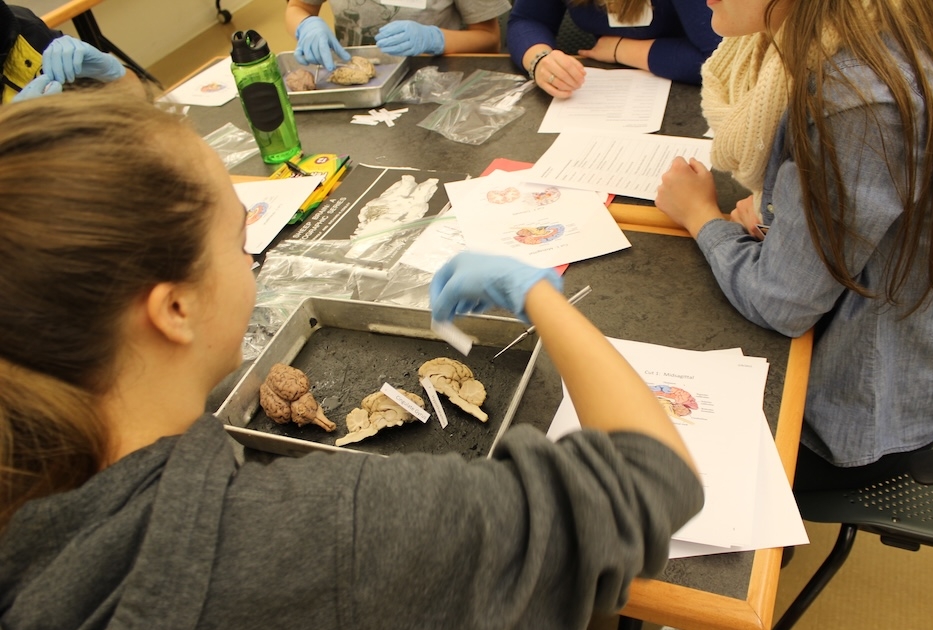
The field of neuroscience is highly interdisciplinary and relies on contributions from many different areas of study. A well-rounded education in neuroscience includes investigations into the molecular, cellular, and genetic aspects of nervous system functioning as well as their influences on behavior. The neuroscience curriculum at SMCM mirrors the interdisciplinarity of the field by drawing on courses from biology, chemistry, psychology, and philosophy (as well as dedicated courses in neuroscience).
SMCM’s Neuroscience program places a strong emphasis on direct research experience within neuroscience. In addition, the program creates an environment where faculty and students work collaboratively and discuss current issues in neuroscience.
Courses Offered
Neuroscience Courses
- Neuroscience Courses>
Honors College Promise
Internships in neuroscience research provide an excellent setting for immersing yourself in the research experience. You’ll gain new research skills, apply your neuroscience knowledge, collaborate with other scientists, and get a taste of what neuroscience research is all about. In particular, off-campus internships give you a valuable opportunity to develop your networking skills so you’ll have a competitive edge and a network of professional connections to aid you in your future job searches.
Summer research opportunities on the St. Mary’s campus are often available in neuroscience faculty laboratories. These positions may be funded by a grant or may be part of programs like SURF.
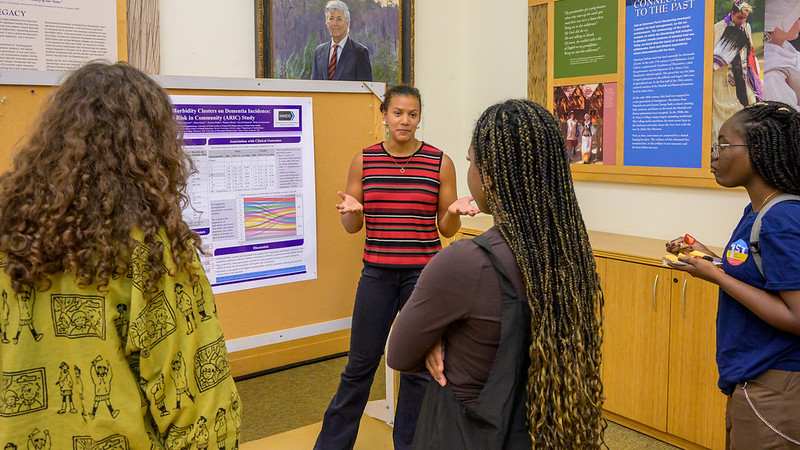
"It feels incredibly meaningful to bring together my majors, minors and extracurriculars from St. Mary’s College. I’m so grateful for the support I’ve received during my time at SMCM."
- Eleanor “Ellie” Walter ’24, Fulbright recipient
Neuroscience Seminar Series
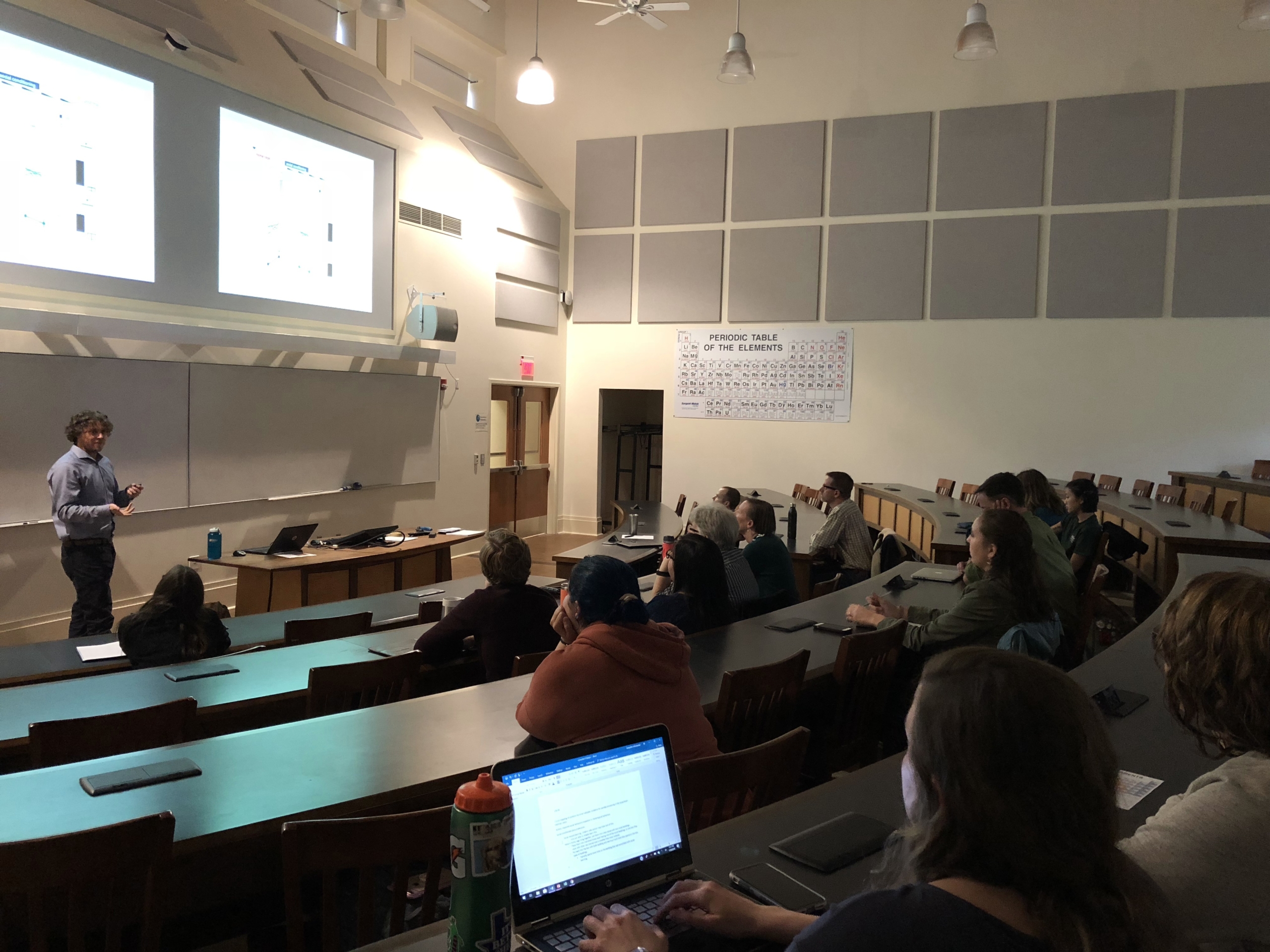
Our seminar series brings outside speakers to campus to deliver lectures in a variety of areas of neuroscience, and to meet and network with St. Mary’s neuroscience students. Speakers have included prominent neuroscientists in a variety of fields which overlap with other areas of science including psychology, biology, and chemistry, thus providing a broad appeal to the campus community. These seminar presentations expose our student minors to cutting-edge research in the field and showcase what it means to be an active research neuroscientist.
After you Graduate
Given the interdisciplinary nature of neuroscience, our major prepares students for a variety of jobs and careers that extend beyond graduate school. Students from the neuroscience program have gained employment as laboratory, research, and surgical technicians, as well as teachers, behavioral therapists, and more.
A majority of our students also pursue higher education, either immediately after graduation or after taking part in post-baccalaureate research internships (many through the National Institutes of Health) or certificate programs. Our students have enrolled in medical, dental and veterinary schools, as well as numerous graduate programs (including psychology, nursing, bioengineering, virology, marine science and neuroscience) across the country.

LATEST NEWS
Connect with Your Program Chair
All the faculty here at St. Mary's College of Maryland want to help you explore your interests and set you up for success. We look forward to connecting with you and meeting you on campus.
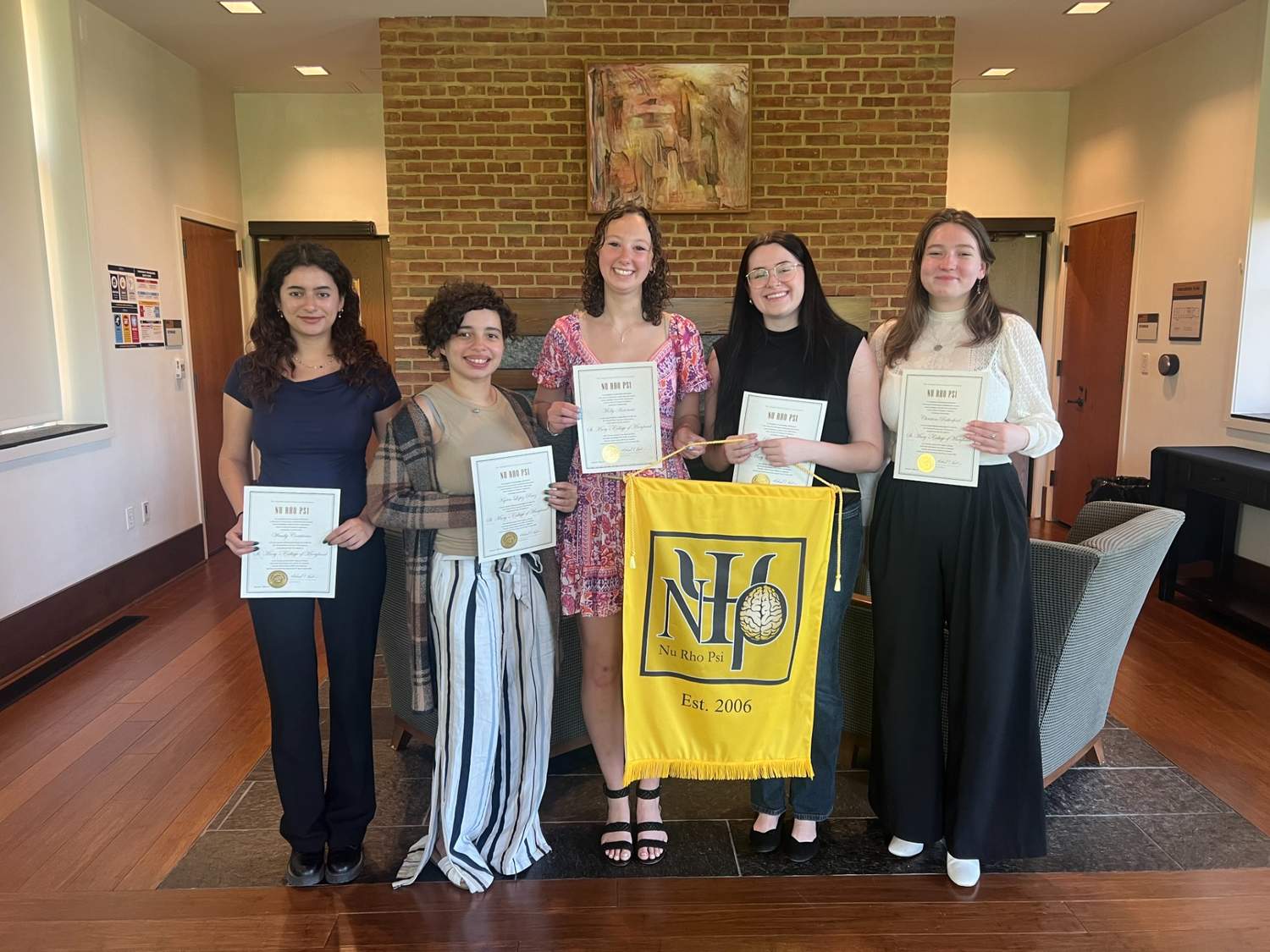
Honor Society
Pick our brains.
We offer a neuroscience program grounded in hands-on research experience. As a neuroscience student, you will work closely with supportive, skilled faculty in small class sizes. The neuroscience program draws from the fields of: biology, chemistry, and psychology. In addition, seniors will complete a capstone experience.
Expand your learning beyond the classroom with opportunities like studying abroad, internships, hands-on classes, or independent research. These experiences help you see the bigger picture.
At St. Mary’s College of Maryland, you’ll benefit from experienced professors, unlike at larger universities where teaching assistants may lead classes. You’re more likely to have the same professor for multiple courses, work with them on your St. Mary’s Project, or have them as your academic advisor.
When you need letters of recommendation for jobs or grad school, you’ll have professors who know you well and can write strong, detailed letters. This close relationship between faculty and students makes your experience at St. Mary’s unique compared to larger schools.