Campus Emergency: x4911
Phone: 240-895-4911
Fax: 240-895-4438
Policies and Procedures
Introduction
This statement provides information to the campus community about public safety at St. Mary's College of Maryland, highlighting St. Mary's strong commitment to crime awareness and campus security. Copies of referenced policies are available from the Dean of Student's Office. All members of the campus community are encouraged to take responsibility for maintaining a secure campus environment by participating in crime prevention programs and by reporting all criminal activity, suspicious incidents and persons, and emergencies immediately to the Public Safety Office at ext. 4911. This information is in compliance with the Campus Security Act, 34 CRF, Sec. 668. Data in this report were contributed by state and local police, Student Life Division, and other members of the campus community.
Campus Law Enforcement
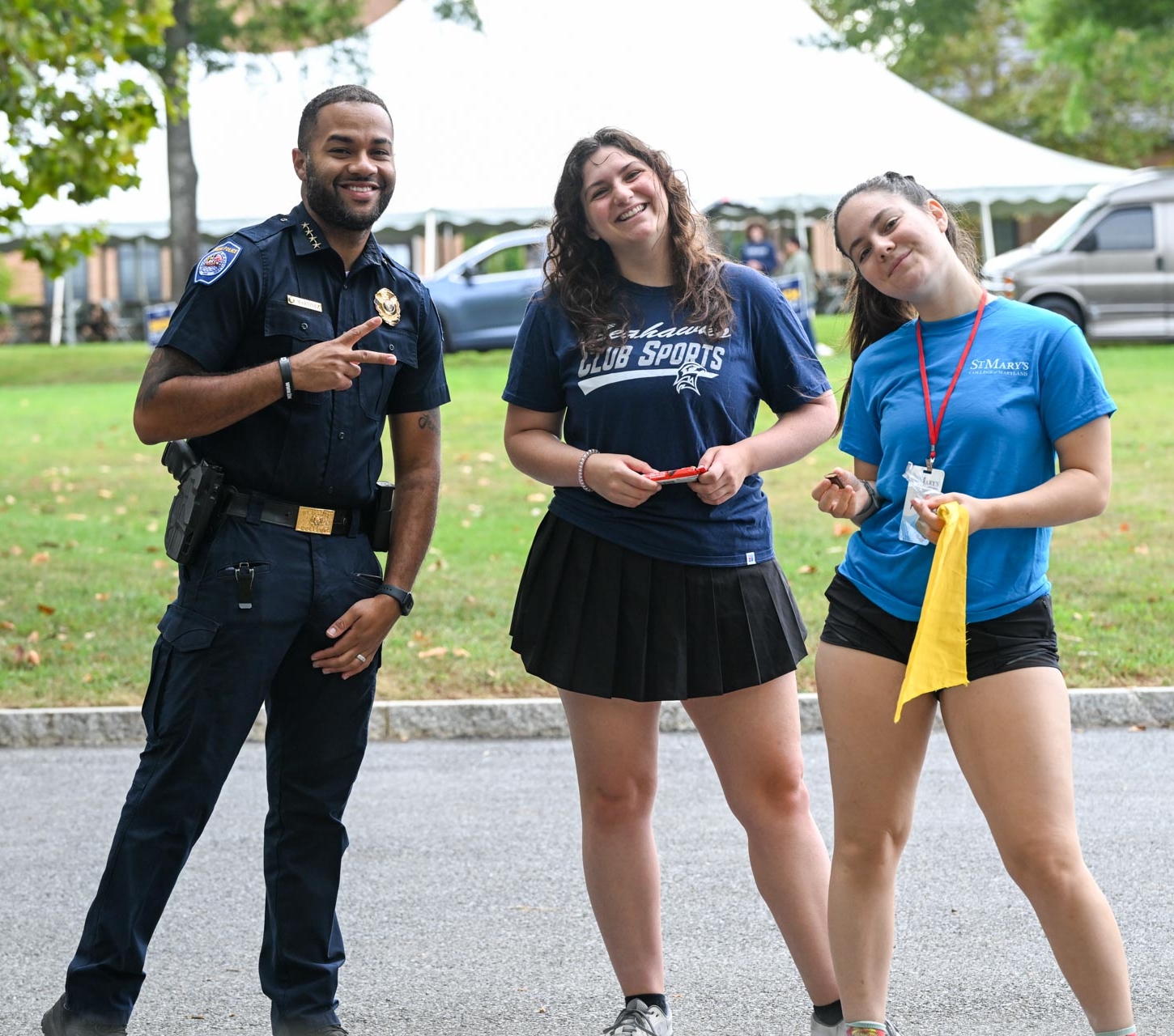
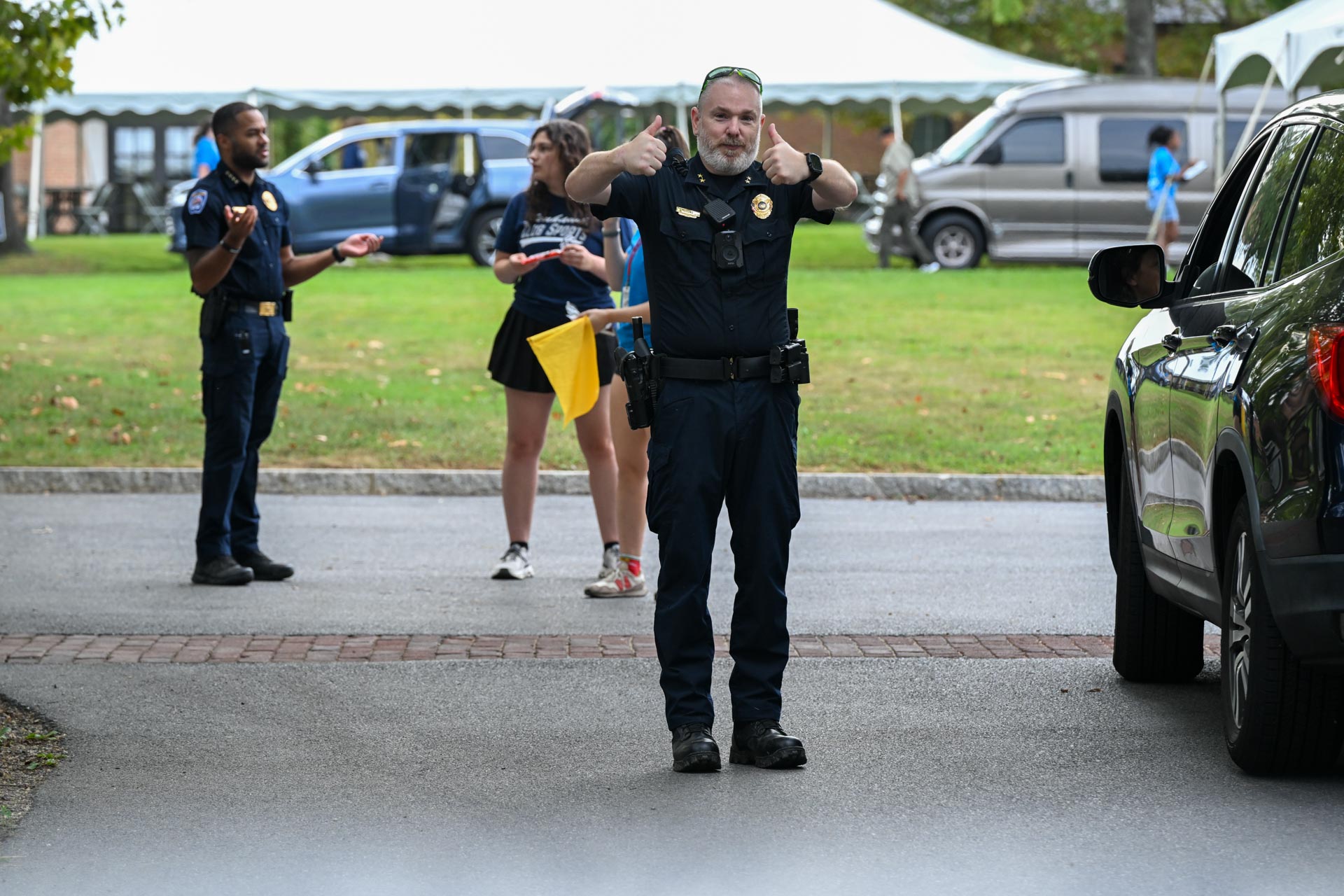
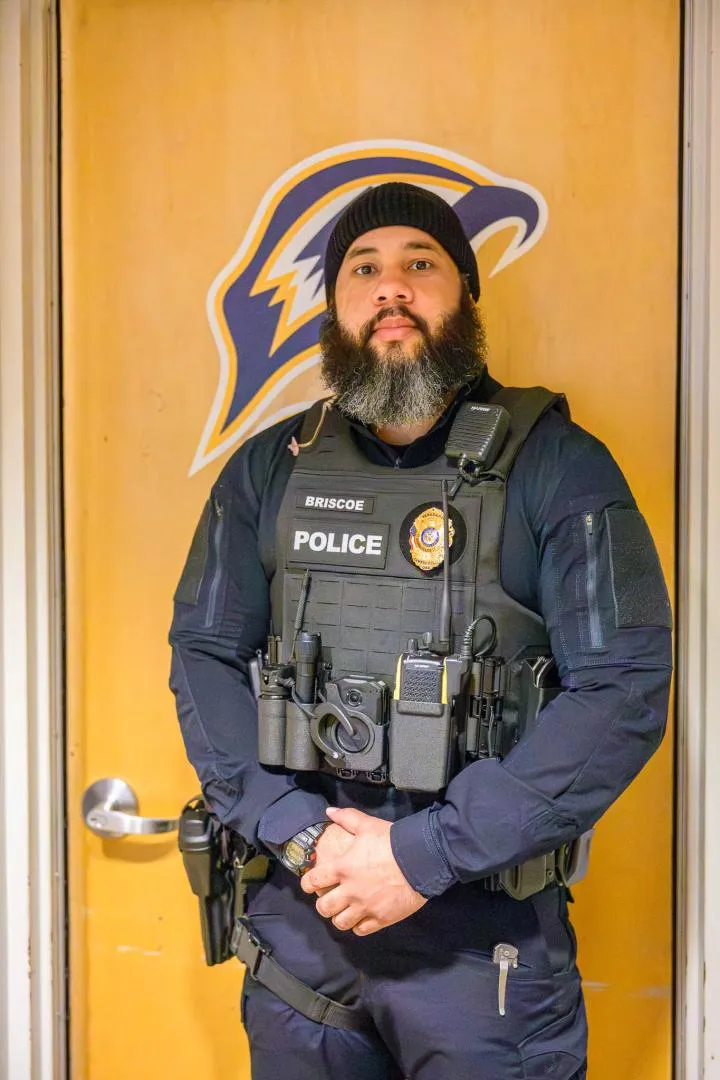
St. Mary's College of Maryland employs a staff of full-time professional commissioned and non-commissioned public safety officers. Campus public safety officers are unarmed however; commissioned officers have the full powers of reasonable search, seizure, and arrest. Campus public safety may defer any criminal investigation or situation, which may involve an arrest to the local law enforcement authorities. The dean of students administers student disciplinary matters.
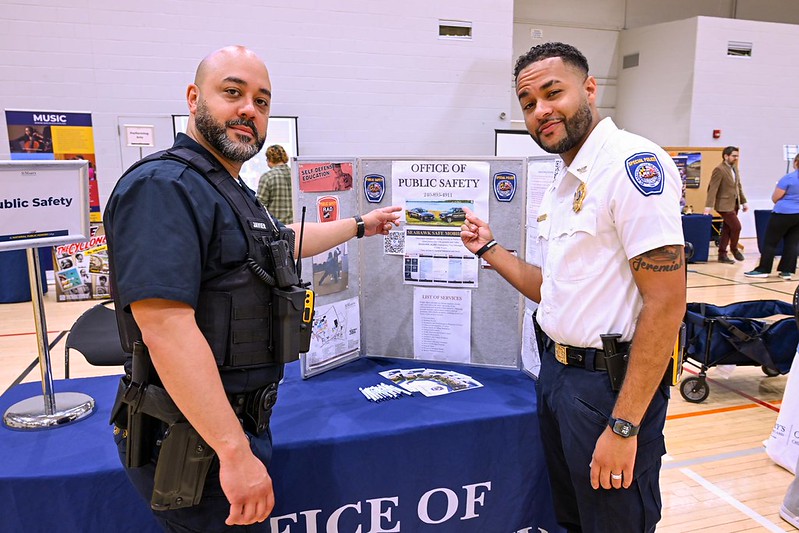
The Office of Public Safety is operational twenty-four hours a day, seven days a week. In the event of criminal or suspicious activity or person, the public safety office should be contacted at the following numbers:
- If emergency police service is required, 911 should be called, prior to notifying campus security.
- Campus Security: 4911 or (240) 895-4911 (answered 24 hours per day).
Access and Security for College Facilities
All campus residence halls are locked twenty-four hours a day. Resident directors and resident assistants are available to provide assistance. Visitors may gain access by contacting the student they are visiting. Exterior doors are not to be propped opened and left unattended, under any circumstances. Additional policies are contained in the Student Handbook, and are administered by the dean of students.
Academic buildings are secured each evening by campus public safety officers. The schedule of closings varies based on each building, normal hours of operation and scheduled activities. Students or visitors are not allowed in buildings after hours without prior approval. Public safety officers will escort any unauthorized person from the building. Criminal trespass could result in arrest.
Crime Awareness and Prevention
The Office of Public Safety's success depends on the support and assistance of the campus community. Any suspicious persons, behavior, or activity must be reported promptly.
Students, faculty, and staff must ensure their safety and the safety of their property by practicing fundamental crime prevention techniques. To that end, public safety will provide orientation sessions at the beginning of the fall semester for students. These sessions will typically be held in conjunction with residence hall orientations. In programs designed to educate and promote awareness of sexual assault and related sexual offenses are in place at St. Mary's College through the Sexual Assault Response and Prevention (SARP) Program. Presentations are given to all new students during New-Student Orientation, and there are programs in the residence halls which address issues related to date rape and all degrees of sexual offenses. In class presentations, discussions and campus-wide awareness events also take place throughout the school year. Additionally, booklets and posters designed to promote prevention and awareness are placed throughout all residence halls and in other public areas.
The St. Mary's College SARP Program runs out of the Counseling Center and provides support and assistance to victims of rape and sexual assault and conducts educational programs on campus in residence halls and at the counseling center. In addition to campus resources, trained advocates are available in the local community who will meet the survivor and help him/her sort out options and plans of action. Services and information are available at the College Health and Counseling Center, Ethel Chance Hall, or by calling ext. 4289.
Students should contact one of the following offices if they are the victims of a sex offense:
- The SARP Coordinator serves as a single point of contact to organize sexual assault victim care and can be reached from 10 a.m. to 5 p.m. weekdays (x4289). In addition to providing support, the SARP Coordinator can make referrals to all necessary resources, including campus Counseling Services, Walden Sierra, Inc. Sexual Assault Legal Institute (SALI), etc.
- A report can be filed with Public Safety (ext. 4911). If no further measures are desired at the time, the process can end there and Public Safety will keep the report on file.
- A complaint can be filed within the College judicial system (ext. 4208) for disciplinary action against a St. Mary's College student assailant. This can be done along with criminal prosecution or instead of it.
- A report can be filed with the Maryland State Police or other local law enforcement agency. Remember, in filing a criminal report, it is important to preserve criminal evidence and obtain a rape physical examination at a hospital within 72 hours of the incident. At any time after a report is made it may be withdrawn from further action.
- The Walden Sierra 24-hour Crisis Hotline (301-863-6661) can be contacted day or night.
Procedures for on-campus disciplinary action in cases of sexual assault, and the possible sanctions to be imposed in such cases, including but not limited to the expulsion from the College, are available from the Judicial Affairs Coordinator, ext. 3181. In any disciplinary action the accuser and the accused are entitled to have an adviser present during a campus disciplinary procedure. Both the accuser and the accused shall be informed of the outcome of any campus disciplinary proceeding brought by alleging a sexual assault.
Additional safety and crime prevention information will be published, periodically in available campus publications. Public Safety will accommodate scheduling any request for training or additional information.
Alcohol and Drug Policy
The Alcohol and Drug Abuse Policy is published in the Student Handbook, Employee Handbook, and Memorandum of Understanding.
Rape and Sexual Assault
St. Mary's College is committed to maintaining an environment free from all exploitation and intimidation based on sex. The College will not tolerate rape or sexual assault or other forms of unwanted sexual activity. The College has taken a proactive stance against rape and sexual assault and has in place sexual assault protocols which are designed to address the health and safety of the victim, the emotional health of the victim, the common safety of the St. Mary's College community, and the protection of the victim from undue embarrassment or publicity. These protocols also ensure confidentiality.
To help students understand behaviors that constitute sexual assault, we have provided the following definitions adopted by St. Mary's College of Maryland. These definitions are provided in addition to sexual offenses as defined by Maryland Annotated Code.
Sexual Assault I: By stranger or acquaintance, rape, forcible sodomy, or forcible sexual penetration, however slight, of another person's anal, genital, or oral opening with any object. These acts must be committed without consent and/or force, threat, intimidation or through the use of the victim's mental or physical incapacitation (e.g. due to excessive use of alcohol or drugs or a mental or physical health condition) of which the accused was aware or should have been aware.
Sexual Assault II: By stranger or acquaintance, the touch of an unwilling person's intimate parts (defined as genitalia, groin, breast, or buttocks, or clothing covering them) or forcing an unwilling person to touch another's intimate parts. These acts must be committed without consent and/or by force, aggression, threat, intimidation or through the use of the victim's mental or physical incapacitation (e.g. due to excessive use of alcohol or drugs or a mental or physical health condition) of which the accused was aware or should have been aware.
Consent: Consent is defined as the act of willingly and verbally agreeing to engage in sexual conduct. Consensual sex is a mutual decision reached by both parties without any hint of force or coercion.
Because of the sensitive nature of these charges, it is in the best interest of all parties involved in a hearing to have no contact with one another prior to and after a hearing. In addition, verbal, physical, or mental harassment, and intimidation of any member of the judicial body including complainants, respondents and any witnesses prior to, during, or after a judicial proceeding is a violation of college policy and will result in additional judicial proceedings.
Students who are the victims of alleged sexual assault may change academic and living situations, if an alternative is reasonably available, by contacting Residence Life at ext. 4207.
The federal Campus Sex Crimes Prevention Act requires institutions of higher education to issue a statement advising the campus community where information concerning registered sex offenders may be obtained. In Maryland, this information is accessible at the following Web site: www.dpscs.state.md.us/sor/.