
As a component of earning any major at SMCM, students must complete a Capstone Experience; this requirement is within the advanced requirements of SMCM’s general education initiative, Learning through Experiential and Applied Discovery (LEAD). The Capstone Experience can be satisfied either through a particular course sequence, combination of courses and experiential requirements, or independent, 8-credit student-designed project known as the St. Mary’s Project (SMP).
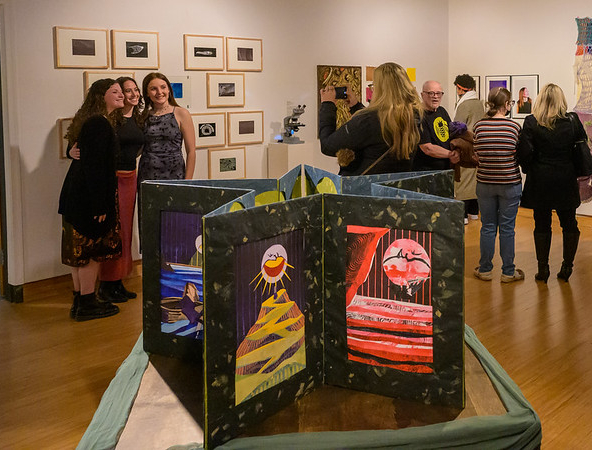
The SMP has been the signature Capstone Experience since 1996, when the Honors College curriculum was adopted following the SMCMs 1992 designation as Maryland’s Public Honors College. Over half of SMCM graduates complete the capstone requirement via the SMP. In all Capstone Experiences, students work closely with faculty instructors/mentors to create a project that incorporates analysis, synthesis, and reflection in the process and/or end product. The final projects are presented to classroom and/or public audiences at the conclusion of the semester.
Schedule
Recitals for students completing capstone experiences in Performing Arts with a Concentration in Music were held the weekend of April 18.
Monday, May 4, 2026
- Anthropology & Sociology – Anne Arundel Hall, Blackstone Room – 9:00 a.m.– 5:00 p.m.
- Art – Montgomery Hall, Upper Commons – 9:00 a.m.– 4:00 p.m.
- Biology (with projects also in Marine Science) – Schaefer Hall 106 – 9:00 a.m. – 3:00 p.m.
- Chemistry & Biochemistry – Goodpaster Hall 117 – 9:00 a.m. – 12:00 p.m., 1:00 p.m. – 3:00 p.m.
- English – Daugherty-Palmer Commons – 9:15 a.m. – 4:45 p.m.
- Environmental Studies – Cole Cinema – 8:30 a.m. – 12:30 p.m.
- History – Kent Hall 120 – 9:00 a.m. – 4:00 p.m.
- Philosophy – Montgomery Hall 151 – 10:30 a.m – 12:20 p.m., 1:00 p.m. – 3:00 p.m.
- Political Science & Public Policy – Kent Hall 213 – 9:00 a.m. – 1:00 p.m.
- Psychology (also with projects in Neuroscience) – Goodpaster Hall 195 – 9:00 a.m. – 1:00 p.m.
Tuesday, May 5, 2026
- ALL PROGRAMS Posters Presentation – Rec Courts, Michael P. O’Brien Athletics & Recreation Center – 9:00 a.m. – 12:00 p.m.
- Economics & Business – Kent Hall 222 – 9:00 a.m – 11:30 a.m., 11:30 a.m – 12:30 p.m.
- Educational Studies – Dean Learning Commons 214 – 1:00 p.m. – 2:30 p.m.
- International Languages & Cultures – Anne Arundel Hall, Blackistone Room – 1:00 p.m.–2:00 p.m.
- Performing Arts: Theater, Dance, and Performance Studies – Montgomery Hall, Bruce Davis Theater – 6:00 p.m.–8:00 p.m
Wednesday, May 7, 2026
- Women, Gender, and Sexuality Studies – Anne Arundel Hall, Blackistone Room – 4:30 p.m - 6:00 p.m.
Projects of Distinction
List of Projects of Distinction
Carter Summers, History
Margaret B. Marlay Award, which recognizes excellence in a St. Mary’s Project in either English or History
Project Title: The Seamless Society: A Historiographical Literature Survey of Imagined Perfected Societies at the End of Historic Change
Mentor: Dr. Christine Adams
Presentation Date/Time/Location: Monday, May 4, 2026, Kent Hall 120, Panel 3: 2-3:30 PM
Krystal Moore-Nicks, Marine Science
Myron G. Marlay Award for Science, which recognizes excellence in a St. Mary’s Project in a field of the sciences.
Project Title: Feedbacks Between Snail Grazing and Fungal Endophyte Communities
Mentor: Dr. Lorena Torres Martinez
Presentation Date/Time/Location: Monday, May 4 11:40 AM, Schaefer Hall 106
Summer LaRocco, Asian Studies & English
Margaret B. Marlay Award, which recognizes excellence in a St. Mary’s Project in either English or History
Project Title: Charity, Confederates, and Catholicism: Point Lookout During the American Civil War
Mentor: Dr. Charles Musgrove
Presentation Date/Time/Location: Monday, May 4, 2026; 12:30 PM, Kent Hall 120
Isabel Walder, Mathematics & Computer Science
Geneva Boone Award for Outstanding St. Mary's Project
Project Title: On the Seidel polynomial of equivalence classes of graphs
Mentor: Dr. Emily Barranca
Presentation Information:
Isabel’s project has been presented at two conferences and has fulfilled the presentation component of the Capstone.
- National Joint Mathematics Meeting, January 20, 2026, Washington, D.C.
- MAA (Mathematical Association of America) Section Meetings for the DC-Maryland-Virginia Section, April 24, 2026, Frederick, Maryland
Read About Walder on InsideSMCM
Alli Thress, International Languages & Cultures-Spanish
Geneva Boone Award for Outstanding St. Mary's Project
Project Title: Graffiti as an Indicator of Contact-induced Language Change within Multilingual Environments
Mentor: Dr. Haley Patterson
Presentation Date/Time/Location: Tuesday, May 5, 2026, 1:00 PM, Anne Arundel Hall, Blackistone Room
Michael Oliver, Art
Patti Runco Arts Alliance Award for Outstanding Work in the Annual Student Art Exhibit
Project Title: Lovers
Mentor: Prof. Tristan Cai
Presentation Date/Time/Location: Monday, May 4, 2026, 3:15 PM, Montgomery Hall Upper Commons
Students Who Have Presented at Conferences
List of Students Who Have Presented at Conferences
Ashley Fenwick, Marine Science
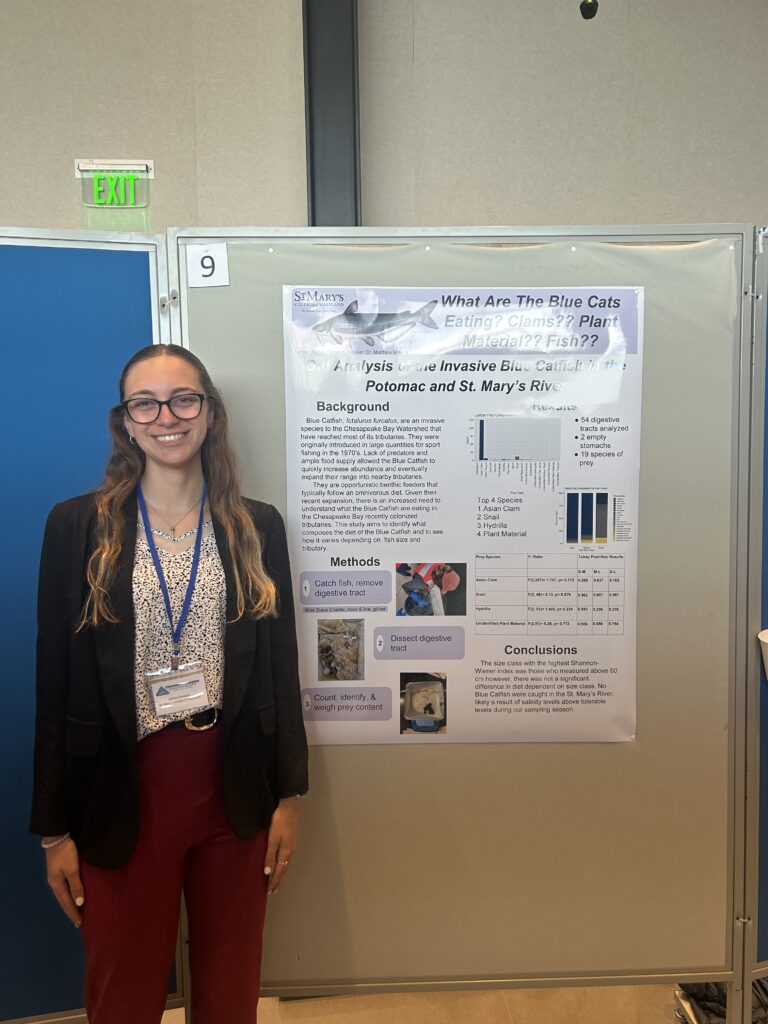
Poster presented on March 19, 2026, at the American Fisheries Society Tidewater Chapter Meeting at University of Maryland Center for Environmental Science Chesapeake Biological Laboratory.
Project Title: Gut Analysis of Blue Catfish in the Potomac and St. Mary's River, MD
Mentor: Matthew Breece
Presentation Date/Time/Location: Monday, May 4, 2026, 1:30 PM, Schaefer Hall 106
Sophia Lin & Joshua Swanson, Computer Science
Poster presentation April 10-11, 2026, at 30th annual conference of the Consortium for Computing Sciences in Colleges Northeast Region (CCSCNE), Northampton, MA
Read about Lin & Swason on InsideSMCM
Project Title: Gamifying the Campus Experience: A 3D Interactive Campus Exploration
Mentor: Dr. Simon Read
Presentation Date/Time/Location: Tuesday, May 5; MPOARC, Board 95
Lee Beary, Anthropology, with a concentration in Archaeology
Paper presentation March 13, 2026 at the Middle Atlantic Archaeological Conference in Gettysburg, Pennsylvania.
Project Title: Communicative Consumption: An Analysis of Tin-Glazed Earthenware at Two High-Status Sites in Colonial St. Mary's County, Maryland
Mentor: Dr. Julie King
Presentation Date/Time/Location: Monday, May 4, 2026, 10:45 AM, Anne Arundel Hall, Blackistone Room
Liz Brown, Biology
Presented March 28, 2026 at the Ecological Society of America (ESA) Mid-Atlantic Conference, Towson, Maryland
Project Title: Bridging Tradition and Science: A Review of Medicinal Plant Knowledge in St. Mary’s City, Maryland
Mentor: Dr. Lorena Torres Martinez
Presentation Date/Time/Location: Tuesday, May 5, 2026, 10:00 AM, MPOBARC Recreation Courts, Board 57
Kaleena Gonzalez, Psychology
Poster presentation April 17, 2026 at the University of Virginia L. Starling Reid Undergraduate Psychology Research Conference, Charlottesville, VA
Project Title: The Role of Parenting and Attachment on Social Anxiety Development
Mentor: Dr. Ayşe Ikizler
Presentation Date/Time/Location: Tuesday, May 5, 2026, 10:00 AM, MPOBARC Recreation Courts, Board 16
Kaylee Holston, Psychology
Poster presentation April 17, 2026 at the University of Virginia L. Starling Reid Undergraduate Psychology Research Conference, Charlottesville, VA
Read About Holston on InsideSMCM
Project Title: The Impact of Bilingualism on Social Spheres and Life Satisfaction
Mentor: Dr. Jessica Leffers
Presentation Date/Time/Location: Tuesday, May 5, 2026, 10:00 AM, MPOBARC Recreation Courts, Board 20
Nicole Osborn, History
Presented March 28, 2026, at the Phi Alpha Theta Mid-Atlantic Conference 2026, Shepherd University
Project Title: From Villain to Martyr: Narratives of the Lynching of Benjamin Hance
Mentor: Dr. Garrey Dennie
Presentation Date/Time/Location: Monday, May 4, 2026, 2:00 pm, Kent Hall 120
Mason Lipscenko, Philosophy
Presentation April 17, 2026, at the SUNY Oneonta Undergraduate Philosophy Conference, Oneonta, New York
Project Title: Wittgenstein and Nāgārjuna: Philosophy as Therapy
Mentor: Dr. John Schroeder
Presentation Date/Time/Location: Monday, May 4, 2026, 10:30 AM, Montgomery Hall 151
Posters
The Tuesday morning of Capstone Days (9 am – 12pm), is a dedicated time for students to present their projects in poster form. Students are responsible for designing a large-format poster in the traditions of their particular discipline which summarizes the key elements of their project including: rationale, relevant literature and/or theory, methodological design and data collection, data analysis, findings and conclusions. In a style seen in many academic conferences, these posters are mounted on bulletin boards and organized in a large common space. The students are based at their respective posters for an assigned period of time, and attendees (including mentors, SMCM faculty and staff, family, friends, and community members) circulate among the posters, learning about the different projects and peppering the students with questions about their research.
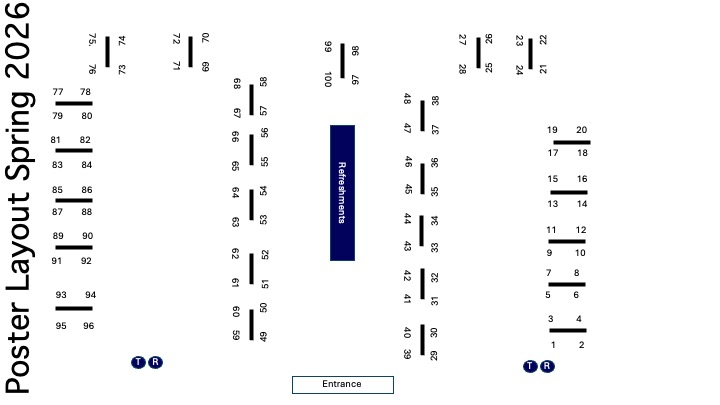
Layout of Posters in the Rec Courts; select image to enlarge
Last Name, First Name | Project Title | Project Abstract | Program | Project Mentor | Poster # | Time |
|---|---|---|---|---|---|---|
| Aguoru, Bechorah | Role of temperature in modulating thyroid-hormone induced tectal morphology in X. laevis tadpoles | Thyroid hormone (TH) regulates key aspects of amphibian brain development, while temperature has been shown to strongly influence developmental rate in ectotherms such as Xenopus laevis. However, the interaction between these factors in X. laevis remains unclear. This study examines the combined effect of temperature and TH exposure on brain development, focusing on neural regions that are subject to critical periods of development, namely the optic tectum and telencephalon. Tadpoles were reared across multiple temperature conditions and treated with TH. Brains were collected at two timepoints and analyzed using fluorescent imaging after whole-mount immunostaining for phospho-histone H3 (pH3). Tectal area, length-to-width ratio, and roundness were quantified along with telencephalon area and roundness. Temperature modulated the effects of TH on brain morphology and warmer conditions were associated with enhanced structural changes relative to the cooler developmental conditions. Quantification of neural proliferation was unattainable due to weak immunohistochemical signal, but significant differences were observed in the measured morphological differences between temperature conditions in the tectum and telencephalon. Importantly, the timepoint at which the brains were collected appear to have minimal influence on the temperature-dependent differences induced by TH in the brain. These findings indicate that temperature does, in fact, modulate the magnitude of TH-mediated neurodevelopment in X. laevis. | Neuroscience | Dr. Sarah Latchney | 46 | 9:00 |
| Ajuwon, Adeniwa | Effects of Glucose Preconditioning on Yeast Growth Under Metabolic and Osmotic Stress | Hyperglycemic environments expose cells to both metabolic and osmotic stress, making it difficult to determine which factor contributes most to cellular dysfunction. This study used Saccharomyces cerevisiae (BY4741) as a model organism to examine how prior glucose exposure influences tolerance to future stress. Yeast cultures were preconditioned in either standard glucose (2% YPD) or high-glucose (10% YPD) broth, standardized to an OD600 of 0.5, serially diluted, and assessed using spot assays on control and stress-inducing media. Stress conditions included high glucose (10% YPD), sorbitol to isolate osmotic stress, and 0.1% 2-deoxy-D-glucose (2-DG) to inhibit glycolysis and isolate metabolic stress. Both preconditioned cultures exhibited comparable baseline growth on 2% YPD, confirming similar viability. However, cultures preconditioned in 10% glucose maintained growth at higher dilutions when challenged with both sorbitol and high-glucose media. The strongest difference occurred under sorbitol media, where high-glucose-preconditioned cells survived two additional dilutions. Both groups showed similar growth inhibition on 2-DG media. These results suggest that prior high-glucose exposure primarily enhances osmotic stress tolerance rather than metabolic flexibility. | Biology | Dr. Abby Beatty | 50 | 10:00 |
| Allen, Briana | How Different Parenting Styles Have an Effect On Children's Screen Usage | This study specifically looks at the four different parenting styles and how these parenting styles have an effect on their childs screen usage, either at home or in public. Previous studies explain the different parenting styles and how screen time is used as an incentive, negative consequences of screen usage, and how screen time can be a significant distraction. This study aims to find out if different parenting styles really do have an affect on a childs screen time usage. Participants were parents from Monarch Preschool in College Park, Maryland with their children ranging from the ages 3-5 years old. Results showed that permissive parents tended to lean more towards a higher amount of screen time and authoritarian parenting styles tend to lean to lower amounts of screen time. These findings indicate that parenting styles do have an affect on their childrens screen usage, it is just not the only cause. | Psychology | Dr. Jessica Leffers | 17 | 10:30 |
| Angel-Aguilar, Pam | The Selective Pressures of Ampicillin Sub-Minimum Inhibitory Concentrations: The Impacts of Resistance and Fitness Trade-offs in Escherichia coli | In this investigation, the effects of non-lethal concentrations of ampicillin on the growth of Escherichia coli (E. coli) were examined over a 2 week period. To do this, optical density (OD600) was used to measure bacterial growth and the values were then compared to colony forming units (CFU/mL) at certain time points within those 14 days. The main goal was to determine whether or not sub-minimum inhibitory concentrations (sub-MIC) of antibiotics cause significant changes in growth, regardless if they can inhibit the bacteria. Through all concentration groups (0, 0.25, 0.5, 1.0, 4 μg/mL), the OD600 values were relatively consistent over time, but the statistical analysis demonstrated no significant differences in growth between concentrations. However, the CFU data were not considered to be reliable due to inconsistent colony formation, the cells often grew in patches rather than as isolated colonies, regardless of proper spread plate technique. This made it difficult to get an accurate count of colonies on each plate per dilution and concentration. Due to this, the OD600 data was more reliable as a consistent method to evaluate growth during this experiment. Although the results did not demonstrate strong changes in overall bacterial growth, they suggest that bacteria are able to grow even when in the presence of low levels of antibiotics. The results indicate that sub-MIC conditions may influence bacterial behavior that are not immediately visible simply through growth alone. Ultimately, this investigation emphasizes how important it is to continue to study antibiotic exposure beyond its ability to inhibit bacterial growth, this also contributes to a better understanding of how low concentrations of antibiotics may shape bacterial response over time. | Biology | Dr. Kevin Emerson | 65 | 10:00 |
| Arianna, Dylan | How Politics Impact LGBTQ+ Help-Seeking Behaviors | Psychology | Dr. Libby Williams | 23 | 10:30 | |
| Athauda, Dinush | The Impact of Ionization Energy in the Determination of Antimicrobial Properties in Transition and Post-Transition Metals. | Certain metals exhibit antimicrobial activity which are integral to designing internal medical devices. This study aims to determine whether the ionization energy of metals influences their antimicrobial properties. It was hypothesized that metals with lower ionization energies would exhibit stronger antimicrobial activity due to enhanced reactive oxygen species (ROS) generation. Aluminum, copper and titanium were selected to test this property across a gradient of ionization energies. Metal disks were placed on LB agar plates inoculated with Escherichia coli and Bacillus subtilis and incubated for 24 hours. These findings indicate that, under the experimental conditions used, the tested metals did not demonstrate distinct or significant antimicrobial behavior. The lack of observed differences may be attributed to factors such as weak antimicrobial activity or too short of an exposure time. This study may be improved by opting to plate a lawn of bacteria and analyzing a growth inhibition radius rather than analyzing colony counts. | Biology | Dr. Kevin Emerson | 64 | 10:30 |
| Barnes, Kyleigh | Homework to Hired: How Parenting Styles Shape Academic Success and Career Confidence | The four different parenting styles encapsulates the different ways parents could deal with their children like how expectations of the child are set, how rules are enforced, and how to guide or reshape behavior just to name a few. The differences in these parenting styles have been linked to substantial differences in the child’s emotional regulation and general life skills. This study investigates how parenting styles shape one's academic success and career confidence by utilizing the Parenting Styles and Dimensions Questionnaire (PSDQ) and the Career Decision Self-Efficacy Scale (CDSE). | Psychology | Dr. Jessica Leffers | 18 | 10:00 |
| Barnes, Shekia | Why PreSchoolers Act Out: The Role of Cognitive Development | In my project I am investigating the cognitive roots of the classroom challenges that causes preschool children to act out. Often, early childhood behaviors are misinterpreted as defiance rather than a lack of skill, which unfortunately contributes to preschoolers being expelled. So to understand this better, I am examining the inhibition failures of inhibitory control rathern than behavioral choices. My study correlates how children aged 3-5 perform on two game like task with their teachers ratings on the Disruptive Behavior Disorders scale (DBD). By highlighting this link, the findings can inform future strategies to support children in the classroom, showing the need for interventions focused on cognitive skill building. | Psychology | Dr. Libby Williams | 15 | 10:30 |
| Blade, Atlas | N-Acetylcisteine as a Treatment for Negative Symptoms of Schizophrenia | Schizophrenia is a disabling disorder affecting many people. The disorder is generally broken up into negative, positive, and cognitive symptoms where the most common treatment is antipsychotics. However, many antipsychotics fail to treat negative symptoms and only ease the experience of positive symptoms. Here we look into the research of N-Acetylcysteine (NAC) as an adjunctive treatment for negative symptoms and its loss in popularity over time, likely due to problems with its efficacy, effects on research from covid, and a general lack of interest in negative symptoms. There are also problems identified within the literature, which struggle to identify a connection between NAC and negative symptoms. The research overall for NAC should be continued but a focus on negative symptom research is imperative for the future research on NAC to be effective. | Neuroscience | Dr. Liz Leininger | 44 | 10:00 |
| Bonilla, Isabela | Role of Memory in Advertising: Creating Ads with Better Memory Retention | My research examines how memory processes affect ad perception, aiming to determine how to improve advertisement retention. A literature review was conducted to analyze foundational memory theories, the impact of positive and negative emotions on memory, the influence of music on recall, and how captioning affects source memory. Based on these findings, I developed a guide for advertisers to create more memorable, engaging content. I developed a 'how-to' guide and conducted a survey to provide marketers with an effective approach to creating unforgettable advertisements | Psychology | Dr. Nayantara Kurpad | 31 | 10:00 |
| Bonner, Ashlyn | The Impact of Video Advertising on Emotion, Enjoyment, and Memory | Advertising is pervasive in our daily lives as it influences how consumers interact with brands, process information, and make purchasing decisions. The present study examined how the emotional valence of advertisements (positive, negative, and neutral) impacts participant’s emotional responses, ad enjoyment, and memory. Using a within-subjects experimental design, participants viewed three videos that represent each emotional condition and reported their emotional reactions, enjoyment of the ad, perceived memory, and memory recall after watching each video. Results from this study demonstrated that both positive and negative advertisements depicted stronger emotional responses than the neutral advertisements. Negative advertisements produced higher objective memory recall scores than both positive and neutral advertisements, with neutral ads being the lowest. Positive advertisements had the highest overall enjoyment scores, compared to the negative and neutral advertisements, with negative ads being the least enjoyable. These results indicate that emotional intensity improves memory retention, while positive emotional content increases the overall enjoyment. The findings demonstrate a trade-off between memorability and likability, showing the importance of carefully choosing the emotional content and messaging of an advertisement to best resonate with consumers. | Psychology | Dr. Nayantara Kurpad | 29 | 10:00 |
| Boone, Carter | Rainbow Trout (Pacific Coast Wild Populations vs. Stocked Populations): Genetic and Ecological Differences and Aquaculture Implications. | Rainbow trout (Oncorhynchus mykiss), also known as steelhead, along the Pacific coast have spread over millennia across various habitats , such as coastal rivers, inland streams, and oceanic regions. Wild populations are controlled by natural selection influences including predation, seasonal variation, and resource availability. Beyond wild populations, rainbow trout have been brought into and stocked in freshwater systems around the globe to boost recreational fisheries and aquaculture. These practices result in economic and social benefit but also entail major ecological and genetic consequences. Wild and stocked populations of rainbow trout exhibit key genetic and ecological differences. Thus, the goal of this paper is to identify and comment on the differences between the two populations and the implications on aquaculture and environmental sustainability. | Marine Science | Dr. Christina Goethel | 71 | 10:00 |
| Brown, Liz | Bridging Tradition and Science: A Review of Medicinal Plant Knowledge in St. Mary’s City, Maryland | For many years, Indigenous communities across North America have developed extensive medicinal plant knowledge rooted in ecological awareness, spirituality, and practical healing traditions. Among these groups, the Piscataway people of Southern Maryland created a deep relationship with native flora utilizing plants in the surrounding area for medicinal and agricultural purposes. Regardless of the rich heritage, Indigenous medicinal knowledge has historically been overlooked and dismissed by Western science, often categorized as folklore rather than fact-based knowledge. Using a qualitative mixed-methods approach, this study integrates archival research, ethnobotanical documentation, and pharmacological literature review to identify and compare the biochemical properties of plants that are traditionally used by native communities and how western pharmaceutical companies use the plants.The findings are expected to contribute to the understanding of how traditional plant knowledge can inform modern drug discovery, strengthen community representation, and encourage the ethical integration of Indigenous science within global healthcare systems. | Biology | Dr. Lorena Torres Martinez | 57 | 10:00 |
| Chuma, Elizabeth | Climate - Driven SAV Species Shifts in Chesapeake Bay Alter Habitat Structure | Marine Science | Dr. Cassie Gurbisz | 83 | 10:00 | |
| Clancy, Isabella | Weaponized Ignorance: The Failed Remediation of PFAS | Per and Polyfluoralkyl substances are a group of thousands of synthetic compounds known for their inability to easily decompose or break down; they accumulate over time, causing a crisis of contamination in water sources, soil, and human bodies. PFAs are abundant in aqueous film-forming foam (AFFF), and the mass production and use of it creates pollution/contamination in the immediate area of naval bases. When consequences ultimately occur, citizens look to their government for the assistance they’re supposedly entitled to, but recurring dismissal and failed remediation prove to be the sole outcome due to factors like military immunity, the prioritization of corporate profit, and the weaponization of government ignorance. Utilizing pre-existing scientific studies/results, newly collected data from a fellow SMP student, and the synethization and integration of policy and litigation alongside interviews with various stakeholders, the military base, NAS Patuxent River, is compared and placed in the historical context of military pollution and government reaction efforts. It has become apparent that remediation efforts fail due to the reasons previously listed, placing the burden on the victims. Moving forward, continuing this research is a vital step to understanding more effective paths of remediation. | Environmental Studies | Dr. Barry Muchnick & Dr. Matthew Fehrs | 89 | 9:00 |
| Connolly, Caden | Is Gynandromorphism in a Species Affected by How Sex is Determined? A Comparative Study | Gynandromorphism is a sexual anomaly in which an individual presents with both male and female traits, typically in some pattern or patchwork across the body. Because so many different factors may potentially determine the sex of an individual during development, including a variety of genotypic and environmental factors, there are many potential causes for this sexual anomaly. In this paper, I explore potential associations between systems of sex determination and both the frequency and developmental patterns of gynandromorphism. I show that some orders of arthropods have significantly higher rates of gynandromorphism than expected by chance, while others have fewer reports than expected, and that gynandromorphic patterns are relatively diverse across arthropods, including bilateral, transverse, oblique, and mosaic patterns. In contrast, no taxonomic orders of birds exhibit more or fewer gynandromorphic individuals than expected by chance, and every reported gynandromorph exhibits a single developmental pattern (bilateral). All reported cases involve genotypic rather than environmental sex determination. My results suggest that gynandromorphism is associated with genotypic sex determination systems and likely occurs from a variety of variables during development. | Biology | Dr. Jordan Price | 75 | 10:30 |
| Contreras, Wendy | Building Reserve, Ignoring Disparity: Bilingualism, Education, and the Limits of Alzheimer’s Research | Alzheimer's disease (AD) affects over seven million Americans and is projected to impact millions more as the global population ages. In the absence of a cure, identifying factors that delay the onset of AD symptoms has become a critical public health priority. Cognitive reserve, which is the brain's ability to maintain function in the presence of neurological damage, has emerged as a promising framework for understanding how life experiences may protect against cognitive decline. This review separately examines two cognitive reserve factors: bilingualism and educational attainment, critically evaluating what the existing literature tells us about each variable's role in delaying AD symptom onset. | Neuroscience | Dr. Torry Dennis | 36 | 10:30 |
| Crane, Elizabeth | The Scent of Disease: Invertebrate Olfaction as a Novel Approach to Cancer Detection | Globally, cancer is a major health burden, accounting for approximately 10 million deaths in 2020. Effective screening methods are key to reducing mortality rates, as early detection can improve treatment outcomes. However, many current screening methods are expensive, invasive, and impractical for frequent use. Abnormal metabolic processes associated with cancer produce distinct volatile organic compound (VOC) patterns, which are detectable in biological samples such as breath, urine, blood, and the headspace of cultured cells. These VOC patterns emerge early in tumor development, offering a promising tool for screening. This review examines the potential use of invertebrate olfactory systems in the detection of VOCs as non-invasive cancer biomarkers. Specifically, the olfactory systems of Caenorhabditis elegans, Formica fusca, and Drosophila melanogaster are evaluated as potential biological tools for detecting cancer-associated VOC profiles. At this time, C. elegans has the strongest evidence for clinical application, with studies showing detection across multiple cancer types and stages. Formica fusca ants demonstrate promise through rapid conditioning methods, while Drosophila provides proof-of-concept evidence through cancer-specific neuronal response patterns. Current research shows these systems exhibit potential as cancer screening methods. Further clinical validation, standardized sampling methods, and a greater understanding of the biological basis of VOC-driven responses are necessary before widespread application in cancer screening is possible. | Biology | Dr. Christina Goethel | 72 | 9:00 |
| Culver, Anna | Evaluating the Effectiveness of Living Shorelines as Solutions to the Impacts of Sea Level Rise and Erosion on Coastal Communities | As sea levels rise due to climate change, coastal communities are some of the most vulnerable areas worldwide. Nature-based infrastructure, such as living shorelines, can increase coastal resilience to climate change, but only if they can vertically keep pace with sea level rise through soil accretion. In this study, sediment deposition tiles and sediment cores were used to quantify soil composition and accretion rates of three living shoreline systems in St. Mary’s County, MD. The objective was to determine whether these living shorelines are keeping pace with sea level rise. We found that plant biomass was positively correlated with surface sediment organic matter content. Meanwhile, the organic matter content of surface sediment had no correlation with the mostly inorganic mineral material that settled out of the water column on sediment tiles, suggesting that organic matter input from marsh plant roots and leaves is the main source of elevation-building soil in these living shorelines. The estimated long-term accretion rates of two living shoreline systems based on sediment cores were 4.38 mm y-1 and 4.78 mm y-1, both of which exceed local sea level rise rate of 3-4 mm y-1. This study emphasizes the importance in understanding factors which sustain living shorelines to develop more effective solutions to increasing threats of sea level rise. | Marine Science | Dr. Cassie Gurbisz | 76 | 9:00 |
| Davis, Paige | The Brain’s Role in ACL Recovery: Neuroplastic Mechanisms and Physical Therapy Interventions | Anterior cruciate ligament (ACL) injuries are common in sports and often result in persistent deficits in knee function despite surgical reconstruction and rehabilitation. Traditional rehabilitation approaches primarily target strength and joint stability; however, emerging evidence indicates that ACL injury also produces widespread neurophysiological changes, including arthrogenic muscle inhibition, altered spinal reflexes, and reduced corticospinal excitability, which contribute to long-term quadriceps weakness and impaired motor control. This study combined a literature review with survey data to examine the relationships between rehabilitation strategies, neuroplastic adaptations, and functional outcomes following ACL injury. Survey data from 25 individuals with a history of ACL reconstruction revealed that the presence of ongoing pain or instability was significantly associated with lower knee confidence. These findings highlight a critical gap in current rehabilitation, which often fails to address the neural consequences of ACL injury. Incorporating neuroplasticity-based interventions, such as visuomotor training, dual-task exercises, external focus cues, and strategies targeting arthrogenic muscle inhibition, may enhance brain-to-muscle communication, improve quadriceps activation, and reduce reinjury risk. I hypothesized to find a significant association between specific rehabilitation techniques and self-reported outcomes in my survey, but there were no significant associations found between specific rehabilitation techniques and self-reported outcomes. | Biology | Dr. Emily Brownlee | 99 | 10:00 |
| DeHaan, Allison | Plasmid Effects on Biofilm Evolution in E. coli Under Antibiotic Stress | Plasmids play an important role in bacterial adaptation by influencing gene regulation, host fitness, and stress responses, yet their effects on biofilm evolution remain context-dependent. This study investigated how a non-conjugative, inducible EGFP-pBAD plasmid affects biofilm formation and antibiotic tolerance in Escherichia coli K-12 MG1655 under sub-inhibitory kanamycin exposure over five weeks of experimental evolution using a glass bead system. Plasmid-free (PF) and plasmid-carrying (PC) lineages were assayed weekly for biofilm biomass and minimum biofilm inhibitory concentration (MBIC90). Both PF and PC populations evolved increased kanamycin tolerance, reaching the assay ceiling (256 µg/mL), indicating strong selection for biofilm-associated tolerance. However, evolutionary trajectories diverged between lineages, with PF populations exhibiting rapid early increases in tolerance followed by a plateau, while PC populations exhibited gradual increases before the populations converged. Biofilm biomass dynamics differed, with PF populations showing a gradual increase in biomass over time and PC populations exhibiting greater variability across passages. Statistical analysis revealed a significant effect of time point, population, and their interaction on biomass. Overall, plasmid carriage influenced the rate and variability of adaptation rather than endpoint antibiotic tolerance, suggesting that evolutionary time was the primary driver of resistance while plasmids shaped the trajectory of adaptation. | Biology | Dr. Abby Beatty | 51 | 10:30 |
| Dilworth, Joshua | Phylogenetic Distribution of Mycobacterium Species that Cause Infection in Humans | Mycobacterium is a genus comprised of primarily free-living, environmental bacteria. They have the highest known number of human pathogens of any bacteria genus, with notable species being M. tuberculosis and M. leprae, which cause tuberculosis and leprosy, respectively. Most species are opportunistic, in that they can cause infection in humans, but factors such as medical procedures conditions affecting the immune system can increase the likelihood of infection being established. This project aims to see how the species that can cause infection in humans are distributed evolutionarily. The ancestors of this genus did not evolve with humans, so the interpretation of the phylogenetic tree is to see how the lineages that cause infection in humans are distributed today. The phylogenetic distribution of human-infecting species appears dispersed and does not correspond to a clear evolutionary pattern. This likely reflects the context-dependent and opportunistic nature of the trait. | Biology | Dr. Jordan Price | 66 | 9:00 |
| Divjak, Clara | A School Should Be True to You: Why Colleges Should Back Solutions to Institutional Betrayal | Sexual violence on college campuses has become extremely prevalent with 13% of students becoming victims during their college experience (Cantor et al., 2019). Through the process of institutional betrayal (IB), educational institutions actions have been found to increase the frequency and severity of negative mental health and educational outcomes for victims of college sexual violence (Adams-Clark et al., 2024; Bruce et al., 2025; Sidelil et al., 2022). Institutional courage (IC) includes behaviors and attitudes purposely engaged in by the institution that create transparency and directly assist in helping victims of college sexual violence (Adams-Clark et al., 2024; Nightingale & Cousineau, 2025). To address the issue of disseminating information about institutional betrayal and institutional courage to stakeholders, an applied project was created about the problem of college sexual violence. Data was collected on this training through a pre and post-test with both content and open response questions to get feedback on the training’s effectiveness and appeal. Implications for the results of this study should be used to educate and train members of the college community and college policy makers on IB and the impacts they can have on campus victims of sexual violence. | Psychology | Dr. Anandi Ehman | 4 | 10:30 |
| Doyle, Lila | Thermal Effects on Wound Healing in Purple Polyp Stylophora | This project takes a look at how temperature influences wound healing in coral Stylophora pistillata (Purple Polyp Stylophora), with a focus on the effects of sustained cooler conditions on tissue regeneration. Coral wound healing is a critical process for reef resilience, while being highly dependent on environmental conditions that affect energy availability and physiological functions. While changes in temperatures are known to impair coral health, the effects of reduced temperatures on regeneration remain less understood. To address this, coral fragments were experimentally wounded and distributed across temperature- controlled tanks representing warmer and cooler conditions. Over a 5 week period, wound healing was monitored using repeated photographic measurements, and changes in wound area were analyzed using linear mixed-effects models. Results showed a slight decrease in wound area over time, displaying limited tissue regeneration. However, this trend was not statistically significant. The found results were affected by the onset of bleaching across all tanks early in the experiment, suggesting that thermal conditions exceeded optimal thresholds and introduced confounding physiological stress. This likely reduced healing capacity and affected measurement accuracy. Overall, the findings emphasize the sensitivity of coral tissue regeneration to temperature stress and highlights the need for more tightly controlled experiments to isolate thermal effects on wound healing. | Biology | Dr. Elizabeth Hamman | 55 | 10:30 |
| Edwards, Emma | Data Compilation and Analysis of Demersal Fish Species in the St. Mary’s River of Maryland | Estuaries are often valued based on their density of fish, as it reflects important data, such as recruitment, mortality, and emigration (França et al., 2009). Establishing a pool of data on the existing populations within the St. Mary’s River, as with other small estuarine ecosystems, will allow for the development of further studies related to fish assemblages in the region. However, there is no current historical record of demersal fish assemblages in the St. Mary’s River. This study uses trawling in order to collect, compile, and analyze the seasonal assemblages of demersal fish in the St. Mary’s River in Maryland. The data gathered, along with previous data collected during 2025, will then serve as a basis to create a historical database of demersal species composition over time for the river. The St. Mary’s River is broken up into three main site locations; Lower River, Upper River, and Middle River. Each site was trawled multiple times between September 2025 and April 2026. The marine animals caught in the trawl were identified by species, measured, and recorded on a data sheet. A data dictionary was created in order to establish a standardized data recording system for all future demersal fish data collection by St. Mary’s College of Maryland. The data from each trawl was then entered into a Google spreadsheet and later analyzed in RStudio. Analyses include basic fish composition and frequency | Marine Science | Dr. Cassie Gurbisz | 82 | 9:00 |
| Esztergomi, Max | The Tolman IV Space-time with Charge and Cosmological Constant | The Tolman IV solution is one the very few exact solutions in general relativity that has found some physical relevance. It has been extensively used to model compact objects such as neutron stars and strange stars. In this paper, we generalise the Tolman IV solution by including charge and a cosmological constant. We use a power law distribution for charge. We find that the solution is physically acceptable for a range of values for central density and pressure. We investigate the spatial curvature and present conditions that lead to different spatial geometries. We also find that the charged fluid can be represented as a polytrope. Finally, we analyse the issue of internal trapping of circular geodesics and find that the solution allows for trapping of massive and charged particles but not of neutral null particles. | Physics | Dr. Anish Agashe | 87 | 10:00 |
| Flores Aguilar, Evelin | Do Cultural Gender Norms Influence Mental Health & Help-Seeking Behavior? | Traditional gender norms have encouraged certain behaviors, roles, and expectations according to assigned sex at birth, such as men being providers and women being homemakers. These norms influence emotional processes and behaviors surrounding mental health, such that more rigid norms may negatively impact mental health and help-seeking behavior. Cultural endorsement of gender norms vary, with some cultures endorsing traditional beliefs more than others. An online study was conducted to explore the differences in gender norm endorsement across cultural backgrounds and the relationships between cultural gender norm endorsement, mental health, and help-seeking behavior. Participants (N = 242) were asked to complete abbreviated versions of the CMNI-46 and CFNI-45 to measure cultural gender norm endorsement, the DASS-21 to measure mental health outcomes, and a 1-item self-designed measure of help-seeking behavior. The study found that masculine gender norms didn't vary across cultural backgrounds (p = .08), but were positively associated with depressive symptoms (p = .002) and stress (p = .001). Additionally, feminine gender norms varied across cultural backgrounds (p = .04), but were negatively associated with depressive symptoms (p = .01). Neither overall measure was significantly related to help-seeking. These findings further the understanding of the potential impacts of culturally-endorsed gender norms on mental health and help-seeking behavior. | Psychology | Dr. Anandi Ehman | 2 | 10:00 |
| Forgione, Vrai | Endocrine Pathways to Comorbidity in Tourette's Syndrome and Postural Orthostatic Tachycardia Syndrome | TS is a catecholaminergic neurological condition that presents with both motor and vocal tics within any given patient, caused by hyperinnervated dopamine (DA), increasing levels of dopamine transport protein (DAT) and vesicular monoamine transporter 2 (VMAT2). To explore comorbidities TS has with other catecholaminergic conditions, Postural Orthostatic Tachycardia Syndrome (POTS) will be utilized. POTS is a catecholaminergic neurological condition marked by cardiovascular dysautonomia, presenting with orthostatic intolerance with postural changes, caused by weakened norepinephrine (NE) preventing venoconstriction. This review covers two pathways to comorbidity TS and POTS may have with one another. These two pathways include a norepinephrine-centric pathway, and a renal dopamine-centric pathway. The NE-centric hypothesis states that in TS patients, increased VMAT2 activity would lead to increased synthesis of weakened NE from DA, coupled with increased clearance of NE at the synapse, allowing any existing symptoms of POTS to be brought within the realm of diagnosability. The renal DA-centric hypothesis states that increased DAT activity within the kidney would lead to induction of increased natriuresis. This natriuretic effect would lead to the flushing of excess electrolytes, however, these excess electrolytes are needed to combat symptoms of POTS, and may aggravate existing orthostatic symptoms into a diagnosable range. | Biology | Dr. Sarah Latchney | 47 | 10:00 |
| Francis, Jacqui | ADHD Effects on Academic Performance Before and After Treatment | My research examines how ADHD has affected academic performance before and after recieving treatment. A literature review was conducted to analyze how ADHD affected academic performance by seeing how people felt after being diagnosed and if it was easier or harder for them to recieve treatment depending on if they were younger or older. Based on what was found ADHD does have a small effect on academic performance at a younger and older age. | Psychology | Dr. Jessica Leffers | 6 | 10:30 |
| Gaevsky, Julia | Living With ADHD: How College Students Approach Treatment for Their Diagnosis | Attention-Deficit/Hyperactivity Disorder (ADHD) is a neurodevelopmental disorder frequently treated with pharmacological interventions; however, variability in treatment response and side effects often lead individuals to explore alternative strategies. The present study qualitatively examined how college students with ADHD experience and evaluate both medication-based and nonpharmacological approaches to symptom management. Participants were 11 undergraduate students with a prior ADHD diagnosis who completed an online questionnaire assessing demographic characteristics, diagnostic history, and treatment use, followed by semi-structured, in-person interviews. Interviews explored participants’ diagnostic experiences, perceptions of medication efficacy and limitations, and engagement with complementary strategies, including behavioral and dietary modifications. Transcripts were analyzed using grounded theory methods, including open and axial coding, to identify emergent themes. Findings indicated that although participants generally reported benefits associated with medication, many also described significant drawbacks, including adverse side effects and concerns regarding long-term sustainability. Participants who engaged in alternative or complementary approaches emphasized the importance of individualized, flexible treatment strategies aligned with their personal needs and well-being. These findings underscore the value of integrating patient perspectives into ADHD treatment planning and support the need for multimodal approaches to care. | Neuroscience | Dr. Victoria Müller Ewald | 5 | 9:00 |
| Glivings, Eden | Black LGBTQ+ People and Religious Trauma: The Impact on Identity Expression | Separately, religious/spiritual abuse, homophobia, and racism all have strong impacts on the people that experience them. Black LGBTQ+ individuals who experience racism and homophobia experienced increased detrimental effects, as well as LGBTQ+ individuals who experience religious/spiritual abuse. Given the importance of religion, particularly the Black church, in the Black community, the current study seeks to investigate the impact of religious trauma on Black LGBTQ+ individuals. Black LGBTQ+ adults who had experience with religion completed two surveys and answered two follow-up questions created for the study regarding their religious/spiritual experience and how it impacted their willingness to explore and/or disclose their gender and/or sexual identity. Despite a correlation matrix resulting in non-significant findings, most participants indicated that their experience with religion/spirituality greatly impacted their willingness to explore/disclose their identity and stated that that experience was due to either their family’s held beliefs or their own. The results of the current study are in line with prior research, and future research should explore this topic further, as well as paths to recovery, healing, and positive aspects of being a Black LGBTQ+ person, especially with a religious/spiritual background/identity. | Psychology | Dr. Libby Williams | 22 | 10:30 |
| Gonzalez, Kaleena | The Role of Parenting and Attachment on Social Anxiety Disorder | Research demonstrates a strong predictive relationship linking authoritarian parenting and insecure parent-child attachment as risks for social anxiety development (SAD) in children. However, less research has compared the relationships between mother and father parenting and attachment with SAD. Of the research that explores both mother and father parenting and attachment, conflicting evidence has been gathered on the separate roles mothers and fathers play on SAD in their children. The current study explored the relationships maternal and paternal authoritarian parenting and insecure mother- and father-child attachment share with SAD symptoms to explore how each parent factors into SAD outcomes and whether the gender of the child moderates the relationship. Participants were undergraduate students (n = 114) who were raised by both mother and father figures. They completed an online survey assessing their social anxiety symptoms, parents’ use of authoritarian parenting style, and their attachment with each parent. A multiple linear regression analysis showed that only father insecure-attachment significantly predicted SAD. The gender of the child did not moderate the relationship for any of the variables. The findings from this research may inform childcare practices and development of parental resources offered to parents. | Psychology | Dr. Ayşe Ikizler | 16 | 10:00 |
| Goodrich, Julien | What's Eating North Woods? An examination of deer behavior and it's effect on plant communities | Deer are an omnipresent feature of the east coast, inhabiting every ecosystem in the region. Because of their high population, lack of natural predators, and potential to impact plant communities on the Atlantic coastal plain, human management is necessary to prevent them from negatively impacting the health of ecosystems. This study looks at how deer behave in the local region around St. Mary’s, and potential impacts of their movement and eating habits on the local plant communities. | Environmental Studies | Dr. Rafael Barreto de Andrade | 90 | 10:30 |
| Gray, Kenzie | Parents of Children with Autism & Mental Health | Autism Spectrum Disorder (ASD) is defined as the inability to initiate and maintain social interaction and communication as well as restrictive and repetitive behaviors, inflexibility, and interests that are not reflective of the individual's age or cultural contexts (ICD-11, 2022). Because ASD has a large and significant impact on the family unit, it is extremely important to study the short term and long term effects of them. It is vital for our understanding of the effects on parents’ mental health, parents’ relationships with each other and with their children, siblings mental health, and siblings relationships with each other. The current study focused on parent mental health. The participants of this study are 66 parents of children who have ASD and 114 parents of typically developing (TD) children, a total of 180 parents. The Generalized Anxiety Disorder Seven (GAD-7) and Center for Epidemiological Studies Depression (CES-D) were used to measure anxiety and depression. Ultimately, it was found that in this sample, parents of children with ASD do not stuggle more with mental health than parents of typically developing children do. | Psychology | Dr. Scott Mirabile | 33 | 10:30 |
| Gross, Timothy | Pediatric, Adolescent and Young Adults (AYAs) Ependymoma | Epenedymomas are Central Nervous system tumors that originate from Ependymal cells. Ependymomas affect both adults and children with different grades and locations for the tumors between each age group. These changes involve differences in tumor aggressiveness, tumor shape, consistency, and genomic expression. However, scientists are still trying to find concrete evidence that biological differences are associated with age. In this paper I will show the differences between adult and childhood ependymomas, and how they can be used in a medical framework. Many studies have found that specific types of cancer found in only children or adults exhibit different forms of genomic expression causing different levels of tumor aggressiveness. Other studies have found the the location of tumors are also closely associated with age. Spinal for adults and intracranial for children. This paper would hope to serve as a pathway, describing the areas in which biological differences change between age the most. Chromosomal gain and losses such as the 1q chromosomes in intracranial childhood tumors but not in adult spinal tumors and the opposite with chromosomes 7 and 12. Biological differences such as these that play important roles in location and aggressiveness can be incredibly influential in later medical frameworks. | Neuroscience | Dr. Liz Leininger | 28 | 9:00 |
| Guy, Hunter | The Effects of Caffeine on the Reproduction, Growth, and Survival of the Freshwater Snail Physa spp. | Caffeine is an emerging pollutant in our water systems. Caffeine has been found in concentrations of up to 3.60mg/L in our environment and is a known toxin to invertebrates. It easily gets in our water because of its extremely high usage, dumping, lacking filtration, and urinating. Freshwater snails (Physa spp.) are an invertebrate that play in important role in water filtration and algae eating. This study exposes Physa spp. to environmentally relevant concentrations of caffeine and tracks how it affects freshwater snail survival, growth, and reproduction. It was observed that the snails had no statistical difference in these factors when exposed to caffeine compared to the control with no caffeine. This reveals that the freshwater snails have some resistance to these pollutants. | Biology | Dr. Elizabeth Hamman | 54 | 10:00 |
| Hanscom, Noah | Origami Constructions: In Multidimension Space | Mathematical origami is a theoretical extension of paper origami where the complex plane can represent an infinitely large piece of paper, and the “folds” of this paper are represented by a set of allowed angles. We study the structure of the set of intersection points between all pairs of angles. This has been well described in 2 dimensions; however, little is known about them in multidimensional space. We determine how an origami set that generates a lattice in three-dimensional space is altered by introducing an additional allowed angle. We also implement an algorithm in SageMath that computes the intersections of pairs of allowed angles from given starting points. The algorithm then computes the projections from the new intersection points back onto the real number line. | Mathematics & Computer Science | Dr. Sara Chari | 94 | 9:00 |
| Haylock, Nicholas | Playing Video Games can Help You Get a Job? Creativity Through Video Games | Psychology | Dr. James Mantell | 14 | 9:00 | |
| Hinton-Miller, Devon | How Art Therapy Affects Children With Autism | Autism is a series of traits that are different from the neurotypical norm. These traits are often but not always trouble socializing, a deficit in fine motor skills, meltdowns, and a low self esteem. Art therapy utilizes art to enable a therapeutic process for the individual that is creating the art. In this literature review, I explored the effectiveness of art therapy in multiple subjects, including socialization, emotional regulation, fine motor skills, and self esteem. Generally, I have found that studies have shown that art therapy is a highly effective tool for helping autistic people navigate their traits and deficits. Although this is the case, I also found a significant lack of research in the area. My aim is to write a policy paper which asks for the funding of research in these areas, so art therapy can eventually be applied in a school setting. I will ask funders in the area to potentially consider their funds to be directed into art therapy research. | Psychology | Dr. Scott Mirabile | 34 | 10:00 |
| Holston, Kaylee | The Impact of Bilingualism on Social Spheres and Life Satisfaction | Bilingualism acts as a vessel for acculturation and enculturation through formation of relationships. Relationships are homogeneous or heterogeneous, in that they create bonding and bridging capital that allow one to connect to their identity. Bonding and bridging capital lead to an increase in life satisfaction (LS). While research tends to focus on the cognitive abilities of bilinguals, it fails to look at the social impact of bilinguals attending a PWI on LS. In this study, we predicted that together second language (L2) age of acquisition (AoA), proficiency, and acquisition method would result in higher levels of heterogeneous relationships, which will have a positive impact on LS. College students from SMCM completed an online study which included the Social Network Strength Scale, the Satisfaction with Life Scale, and a language questionnaire. We found that L2 proficiency was related to having stronger L2 relationships, however AoA, proficiency, and acquisition method alone did not influence homogeneity. Additionally, the impact of L2 AoA, proficiency, and acquisition method on homogeneity in relationships determined LS. These findings suggest that language abilities can influence the strength and diversity of relationships and subsequent LS. Future research should focus on the social and mental implications of bilingualism. | Psychology | Dr. Jessica Leffers | 20 | 10:00 |
| Houston, Mackenzie | Effect of Nitrogen (N) and Phosphorus (P) Spikes on Phytoplankton and Zooplankton Abundance: A STURM Experiment | Zooplankton and phytoplankton are important marine organisms that can be impacted in many ways by many chemical and biological events, including increased nutrients in the water column. Increased nitrogen and phosphorus in the water column can lead to increased phytoplankton populations, and therefore an increased abundance of zooplankton. By doing a STURM experiment using a brand new Mesocosm set-up at SMCM, used here without a sediment bottom, we can see how the abundance of zooplankton and phytoplankton change over time when there is a spike of nitrogen and phosphorus. My first hypothesis states that this new facility will be able to support ecosystem studies for undergraduate work with little complication. My second hypothesis states that using this facility, the phytoplankton population will increase due to the increase in Nitrogen and Phosphorus, subsequently followed by an increase in Zooplankton abundance. Results show that over the span of 10 days (3/4/26 - 3/13/26), phytoplankton abundance was significantly higher in tanks with added nutrients (Tanks 4, 5, 6) than without (Tanks 1, 2, 3) and was followed by a significantly higher zooplankton abundance in tanks 4, 5, 6. Thus, in both cases, the added nutrients led to denser populations. The new mesocosm facility at SMCM allows undergraduate students to conduct hands-on research on estuarine ecosystems and promotes experimental learning in marine science. | Marine Science | Dr. Elka Porter | 80 | 9:00 |
| Hull, Madeline | Influence of location-specific environmental stressors on oyster habitat restoration success | I evaluated the impact of the size and location of manufactured oyster reefs on the density of marine organisms, as well as the effect of various environmental conditions, including human interactions, on population density. For species that modify and maintain their own habitats, such as the Eastern Oyster (Crassostrea Virginica), understanding their impacts on populations is crucial for the success of restoration efforts. These evaluations were developed by measuring the density-specific settlement of organisms found in manufactured oyster reefs. Reefs were placed in blocks at two different locations within the St. Mary’s River, specifically at low and high energy zones. Settlement occurred from May to October 2025. Overall, organism abundance showed a marginal increase in high-density treatments but did not differ significantly between tidal zones. Species richness remained constant throughout treatments. These results indicate that habitat availability plays a large role in early colonization (Hubbard et al.), including tidal position. Whereas environmental stress may have a more subtle influence on settlement patterns. | Biology | Dr. Elizabeth Hamman | 53 | 10:30 |
| Humphrey, Juniper | Fungal endophyte diversity in US endemic Persea species | Biology | Dr. Lorena Torres Martinez | 58 | 10:30 | |
| Kendrick, William | The evolution of morphological and behavioral traits in Old World Swifts | Biology is constantly redefining what evolution is and what drives it. The purpose of my project is to observe how the evolution of both morphological and behavioral traits explains the driving forces of natural and sexual selection. The bird family of swifts are known for their aerial mastery and unlike other birds, they spend almost all of their lives flying with some species only landing to mate and reproduce. This has made them very hard to study leading to a lack of research done for many swifts. I focused on Old World swift species and used literature to compare traits and behaviors which I then mapped onto a molecular phylogenetic tree to see how they evolved over time. Looking at that information, I hypothesized what caused those traits to evolve and came up with reasons for these changes that can be applied to other birds and explains what drives evolution of these traits. | Biology | Dr. Jordan Price | 67 | 10:00 |
| LaBille, Sarah | Evaluating KdUINO as a Low-Cost Alternative for Measuring Light Attenuation in the St. Mary's River | Light attenuation provides a measure for the availability of photosynthetically active radiation (PAR) in aquatic ecosystems and is critical for the growth of submerged aquatic vegetation (SAV) and phytoplankton. Traditional measurements of light attenuation rely on high-cost instruments, limiting widespread or long-term monitoring. In this study, we evaluated the performance of KdUINO, a low-cost, Arduino-based light sensor system, for measuring vertical light attenuation in the St. Mary’s River in St. Mary’s City, Maryland. KdUINO measurements were compared with LI-COR LI-1500 sensor profiles across multiple dates (June 2025–April 2026) and integration times (14–300 ms). Results demonstrated that KdUINO consistently captured the vertical patterns of light attenuation, although Kd values varied with deployment date, environmental conditions, and sensor settings. Measurements showed a systematic scaling difference relative to LI-1500, with KdUINO PAR values consistently higher in magnitude but preserving depth-dependent attenuation patterns, and Kd values showing strong agreement with LI-1500 on most sampling dates with near 1:1 correspondence in several deployments. One anomalous dataset highlighted the importance of quality control in sensor performance. Integration time influenced performance, with intermediate times (50–154 ms) providing the closest agreement for the blue channel, while the clear channel exhibited larger deviations at extreme integration times. Measurements collected using the default 154 ms integration time showed strong agreement with LI-1500 for the blue channel (KdUINO/LI-1500 ratio ≈ 0.95), though the clear channel remained lower (ratio ≈ 0.68). Overall, KdUINO provides a low-cost alternative for high-resolution light attenuation monitoring in estuarine systems, capturing reliable patterns of light reduction with depth. These findings support its use in citizen science and long-term monitoring programs, with calibration and integration time optimization recommended to improve accuracy. | Marine Science | Dr. Cassie Gurbisz | 79 | 10:00 |
| Levesque, Danielle | The effects of temperature on metamorphic-like effects of thyroid hormone in X. laevis tadpoles | Phenotypic plasticity enables organisms to adaptively respond to environmental variation. Temperature is a key environmental factor and is likely to play a major role in shaping molecular and developmental trajectories, particularly in ectothermic animals. Xenopus laevis is a well-established animal model for studying embryonic development, as its external development allows direct observation of embryogenesis. X. laevis is also useful for understanding how thyroid hormone (TH) regulates vertebrate development, given that amphibian metamorphosis is entirely dependent on TH signaling. In anurans (frogs and related species), metamorphosis proceeds more rapidly at elevated temperatures, suggesting an interaction between thermal conditions and endocrine regulation. The goal of this study was to determine how temperature affects metamorphic-like change in X. laevis larvae treated with exogenous TH. We exposed stage 42 larvae to five temperature conditions for 4 or 10 days and then treated half of the X. laevis with TH. We found that elevated temperatures enhanced the morphological effects of TH, promoting pronounced metamorphic-like changes in X. laevis. These findings demonstrate that temperature modulates TH-driven developmental processes, highlighting a key interaction between environmental and endocrine factors in shaping phenotypic plasticity during vertebrate development. | Biology | Dr. Chris Thompson | 97 | 9:00 |
| Lewis, Aurora | Incidence of the invasive plant pathogen Raffaelea lauricola in native Persea spp across the United States | The Laurel Wilt epidemic, caused by Harringtonia lauricola, poses a serious threat to the production of commodities derived from the Lauraceae family in the United States, including the avocado (Persea americana), native spice trees like sassifras, and to other native tree and shrub species. The fungus is transmitted by the insect vector Xylosandrus glabratus (Redbay Ambrosia beetle) that was introduced from Asia as early as 2003. Since then the laurel wilt disease has rapidly spread across Lauraceae species throughout the central and south eastern United States recruiting other native wood boring species as vectores, causing severe declines in these plant populations. Among the species substantially affected by this pathogen are the only three wild relatives of avocado crops in the U.S.: Persea borbonia, Persea humilis, and Persea palustris which range from Texas up to Maryland. It remains uncertain which genotypes of H. lauricola are infecting Persea species and whether there is emergent genetic variation of the pathogen among these hosts. This project aims to survey the incidence of H. lauricola among Persea hosts across their native range identifying potential areas showing signs of resistance, and estimating the genotypic diversity and population structure of fungal isolates infecting Persea species. | Biology | Dr. Lorena Torres Martinez | 69 | 10:30 |
| Lin, Sophia | Gamifying the Campus Experience: A 3D Interactive Campus Exploration | We present our experience completing the St. Mary's Project (SMP), a capstone requirement at St. Mary's College of Maryland that encourages independent research and creative work. As virtual tours become essential for prospective students unable to visit in person, existing solutions often lack interactivity. Our project uses Unity to address this gap by creating an immersive digital twin of the campus for use at recruitment events, aiming to gamify exploration and promote user accessibility. This project's multidisciplinary aspects include not only computer science but also art and media production, allowing us to integrate digital art, voice-acting, soundtrack, and 3D environments, contributing to a cohesive and immersive user experience. Due to the intensive 3D modeling requirements, we followed a Waterfall development framework to prioritize the production of complex assets in Blender. The campus was reconstructed using Google satellite imagery and photographic references to ensure authenticity. Key technical challenges included managing high-volume repository constraints; we implemented Git LFS via Git Bash to effectively handle large binary assets. By parallelizing team roles, we simultaneously developed intuitive UI systems and voice-acted dialogue to enhance immersion and accessibility. Our results include a playable demo that serves as an innovative contribution to the college’s outreach efforts. We will discuss the benefits of a multidisciplinary approach, the trade-offs of our methodology, and the technical hurdles of translating a physical campus into a digital environment. | Mathematics & Computer Science | Dr. Simon Read | 95 | 10:30 |
| Linnick, Helena | A Prospective Timeline of p53 Expression in Regenerating Planarians | The protein p53 plays a critical role in regulating cell growth, DNA repair, and programmed cell death in response to cellular stress. While well studied in mammals, its role during whole-body regeneration remains less understood. The planarian Schmidtea mediterranea is an ideal model for this process due to its ability to regenerate using pluripotent stem cells called neoblasts. This study aimed to examine how p53 expression changes during regeneration and whether repeated injury alters this response. Planarians were assigned to control, single regeneration, and repeated regeneration groups across multiple early timepoints. However, prolonged fasting and reduced specimen viability led to significant sample loss and low RNA yields, preventing downstream molecular analysis. As a result, a prospective model of p53 expression during the first 72 hours of regeneration was developed using experimental observations and existing literature. Prior studies suggest that p53 activity increases shortly after injury to maintain genomic stability, then fluctuates during stem cell proliferation and tissue formation before returning to baseline. Although direct measurement was not achieved, this study highlights the importance of temporal p53 regulation during regeneration and the challenges of conducting molecular work in sensitive model systems. | Biology | Dr. Abby Beatty | 59 | 10:00 |
| Linz, Ava | The Effects of Specialized NPK Fertilizers on the Growth and Stability of Daphnia Magna Culture Populations | The most prominent threat to the stability of aquatic ecosystems is by eutrophication as a result of runoff, typically originating from anthropogenic agricultural operations that make use of NPK fertilizers. This eutrophication, in turn, causes negative cascading issues such as the development of harmful algal blooms, consisting of phytoplankton. In the wild, blooms are kept in check by grazing zooplanktonic organisms, such as Daphnia magna. While it is well understood how eutrophication impacts growth rate and density of bloom phytoplankton populations, it is not well understood how these nutrients on their own may impact the survivability and reproduction of zooplanktonic species. In order to fill this knowledge gap, an experiment was conducted that exposed D. magna cultures to specialized NPK fertilizers in order to determine if specific elevated nutrients found in eutrophic conditions had a significant impact on the population growth and sustained average density of zooplankton. The experiment did not detect any significant effect of nutrient type on culture population growth and density. However, the survivability of the cultures did suggest that nitrogen-based fertilizers are especially lethal to D. magna. The study provided valuable insight into maintenance of D. magna cultures long-term in a lab setting, and provides further evidence that the application of the species as a biological filter is limited. Future studies intend to further innovate on the techniques utilized in this experiment in order to better inform culturing protocols for D. magna. | Biology | Dr. Elizabeth Hamman | 56 | 9:00 |
| Lopez, Sofia | Modifiable Lifestyle factors in Alzheimer’s Risk | Alzheimer's is a neurodegenerative disease that is defined by a build up of protein tangles in the brain. The main symptoms of Alzheimer’s include memory issues, cognitive issues, confusion with time/place, language issues, and personality changes. Alzheimer’s is both hereditary and genetic and as of now there is no cure. There are preventative measures that can be taken such as altering lifestyle choices. Sleep, diet, and exercise can all be monitored and proper management of these choices can lower the risk or defer the progression of Alzheimer's. Sleep is one of the most important factors as it is the time that allows the brain to rest and reset. Deep sleep is very restorative for the brain and it is essential that the deep sleep goal is met each night. Along with eating the right things and getting enough exercise daily which is very healthy for the brain and improves brain function overall. A healthy brain and healthy body go hand in hand and can improve quality and longevity of life. | Neuroscience | Dr. Torry Dennis | 37 | 9:00 |
| Lowry, Hannah | Choosing what to save: The role of human bias in wildlife conservation efforts | As it is not possible for every endangered species to be prioritized, conservationists generally consider the ecological and economic benefits of species when determining funding and resource allocation. It has also been suggested that human responses to the physical appearance of animals may impact attitudes toward their conservation, thus impacting which species are prioritized. In this study, I surveyed 71 undergraduate students at St. Mary’s College of Maryland to quantify the relationship between human perceptions of 15 endangered species and their perceived conservation priority. Contrary to previous studies, I found no significant relationships between the perceived “charisma,” “cuteness,” “likeability,” and “visual appeal” of species and their conservation priority rankings. Instead, perceived “importance” and “value” were significant predictors of species conservation priority ranking. This indicates that knowledge of a species’ ecological importance influences perceptions of conservation priority, which is corroborated by a positive relationship between social media interest and conservation priority. These findings contribute to developing a better understanding of the ways that human biases impact conservation decisions, which is crucial to consider as these decisions are being made. | Biology | Dr. Jordan Price | 68 | 9:00 |
| Lubeck, Arielle Jolie | Symbiont-Driven Antiviral Protection: Wolbachia’s Influence on Nora Virus Infection in Drosophila melanogaster | Symbiotic microorganisms play an important role in shaping insect immunity and responses to viral infection. In Drosophila melanogaster, interactions between RNA viruses and Wolbachia can lead to microbial antiviral protection. This leads to the need for a baseline of viral testing in laboratory strains. This study aimed to detect the presence of RNA viruses, including Nora virus, Drosophila C virus (DCV), and Flock House virus (FHV), across multiple D. melanogaster strains using RT-PCR–based screening methods. Genomic nucleic acids were successfully extracted from several fly lines, followed by cDNA synthesis and PCR amplification using viral primer sets. While Nora virus was not detected in lab strains, DCV and FHV showed presence via gel electrophoresis bands. These findings suggest that RNA viral infections are prevalent among commonly used lab strains. The presence of these viruses highlights the importance of screening because these infections can influence other experimental outcomes. Establishing baseline viral testing provides the cornerstone for future studies investigating host-virus-symbiont interactions, specifically looking into Wolbachia and potential antiviral properties. | Biology | Dr. Kevin Emerson | 63 | 9:00 |
| Lumezi, Tony | Addressing ADHD Symptoms with a Game-Adjacent Product | Games have evolved into a diverse medium capable of education, behavior change, and global connectivity. Research was examined about the use of games as interventions for children with Attention-Deficit/Hyperactivity Disorder (ADHD), a neurodevelopmental condition affecting attention, impulse control, among other systems. While medication and behavioral therapy remain common treatments, they face challenges in adherence, accessibility, and long-term effectiveness. Game-based interventions offer an engaging alternative by leveraging motivation, immediate feedback, and individual agency. Using the principles of this research, a game was developed to tackle some of the detriments associated with ADHD. | Psychology | Dr. Gili Freedman | 7 | 9:00 |
| Maris, Quinton | Observing Seasonal Microbial Abundance Patterns in the Southeast Chukchi Sea Shelf System | Microbial communities in the Arctic are essential to the study of climate change due to their ability to serve as biological indicators for numerous processes. The Arctic is the fastest changing system in the world, making it an excellent scientific observatory for ecologists. Examining bacteria at the class level can contextualize the system specific role of microbials allowing us to draw conclusions about larger processes like climate change. The Distributed Biological Observatory (DBO) is an ocean sampling program which is contributed to by scientists from all over the world. The DBO’s aim is to collect data in the Arctic along a latitudinal gradient that follows ice edge retreat, in order to provide long term data that can later be used in applications such as modeling that work to better predict climate change globally. Sediment samples from the southeastern Chukchi Sea were collected and sequenced to generate microbial community composition and bacterial abundance. This data will be compared seasonally to observe changes in abundance of key microbial taxa during different environmental conditions. The results from these data can ultimately be used to draw inferences about ecological responses to ongoing shifting environmental parameters in the ecosystem. | Biology | Dr. Christina Goethel | 73 | 10:00 |
| Mathis, Victoria | Effects of Ginsenoside Rb1 on Methamphetamine-Seeking Behaviors in Rats | Substance use disorder is characterized as a chronic state of compulsive drug use, regardless of unfavorable outcomes, driven by neuroadaptations within the dopaminergic reward pathways. Recent research explores the effects of ginsenoside Rb1, an active compound within Panax ginseng, and its ability to regulate dopaminergic and glutamatergic systems that are altered from drug use. This current study seeks to evaluate whether Rb1 can affect methamphetamine-seeking motivations by using a self-administration paradigm with female and male Sprague-Dawley rats. The animals will go through seven phases, including 1) methamphetamine self-administration, 2) progressive ratio, 3) home cage abstinence, 4) extinction round 1, 5) cue-induced reinstatement, 6) extinction round 2, and 7) methamphetamine-induced reinstatement. Data collection is still ongoing; however, we hypothesize that Rb1 will decrease motivations to consume the drug and attenuate reinstatement that is triggered by methamphetamine-associated cues. Findings from our study will expand our understanding of Rb1 and its role in addiction and assess its potential as an accessible pharmacotherapeutic approach to support recovery and reduce relapse vulnerability. | Psychology | Dr. Torry Dennis | 39 | 9:00 |
| McKee, Devin | Forage Fish Community Dynamics of Artificially Versus Naturally Sheltered Habitats | This study examined how artificial shoreline structures influence forage fish communities in the St marys River, a Chesapeake Bay tributary. Forage fish support the trophic flow from estuarine habitats to higher levels, linking primary production to predator populations. Estuarine habitats are highly productive but increasingly influenced by anthropological development. The impact of artificial structures such as docks and reefs remains unclear. We conducted a series of samples over the course of 11 weeks at two different sites. The first was the Waterfront with artificial cover from the docks and the second was Church Point with its natural oyster reef. Using a seine net the fish were caught, counted and identified to analyze the species abundance, richness and evenness. The dynamics of the community was analyzed using a Shannon-Wiener index, t-test and catch per unit effort. Results show a slightly higher CPUE, abundance and diversity at the Waterfront compared to Church Point. However, the differences in abundance were only slightly statistically significant (p = 0.062). This difference could be shown with a longer testing period. Over time both sites experienced a seasonal decline in population. In conclusion our hypothesis was confirmed, artificial structures seem to enhance population abundance and evenness, perhaps by offering shelter and nourishment. | Marine Science | Dr. Matthew Breece | 81 | 10:00 |
| McKenzie, Mia | Identifying Bacteria in Fomites in St. Mary’s College of Maryland Athletic Recreational Center (ARC) | This study investigated the presence and identification of bacteria isolated from commonly used fomites in the St. Mary’s College of Maryland weight room. Frequently touched surfaces, including door handles, benches, barbells, and athletic equipment, were sampled to evaluate potential microbial contamination and associated health risks. Samples were collected using sterile swabs and cultured on selective and differential media, followed by Gram staining and a series of biochemical tests to identify bacterial isolates based on phenotypic characteristics. Results showed the presence of both Gram-positive and Gram-negative bacteria, including members of the genera Staphylococcus, Streptococcus, Enterobacter, and Escherichia. A diversity of isolates were observed, with some being partially identified due to limitations in biochemical testing and some being identified to the species level. Specifically, Streptococcus pyogenes was identified on a door handle, while Escherichia coli was isolated from a weight room bench. Staphylococcus species were commonly found on barbells, and Enterobacter was detected on athletic gear. These findings demonstrate that shared fitness equipment can harbor normal microbiota as well as opportunistic pathogens capable of causing infection, particularly through cuts or abrasions. The study highlights the importance of proper hygiene and routine disinfection of gym equipment to reduce microbial transmission in high contact environments. | Biology | Dr. Abby Beatty | 49 | 10:30 |
| McNulty, Liam | Executive Function in Multi Dynamics | College student-athletes must simultaneously manage academic responsibilities and athletic performance demands, requiring strong cognitive regulation and adaptability. Executive function (EF) including working memory, inhibitory control, attention regulation, and cognitive flexibility has been identified as a key cognitive system supporting goal-directed behavior across complex environments. The present study examines the relationship between executive function and both academic and athletic performance among student-athletes at St. Mary’s College of Maryland. Participants complete a 15-minute online survey assessing executive function skills, perceived academic performance, athletic experiences, and decision-making processes, along with open-ended reflection questions. The study uses a cross-sectional survey design to explore associations between EF abilities and performance outcomes. Findings are expected to contribute to understanding how cognitive skills support student-athlete success and may inform future interventions targeting focus, planning, and adaptability in collegiate populations. | Psychology | Dr. Ayşe Ikizler | 26 | 10:00 |
| Mendez, Melina | The Title IX Files: The Mental Health Impact and Effectiveness of Title IX on Marginalized College Students in Maryland | This study examines the perceived effectiveness of Title IX offices and their impact on student mental health. In particular, it focuses on students at three Maryland colleges who are underrepresented, including students of color, LGBTQ+ students, first-generation college students, and students with disabilities. Participants were intended to include undergraduate students from St. Mary’s College of Maryland, Towson University, and Community College of Baltimore County who identify as members of underrepresented groups, including students of color, LGBTQ+ students, first-generation college students, and students with disabilities. Although recruitment efforts targeted all three institutions, data collection was ultimately limited to students from St. Mary’s College of Maryland. To collect data, we will use a mixed-method approach consisting of an online survey and optional semi-structured interviews. The survey will measure student awareness of Title IX and their perception of its effectiveness and impact on their mental health. The optional interviews will provide more in-depth insights into participants' personal experiences with Title IX offices. Data analysis will include identifying patterns in awareness, accessibility, and perceived support across the three institutions. This project expands upon a previous study that focused on one institution, allowing for broader comparisons among institutions. Findings will identify any gaps or issues within Title IX processes, provide recommendations for improving support systems, communication, and resources available to better serve marginalized groups of students, and ultimately enhance the well-being of all students. | Psychology | Dr. Ayşe Ikizler | 3 | 9:00 |
| Mobray, Tramarie | Adenosine Receptors and Addiction in the Brain’s Reward System | A1 and A2A receptors are adenosine receptors which are extremely important in the central nervous system (CNS) and the mesolimbic pathway, also known as the brain's reward circuit. When drugs are taken, they cause abnormally high dopamine release in the mesolimbic pathway. A2A receptors have the ability to form heterodimers, receptor complexes with D2 (dopamine) receptors. When A2A gets activated on these complexes, D2 receptor activity is reduced locally, but the overall pathway that inhibits motivated behavior (the indirect pathway) becomes stronger. A2A receptors are a promising therapeutic target because they have the ability to restore balance in the brain and possibly reduce relapse. | Neuroscience | Dr. Torry Dennis | 38 | 10:30 |
| Morales, Gerardo | Protecting Cognition: Ginsenoside Rb1 and Methamphetamine in Rats | Methamphetamine use has been associated with long-lasting impairments in learning and memory and remains a major challenge in the treatment of substance use disorders. This study examined whether Ginsenoside Rb1, a naturally derived compound with neuroprotective properties, could attenuate methamphetamine-induced cognitive deficits when administered following drug exposure. Sixteen female Sprague Dawley rats were randomly assigned to one of four treatment conditions in a 2 × 2 between-subjects design, receiving methamphetamine or saline followed by Ginsenoside Rb1 or saline. Behavioral performance was assessed using the Novel Object Recognition task and the Morris Water Maze to measure recognition memory, spatial learning, and cognitive flexibility. Results from two-way analyses of variance indicated that Ginsenoside Rb1 did not significantly attenuate methamphetamine-induced cognitive deficits. These findings suggest that Ginsenoside Rb1 alone may not be sufficient as a post-exposure intervention to protect cognitive function following methamphetamine use. Further research is needed to identify more effective post-exposure interventions for mitigating methamphetamine-induced neurocognitive impairment. | Neuroscience | Dr. Torry Dennis | 40 | 10:00 |
| Mughal, Umar | Morphometric Analysis of Sexual Dimorphism in Anaxyrus fowleri and Lithobates clamitans | Sexual dimorphism, the physical differences between males and females of the same species, is common in amphibians and may reflect ecological pressures. This study examined morphometric variation in Lithobates clamitans and Anaxyrus fowleri from Maryland and evaluated the reliability of external traits for sex identification. Preserved specimens from the Vertebrate Collection at St. Mary’s College of Maryland were measured using digital calipers, and principal component analysis was used to assess morphological variation. Results showed clear species-level separation between L. clamitans and A. fowleri, particularly in body proportions and limb measurements. Within species, individuals showed greater overlap, suggesting that size, age, and sex all contributed to variation. In L. clamitans, the tympanum-to-eye ratio was generally effective for predicting sex, while external traits were less reliable in A. fowleri when compared with dissection results. These findings indicate that morphometric methods are useful for distinguishing species and examining dimorphism, but anatomical confirmation remains important when sex classifications are uncertain. | Biology | Dr. Patricia Salerno | 70 | 10:30 |
| Mustafa, Madi | Middle Eastern and North African (MENA) Americans’ Perceptions of Trauma as Impacted by Familial Acceptance and Enculturation | Psychology has often forgotten the mental well-being of Middle Eastern and North African families, despite the high occurrences of transmission of trauma between generations (El-Khalil et al., 2025). This study aims to address the gaps in the literature by asking the question: what are the effects of the strength of one’s MENA identity on the presence of trauma as moderated by enculturation/acculturation, familial acceptance, and one’s perception of trauma. 99 participants were asked to complete 3 surveys (culturally-specific functioning Harvard Trauma questionnaire, MENA identity measure, and Stevenson Multigroup Acculturation scale) and 4 open ended questions on their perceptions of trauma and familial acceptance (Berthold et al., 2019; Resnicow et al., 2021; Stephenson, 2000). The findings indicated that there was no significant relationship between the dependent variable, predictor, or moderators. This study and future research will be invaluable to furthering the presence of family based interventions to MENA communities. | Psychology | Dr. Ayşe Ikizler | 11 | 9:00 |
| Natchipolsky, Lillian | Antibiotic-Specific Trajectories of Resistance Evolution Under Serial Passaging | Antibiotic resistance as presently understood is a dramatic threat to our ability to fight off bacterial infections with existing therapies. Overuse of antibiotics has contributed to a wide array of increasingly difficult to treat bacterial infections and environmental spread of resistant bacteria. The mechanisms and rates at which resistance can arise within a population vary depending on the type of antibiotic administered. The aim of this study was to identify patterns of resistance evolution in populations of E. coli exposed to sub-lethal concentrations of commonly prescribed antibiotics through daily serial passaging, allowing resistance to develop under progressively increasing selective pressure. The results yielded strains of E.coli highly resistant to both kanamycin and ampicillin, with ampicillin resistance emerging rapidly and reaching near-complete resistance within a short time frame, while kanamycin resistance developed more graduallyThese contrasting trajectories are indicative of different mechanisms of developing resistance. | Biology | Dr. Abby Beatty | 52 | 10:00 |
| Nelson, William J. | How To Make The Best Apology and The Benefits In Providing Forgiveness | Apologizing, making amends, and providing forgiveness are all essential aspects of life that have been studied and expanded upon in psychology. A goal to accumulate all aspects of apologies in a singular space was the targeted destination of this work. This project aimed to evaluate all the necessary factors and aspects that go into effective apologies and the benefits of forgiveness. This included aspects of timing, gender, hierarchy, and other social aspects. Once all information was acquired, a self-guide book was made to navigate transgressions and create resolutions, all while promoting forgiveness. Interactive elements were added to the book to provide a hands-on learning experience. The research gathered matters to help improve the well-being of others and promote a loving modern society, in-turn facilitating growth, progress, and prosperity among each other. The hope of this research is to impact readers directly making them walking examples of the findings, therefore impacting non-readers indirectly. | Psychology | Dr. Gili Freedman | 9 | 9:00 |
| North, Brianna | Analysis of the Late March Phytoplankton Rates in the St. Mary's River | Phytoplankton are diverse microscopic organisms that act as the foundation for aquatic food webs and nutrient cycling. This study focuses on different sizes and types of phytoplankton. Because phytoplankton populations respond quickly to environmental changes, they serve as important indicators of ecosystem health. However, gaps remain in understanding their distribution in smaller tributaries of the Chesapeake Bay, such as the St. Mary’s River. By analyzing phytoplankton size and abundance using flow cytometry, this study aims to better understand local population dynamics and their implications for nutrient pollution, algal blooms, and overall ecosystem stability in the Chesapeake Bay. | Marine Science | Dr. Cassie Gurbisz | 77 | 10:30 |
| O'Farrell, Verik | Using Mindfulness to Cope With Stress and Anxiety for Athletes | This project aimed to better understand how stress and anxiety affect athletic performance and to provide athletes with coping strategies. A website was developed to help athletes manage these challenges using mindfulness and other techniques. Although a survey was intended to evaluate the effectiveness of the website, data were not collected due to time constraints. Overall, this project highlights the importance of managing stress and anxiety and suggests that mindfulness can be a useful tool for improving athletic performance and well-being. These findings suggest that teaching athletes mindfulness and coping strategies may help them manage stress and anxiety more effectively in competitive settings. This website could be used by student-athletes, coaches, or athletic programs as a resource. Future research should evaluate the effectiveness of this website using survey data from student-athletes. | Psychology | Dr. Anandi Ehman | 25 | 9:00 |
| O'Ferrall, Shannon | The War of the Rainbow: How the Christian Church Impacts Familial Acceptance of LGB People | The Christian church has long had an impact on familial and cultural values in the world. One of the biggest areas that the church has influenced people is through their relationship with LGB people. The Christian church has historically had a negative relationship with LGB people, as many Christians use religious beliefs as an excuse to discriminate against others. This applies to families as well, as some families that are involved in the Christian church reject their LGB family members due to ideas that the church has instilled in them. This causes a rift for any LGB members of the Christian church, as they have been taught that their sexuality is incompatible with their religion, and many walk away from their faith because of this. This ostracization from the Christian church and from families can cause significant psychological and physical harm to an LGB person. The intervention that was created for this issue aims to help families better understand each other within the context of their church, and to build better communication skills, understanding, and acceptance towards those who are different from themselves. | Psychology | Dr. Gili Freedman | 21 | 9:00 |
| Oates, Elsa | Examining the Impact of Rape Myths, Media, and Sexual History on Consent | Current scholarship on sexual consent shows that consent negotiations are shaped by social attitudes (e.g., rape myth acceptance), behavioral patterns (e.g., exposure to sexualized media), and lived experiences (e.g., history of sexual violence). These factors have been shown to negatively influence engagement in consent behavior, often moderated by surrounding contextual factors such as participant demographics. The present study hypothesized that there would be a significant difference in how ambiguous sexual scenarios are perceived as consensual, and that rape myth acceptance, exposure to sexualized media, and history of sexual violence would explain variance in perceptions of consent. Participants were randomly assigned to read one of two vignettes describing an ambiguous sexual scenario in which consent was neither explicitly given nor withdrawn. The vignettes differed only in the gender of the sexual pursuer, after which participants rated perceived consent. Participants also completed measures assessing rape myth acceptance, exposure to sexualized media, and history of sexual violence. Results indicated no significant differences in consent perceptions between vignette conditions. However, all three predictors significantly explained the variance in consent perceptions. These findings suggest that sexual violence prevention efforts should extend beyond informational approaches to address multiple psychological domains and incorporate opportunities for skills development. | Psychology | Dr. Anandi Ehman | 1 | 10:30 |
| Philyaw, Piper | Reject Rejection Sensitivity: A Way to Mitigate Its Effects | This project attempts to mitigate the negative mental effects of Rejection Sensitivity through a self-help journal. This journal will include exercises to boost self-compassion and prosociality. | Psychology | Dr. Gili Freedman | 10 | 10:00 |
| Pickeral, Presley | Synaptic Activity Is Necessary for Survival of Inferior Olive Neurons in Mice | In the cerebellum, climbing fibers from the inferior olive nucleus initially form multiple connections with Purkinje cells, which are later refined to a one-to-one relationship through activity-dependent pruning. It remains unclear how synaptic activity in the cerebellar cortex influences inferior olive neuronal survival. The present study examined neuronal survival across developmental timepoints (postnatal days 6, 12, 18, 24) following conditional deletion of vGluT2 in a subset of inferior olive neurons. In both control and conditional knockout (cKO) mice, a subset of inferior olive neurons was labeled with tdTomato. However, only tdTomato+ neurons in the cKO group lacked glutamatergic neurotransmission. At postnatal day 6, there was no difference in the number of tdTomato+ neurons between groups, indicating that early neuronal survival is independent of synaptic activity. After postnatal day 6, cKO mice experienced a dramatic reduction in tdTomato+ neurons compared to controls, suggesting that this is a critical window in which synaptic activity is important for inferior olive neuronal survival. This reduction plateaus after postnatal day 6 and lasts into adulthood. These findings indicate that olivocerebellar circuit refinement is dependent on synaptic activity in the cerebellar cortex. | Neuroscience | Dr. Victoria Müller Ewald | 45 | 10:00 |
| Raheja, Anjali | NS-PTEN deletion increases microglial density in the mouse hippocampus | Dysregulated hippocampal neurogenesis is a feature of temporal lobe epilepsy (TLE), marked by elevated neuronal proliferation. This abnormality has been linked to increased excitability of the hippocampus, leading to spontaneous seizures. The tumor suppressor gene phosphatase and tensin homolog deleted on chromosome 10 (Pten) regulates neuronal proliferation and its deletion is implicated in TLE. We have previously shown that genetic deletion of Pten in mice leads to an atypical increase in proliferating cells in subregions of the dentate gyrus typically devoid of neurons, but rich in glial cells, notably the Hilus and Molecular Layer. In this study, we hypothesized that Pten-deficient mice would exhibit increased microglia in these same subregions. To test this hypothesis, we performed immunohistochemistry for Iba1, a marker for microglia, on wild-type and Pten-deficient mice aged 4 and 10 weeks. Our data demonstrate that male Pten-deficient mice resulted in a 50% and 66% increase, respectively, in Iba1+ cell density in the dentate gyrus at 4 and 10 weeks of age. When parsed into dentate gyrus subregions, male NS-Pten knockout mice displayed significant increases in Iba1+ cell density in the Granule Cell Layer and Molecular Layer at both ages and in the Hilus at 10 weeks of age. Ongoing analyses will quantify the Iba1+ cells into morphological categories. Our results increase our understanding of how microglia may contribute to the spatial dysregulation of neurogenesis in Pten-deficient mice. | Biology | Dr. Sarah Latchney | 48 | 9:00 |
| Rhonehouse, Amelia Erin | Cerebellar Targeted Transcranial Magnetic Stimulation in Schizophrenia Patients | The current treatment for schizophrenia is antipsychotic medications, which continue to have efficacy limitations. These medications mainly treat positive symptoms of schizophrenia without significant reductions in negative or cognitive symptoms. The cognitive symptoms of schizophrenia are not as commonly researched in treatment studies and thus require further research. Additionally, while many areas of the brain have been implicated in schizophrenia presentation, the cerebellum is a more recent suggestion in the literature. Due to this, the present study aims to combine these areas of study and assess whether transcranial magnetic stimulation treatment could be used to reduce cognitive symptoms by targeting the cerebellum. The study used three NIH cognitive toolbox assessments to score patients. These included the List Sorting Working Memory Test (LWSMT), Flanker Inhibitory Control and Attention Test (FOCAT), and Pattern Comparison Processing Speed Test (PCPST). Main effects were not shown for any of the cognitive assessments, mainly due to low participation rates. However, the FICAT and the PCPST showed medium-to-high effect sizes. The FICAT showed a high effect size, ηp2 = .26, in the treatment group analysis. The PCPST scores showed a medium effect size in the treatment group, ηp2 = .11, and a high effect size in the session analysis, ηp2 = .21. These findings together suggest an effect for both sessions over time, and active treatment may be shown if the data had reached statistical power. | Psychology | Dr. Victoria Müller Ewald | 43 | 9:00 |
| Rigney, Hattie | Climate Change in the Chesapeake Bay: Keeping Local Communities' Culture | The effects of climate change are becoming more apparent and extreme everyday, especially for those living in coastal communities. Many of these communities will need to be relocated in the near future, as the land they are currently living on disappears into the water. As this continues to happen around the world, we must identify what aspects of relocating whole communities work well and which do not. This is especially true for communities with unique cultures that are based-on or rely on the environment around them to continue practicing their culture. This literature review identifies communities with place-based culture that have already undergone the process of resettlement and evaluates the elements of what went well, and what did not. The aim of the review is to put these elements into perspective for two island communities in the Chesapeake Bay: Tangier Island, VA and Smith Island, MD. Both are extremely vulnerable to climate-driven relocation and share a unique culture. It is important that we are proactive about the collective movement of these communities to an area that keeps them physically safe, as well as preserves their way of life. | Marine Science | Dr. Cassie Gurbisz | 78 | 9:00 |
| Rock, Nakiah | Seeing Yourself on the Screen | Video games are a medium that is rarely discussed in the focus of Anthropology. While many forms of art are well discussed, the recency of video games as a medium has made it somewhat underrepresented, as well as the way in which it represents characters from minority groups. This paper and presentation focuses on the importance of representation, focusing on one mainstream game and two indie games. | Anthropology | Dr. Brian Smithson | 88 | 10:00 |
| Roncevic, Andrea | Breaking the Barrier: The Role of Blood-Brain Barrier Dysfunction in Alzheimer’s Disease | The blood-brain barrier (BBB) is a specialized vascular interface that maintains brain homeostasis by regulating the exchange of nutrients, metabolites, and immune signals between the blood and neural tissue. It is composed of endothelial cells, tight junctions, pericytes, and astrocytes, which work together to protect neurons and support normal brain function. BBB dysfunction has emerged as a key factor in Alzheimer’s disease (AD), with evidence showing disruption in aging, mild cognitive impairment, and AD. Structural and functional changes, such as tight junction loss, pericyte damage, impaired transport, and neuroinflammation, lead to increased permeability. This reduces amyloid-β clearance and allows harmful substances to enter the brain. As a result, amyloid accumulation, tau pathology, oxidative stress, and inflammation further damage the BBB, creating a harmful cycle. BBB impairment accelerates neurodegeneration by promoting neuronal damage and cognitive decline. Targeting BBB integrity and function offers promising opportunities for early detection and therapeutic intervention in Alzheimer’s disease. | Neuroscience | Dr. Torry Dennis | 35 | 9:00 |
| Rouland, Phinheas | The Effects of Farmland Management on Grassland Breeding Bird Success in Southern Maryland | Of the six major North American bird groups in decline, grassland birds are facing the steepest decline. Of these species, two can commonly be found in Southern Maryland, the Eastern Meadowlark and Grasshopper Sparrow species, whose populations have decreased by 75 percent and 72 percent, respectively. While habitat loss is the largest cause, there are a number of contributing factors, including the conversion of land to monoculture, overgrazing by cattle, and haying during the nesting season. This research examines the effects of disturbances like these on nesting success compared with natural native grasslands. Ultimately, there is significant variation in Eastern Meadowlark Breeding Success across all farming practices, with the greatest success in the control grassland, followed by haying, and significant variation in Grasshopper Sparrow breeding success in the grassland only. | Environmental Studies | Dr. Rafael Barreto de Andrade | 93 | 10:30 |
| Russo, Miranda | From Words to Wellness: The Power of Expressive Writing in Female College Students | Expressive writing is a well-known psychological intervention often used to reduce trauma-related symptoms and anxiety. However, less research has explored its effects on positive outcomes such as self-esteem, mindfulness, and psychological well-being. Particularly in female college students who are at higher risk for anxiety and depression. The present study examines whether expressive writing can improve these areas of mental health by creating emotion-based journal prompts (intervention) and comparing them to fact-based journal prompts. All participants completed pre and post-test measures for the three variables; self-esteem, mindfulness, and psychological well-being, over the course of one week. It was hypothesized that those in the expressive writing condition would show greater improvements compared to the control group. This study aims to expand the use of expressive writing beyond trauma-focused treatment, highlighting its potential as a simple, low-cost tool for improving overall mental wellness in college populations. | Psychology | Dr. Ayşe Ikizler | 12 | 10:00 |
| Salo, JD | Assessing the Impact of urbanization and noise pollution on bird biodiversity in St. Mary's County of Maryland | Urbanization and anthropogenic noise are major drivers of biodiversity decline, influencing bird communities by altering habitat structure and environmental conditions. This study examined how different levels of urbanization and noise pollution affect bird species richness and community compositions in southern St. Mary’s County, Maryland. Avian surveys were conducted across six sites with varying levels of disturbance using standardized audio detection. Environmental variables including noise pollution (dB), temperature, and land use were measured at each site. Species diversity was analyzed using rarefaction and extrapolation, while community composition was analyzed using Bray-Curtis dissimilarity, non-metric multidimensional scaling, and analysis of variance. Environmental drivers were evaluated using generalized linear models and envfit analysis. Species richness ranged from 15 to 39 species and was highest in less urbanized sites. Community compositions were significantly different across sites (R = 0.65, p=0.001). Noise pollution and impervious surface cover were significant negative predictors of richness and drivers of community compositions. Findings demonstrate that urbanization and noise pollution reduce bird biodiversity and shift communities towards species tolerant to disturbance. | Environmental Studies | Dr. Rafael Barreto de Andrade | 91 | 10:30 |
| Schaffer, Abigail | Effects of Lumbar Support Firmness and Position on Lordosis and Pelvic Tilt | Scoliosis is associated with anterior and posterior pelvic tilt, yet it remains unclear how back support cushions can correct pelvic alignment while maintaining proper spinal curvature. This study examined how cushion firmness and vertical placement influence spinal alignment. Polyfoam, memory foam, and latex cushions were tested across three regions (L1–L5, T7–T12, T1–T6) using an anatomical model to compare curvature changes. Improper placement of cushions was also evaluated. Additionally, qualitative data were collected through a case study in which an injured participant tested cushions before and after physical therapy, with weekly surveys tracking comfort and recovery. No cushion achieved ideal spinal curvature across all regions, and improper placement, particularly using lumbar support in thoracic regions, produced negative effects. Polyfoam most closely approximated ideal curvature in the lumbar and upper thoracic regions when placed at L1–L5. However, the participant’s preference shifted from polyfoam to memory foam over time, potentially reflecting limited progression in physical therapy, as pain ratings showed minimal improvement. Future research should incorporate anatomically optimized models and larger, more diverse human samples to improve generalizability. | Biology | Dr. Abby Beatty | 60 | 10:30 |
| Schauermann, Ned | Cortisol and Competitive Match Stress in Division III Soccer Players | Neuroscience | Dr. Liz Leininger | 27 | 10:30 | |
| Shermeyer, Josie | Artificial Intelligence in Pharmaceutical Drug Discovery: Weighing Breakthroughs against Pitfalls | Artificial intelligence (AI) is transforming pharmaceutical drug discovery by improving the speed and efficiency of a traditionally costly and time-intensive process. This paper explores AI’s role across the drug development pipeline, highlighting how machine learning and deep learning accelerate drug candidate identification and molecular optimization. However, challenges such as limited model transparency, data bias, and high computational demands raise concerns about ethics, sustainability, and regulatory oversight. The successful integration of AI will depend on explainable systems, strong validation standards, and interdisciplinary collaboration to ensure safe and effective therapies. | Chemistry & Biochemistry | Dr. Kelly Neiles | 85 | 10:30 |
| Shively, Robert | The Mathematics of Post-Quantum Cybersecurity | Without a secure mechanism for encryption/decryption, a hacker could monitor all information you send, impersonate you, and transfer your life savings into an untraceable account. The advent of the quantum computer brings about Shor’s algorithm, capable of breaking classical encryptions. In this project we will discuss the inner workings of the post-quantum solution, ML-KEM, which is capable of facilitating a secure transfer of a secret key against both classical and quantum computers. Additionally, we will show ML-KEM is CPA and CCA2 secure under the LWE and MLWE assumptions. | Mathematics & Computer Science | Dr. Sara Chari | 96 | 9:00 |
| Sife, Chekesa | The Impact of Traumatic Brain Injury on Daily Motivation | This study examined the relationship between traumatic brain injury (TBI) and daily motivation among college students. Traumatic brain injuries are associated with cognitive and emotional changes that may influence motivation in everyday functioning. Participants included undergraduate students from the SMCM community who either reported a history of TBI or no history of TBI. Participants completed a self-report questionnaire assessing levels of daily motivation. An independent-samples t-test was used to compare motivation scores between individuals with and without a reported history of TBI. The purpose of this study was to determine whether experiencing a TBI is associated with differences in daily motivation. Understanding this relationship is important because motivation plays a key role in academic performance, daily functioning, and overall well-being following brain injury. | Psychology | Dr. Victoria Müller Ewald | 42 | 10:00 |
| Singh, Gurpiya | The impacts of light and temperature on the gene expression of the mixotrophic dinoflagellate, Heterocapsa rotundata | Biology | Dr. Emily Brownlee | 100 | 10:30 | |
| Smith, Carsyn | Fitness Consequences of Wolbachia Removal across Drosophila Melanogaster Strains | Wolbachia is a maternally inherited intracellular bacterium that infects many arthropods, including Drosophila melanogaster, and can influence host reproduction, development, immunity, and overall fitness. This study examined whether tetracycline treatment, used to remove Wolbachia, affected developmental survival and adult emergence in four Drosophila strains: Ber2, D338, D335, and Oregon R. Fitness-related outcomes were measured using pupal counts, adult emergence, and adult sex ratios. Mean final pupal counts and mean total adult emergence were compared between control and experimental groups using Welch’s t-tests. The results showed variation among strains and replicates, but no statistically significant differences were detected between control and experimental groups for either pupal counts or adult emergence. These findings suggest that, under the conditions tested, tetracycline treatment and Wolbachia removal did not have a strong measurable effect on these fitness-related traits in the strains examined. This study contributes to a broader understanding of Wolbachia-host interactions and highlights the importance of considering genetic background and treatment conditions when evaluating symbiont effects on host fitness. | Biology | Dr. Kevin Emerson | 62 | 10 |
| Snyder, Hailey | Investigating the Link Between Sleep Quality and Traumatic Brain Injury | Disturbed sleep is one of the most common complaints associated with a traumatic brain injury (TBI), regardless of the severity, and can heavily affect recovery outcomes. This observational study used a cross-sectional survey design to examine the differences in sleep quality between individuals with and without TBI as well as the relationship between TBI severity and sleep quality. Results indicated that there was no significant difference in sleep quality between participants with and without TBI. Future research should be conducted that focuses on longitudinal studies with more diverse populations. | Neuroscience | Dr. Victoria Müller Ewald | 41 | 9:00 |
| Swanson, Joshua | Gamifying the Campus Experience: A 3D Interactive Campus Exploration | As virtual tours become essential for prospective students unable to visit in person, existing solutions often lack interactivity. Our project uses Unity to create an immersive digital twin of the campus for use at recruitment events, gamifying exploration while promoting accessibility. The project's multidisciplinary scope spans computer science, art, and media production, integrating digital art, voice-acting, soundtrack, and 3D environments into a cohesive user experience. Due to intensive 3D modeling requirements, we followed a Waterfall framework to prioritize complex asset production in Blender, reconstructing the campus using Google satellite imagery and photographic references to ensure authenticity. Key technical challenges included managing high-volume repository constraints, which we addressed by implementing Git LFS via Git Bash to handle large binary assets. By parallelizing team roles, we simultaneously developed intuitive UI systems and voice-acted dialogue to enhance immersion and accessibility. Our results include a playable demo that serves as an innovative contribution to the college's outreach efforts. We will discuss the benefits of a multidisciplinary approach, the trade-offs of our chosen methodology, and the technical hurdles of translating a physical campus into a compelling digital environment. | Mathematics & Computer Science | Dr. Simon Read | 95 | 10:30 |
| Swimmer, Sarah | The Effectiveness of Captive Breeding Programs as a Tool for Conserving the Biodiversity of Endangered Species | Zoos and aquariums across the world showcase animals of every kind for the public to see. They have been criticised for their inhumanity and praised for their conservation efforts. Many of these institutions hold their mission of conservation and preservation at the helm of their mantle, but how do we know what side will win the war of these prized institutions? Captive breeding programs are a large reason why these organizations are such a revolutionary addition to the conservation movement. This paper will explore the importance of captive breeding programs in zoos and aquariums across the country while also breaking down the effectiveness of these programs as a tool for the conservation of endangered species. Exploring questions such as “Are zoos and aquariums an effective conservation tool if the animals in captivity are not being later introduced back into the wild?” and “Are factors such as human interference and climate change at fault for this?” Through the use of surveys and detailed data collection, this study determines the effectiveness of captive breedings as a conservation tool, declaring them as not only an innovative but crucial addition to the conservation movement | Environmental Studies | Dr. Rafael Barreto de Andrade | 92 | 9:00 |
| Theurer, Indiana | Investigating the impacts of pH on filtration and accumulation of microplastics in Crassostrea virginica | This study examines the combined effects of ocean acidification and microplastic exposure on the eastern oyster (Crassostrea virginica), an ecologically important filter feeder in coastal ecosystems. Rising atmospheric carbon dioxide (CO₂) levels have led to increased ocean absorption, lowering seawater pH through the formation of carbonic acid. This process reduces the availability of carbonate ions necessary for calcification, posing a threat to organisms that rely on calcium carbonate structures. In addition to chemical stressors, marine environments are increasingly impacted by microplastics, which are small plastic particles less than 5 mm in size that can be ingested by filter-feeding organisms. This research aims to determine how reduced pH conditions influence the ingestion and rejection of microplastics in oysters. Live oysters were acclimated under controlled laboratory conditions and then exposed to three pH treatments: ambient, moderate acidification, and high acidification. Fluorescent polystyrene microplastic beads were introduced into experimental treatments at a controlled concentration. Pseudofeces were collected at regular intervals and analyzed using fluorescence microscopy to assess particle rejection. Following a 24-hour exposure period, oyster tissues were examined to evaluate potential microplastic accumulation under varying pH conditions. | Marine Science | Dr. Emily Brownlee | 83 | 10:30 |
| Toppi, Isabella | An Exploration of the World of Final Fantasy XIV’s Faerie Server and Community | The current research sought to understand how the Faerie server of FFXIV impacts the identity development and expression of queer players through its queer community, virtual game environment, and avatars. I used a thematic analysis approach to interview queer participants of Faerie (N = 10) on their experiences. Participants stated that the queer playerbase helped them feel at home in the majority queer space. The virtual game environment encouraged deeper long-term presence in the game community. The world and avatar of the game helped players develop and affirm their identity through gameplay experiences and visual gender expression. | Psychology | Dr. Gili Freedman | 24 | 9:00 |
| VanBronkhorst, Colin | A Piano in the Head and the Hands: Spatial-Pitch Associations in Playing an Instrument | Playing an instrument requires quick processing of sounds and coordinated hand movements in response. Previous studies have shown an innate association of pitches as existing on a left-to-right plane as they would be organized on a piano (with lower pitches to the left and higher pitches to the right). This association was found to different degrees in musicians and nonmusicians alike. The current study had participants complete a pitch perception task to test this, also looking at the difference between one-handed and two-handed activities. Results did not show evidence for the same left-right pitch association present in the literature, though the data’s trend suggests this may be due to an underpowered sample. Participants showed more skill completing a two-handed task, which suggests that it is easier to differentiate between broad-strokes motor movements during pitch perception tasks. | Neuroscience | Dr. James Mantell | 13 | 10:30 |
| Warren, Arianna | From Mistrust to Morbidity: A Review of the Biological Mechanisms Driving Health Inequities in Chronic Disease | This review examines how medical mistrust, racism related stress, and biological stress responses contribute to chronic diseases in African American men. A systemic literature review was performed with the use of PubMed, Google Scholar, and university databases. The terms searched related back to medical mistrust, racism in healthcare, preventive care, and epigenetics resulting in peer-reviewed studies that included healthcare experiences, chronic disease outcomes, and biological stress. Findings showed that medical mistrust contributed to delayed screenings, reduced preventive care, lower treatment adherence, and poorer disease management. History of medical exploitation like the Tuskegee Syphilis Study and Henrietta Lacks continues to influence the African American population's trust in the medical systems. A significant amount of exposure to racism triggers biological stress through cortisol dyregulation, allostatic load, and epigenetic changes. It results in accelerated biological aging, DNA methylation, and increases the risk for diabetes and cardiovascular disease. Many studies suggested that community-based interventions, cultural sensitive care, and stronger patient-provider relations were strategies that would improve trust and reduce chronic disease disparities. | Biology | Dr. Patricia Salerno | 74 | 9:00 |
| Watkins, Emma | Movement Matters: The Benefits of Physical Activity Across the Lifespan | As children spend more time in sedentary activities, concerns have grown about how reduced physical activity may affect their development. This study explored whether the cognitive and emotional benefits of exercise in childhood persist into early adulthood by comparing college athletes and non-athletes. Undergraduate students ages 18-24 completed surveys measuring physical activity, emotion regulation, perceived stress, athletic identity, and childhood sports involvement. Results showed that athletes reported higher levels of physical activity, stronger emotion regulation, and greater involvement in sports during their childhood. Additionally, physical activity was found to be linked to better emotion regulation, which was associated with lower levels of stress. However, differences in stress between athletes and non-athletes were not consistent. The findings overall suggest that the benefits of physical activity extend beyond childhood. This highlights the importance of encouraging regular physical activity early in life to support long-term well-being. | Psychology | Dr. Jessica Leffers | 19 | 10:30 |
| Weaver, Alexandria | Impact of Videos and Video Captions on Viewers' Experiences of Advertisements | This study aimed to explore whether video captions can be used to improve viewers' memory retention and decrease their cognitive load. Before the study was conducted, it was hypothesized that participants who watched a video with video captions would report improved memory retention when compared to watching videos without video captions. Participants who also watch a video with video captions would report lower cognitive load when compared to watching a video without video captions. For the methodology, this study uses three different advertisement videos that participants viewed: positive, negative, and neutral. The positive and negative videos were supported with video captions, while the neutral video had no captions. Participants were then asked to answer questions that measured their perception of caption usefulness, memory recall, and cognitive load. Based on our results, participants reported greater understanding of the content, found it easier to follow, and preferred it when captions accompanied the video. We also found that participants who preferred video captions also had better memory recall and decreased cognitive load. Overall, our hypothesis was mostly supported by our findings, suggesting that video captions improved understanding and engagement. | Psychology | Dr. Nayantara Kurpad | 30 | 10:00 |
| Weene, Alyssa | BORRELIA BURGDORFERI IN TICKS FROM HUMANS VERSUS HORSES: Treatment protocols in humans vs. horses | Lyme disease is a common tick-borne illness caused by the bacterium Borrelia burgdorferi and affects both humans and non-human animals. This paper looks at how ticks spread B. burgdorferi and compares how Lyme Disease, the disease caused by the bacterium, impacts humans versus horses. The main tick species responsible are Ixodes scapularis in North America and Ixodes ricinus in Europe. Research shows that the longer a tick stays attached to a host, the higher the chance of disease transmission, especially after 48–72 hours. Horses are often at a higher risk because they spend more time outside near vegetation and ticks may go unnoticed for longer periods of time. In humans, Lyme disease is usually easier to diagnose and treat in humans and in horses when there is early detection. This disease responds well to antibiotics in the early stages. In horses, diagnosis is more difficult because symptoms can be unclear, and treatment is not always given in a timely manner due to late diagnosis. Overall, this paper supports the idea that Lyme disease is harder to diagnose and treat in horses than in humans, showing the importance of early detection and prevention. | Biology | Dr. Kevin Emerson | 61 | 9:00 |
| Williams, Jacob | Is AI Useful in School/Career Settings? Here's What SMCM Thinks! | Perceptions of AI can differ from person to person based on the current circumstances they are in. AI can be utilized in many different fields, so it is important to assess what the AI is being used for and how it is perceived by the people in that field. The present study focuses on the perceptions of AI in the school and workplace settings. Trust and competence were used as variables of predicting positive and negative perceptions of AI. Mixed data was gathered from an 15 minute online survey sent out to the St. Mary’s College of Maryland research pool. Results showed that trust and competence were highly correlated with each other in regards to perceptions of AI. AI was perceived more positively in educational settings compared to workplace settings. Perceptions from qualitative data suggested that many students used AI only as an academic assistant, while others rejected using AI. These findings suggest that trust and competence significantly influence how people perceive AI in different settings. Future research should analyze participant pools with a mix of educational and work-related occupations for more accurate results. | Psychology | Dr. Jessica Leffers | 8 | 10:30 |
| Wilson, Elizabeth | Lead poisoning changes gene expression in the Xenopus laevis larvae brain | Lead (Pb) toxicity is an ongoing issue that affects the development of both the brain and the body, yet its underlying mechanisms and processes are not fully understood. This study uses a transcriptomic analysis to examine the developing brain of Xenopus laevis larvae’s gene expression changes in response to Pb exposure. The larvae were exposed to 10, 100, and 1000 ppb Pb, and brain samples were collected at 2, 4, and 7 days of exposure. Differentially expressed genes were then identified by RNA sequencing. Gene Ontology (GO) and Kyoto Encyclopedia of Genes and Genomes (KEGG) pathway analyses were then performed to look at the biological changes that were associated with the differentially expressed genes. Pb exposure produced extensive, dose- and time-dependent transcriptional changes, with a favoritism toward gene upregulation, which indicates activation of stress-response pathways. The magnitude of differential gene expression increased with both concentration and exposure time. The genes gstp1.L, nmral1.S, and nmral1.L were highly upregulated, and apoe.L, sds.S, and sds.L were downregulated. GO and KEGG pathway analyses showed that there was an upregulation of oxidative stress and detoxification mechanisms, including glutathione transferase activity and metabolism of xenobiotics by cytochrome P450. This suggests that there is an increase in reactive oxygen species production. Additionally, the upregulation of arachidonic acid metabolism indicates the activation of inflammatory pathways and the possible disruption of metal homeostasis. Ferroptosis increase also suggests that there is an advancement towards oxidative cell death, and metabolic pathways that are essential for growth, including amino acid biosynthesis and insulin signaling, were downregulated. This shows a shift toward cellular processes that are more focused on survival when exposed to Pb and other toxic heavy metals. These results confirm that Pb exposure can affect the changes in gene expression that contribute to oxidative stress, inflammation, and disruption of metabolic pathways. In addition to the gene expression changes, the results emphasize the vulnerability of the developing brain to environmental contaminants. | Biology | Dr. Chris Thompson | 98 | 10:00 |
| Zepp, Gabrielle | How Metacognition Affects Improves Comprehension in the Classroom | When students are in school, they are almost always reading no matter what their subject is. it is really important that when they are reading, they are able to comprehend what they are reading. Teachers are the ones that are teaching these students how to comprehend what they are reading using metacognitive strategies. The way that the teacher presents content for how to read is very important and using a strategy that is effective for students. When students are learning the strategies that teachers are teaching them, they are then able to monitor their own thinking and reading and are able to improve their reading comprehension. For my applied project I am creating a brochure for teachers to be able to apply metacognitive strategies into their lessons to improve students reading comprehension. | Psychology | Dr. Scott Mirabile | 32 | 10:30 |
Presentations
The St. Mary’s Project includes an expectation of a public presentation of the student’s work in the endeavor. These presentations can take multiple forms (e.g., presented paper, poster presentation, panel discussion, recital, performance, gallery show, among others), and can be in venues internal or external to the SMCM Community. Other capstone experiences embed a presentation requirement either within the coursework or in a style similar to the SMP. The majority of presentations occur over the first Monday and Tuesday following the official last day of classes in the spring semester. Known initially as “SMP Days” and more recently termed “Capstone Days,” programs across campus host their students’ presentations. Typically, these presentations are held in a program’s primary academic space and invite all members of campus (and beyond) to the sessions. Some presentations do occur outside of these traditional Capstone Days, notably recitals of students completing a major in Performing Arts, with a concentration in Music, or students whose work has been accepted for presentation at a professional/academic conference outside of the campus.
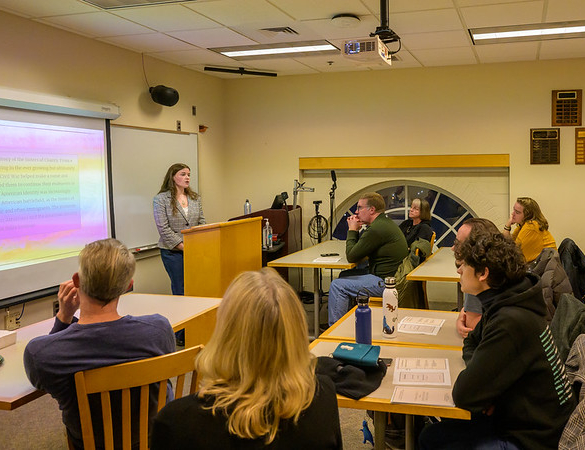
Last Name, First Name | Project Title | Project Abstract | Program | Mentor | Date | Time | Location of Presentation | |
|---|---|---|---|---|---|---|---|---|
| Ackerman, Luka | Exploring the potential of P450 BM3 in electrocatalytic reductive dehalogenation of long-chain halogenated compounds | The sheer amount of wastewater generated by the pharmaceutical and agricultural industries adds up to over 380 trillion liters, with a large portion of this containing deleterious halogenated compounds including pesticides and personal care products. As a result, researchers have utilized a variety of methods to filter out or dehalogenate these compounds in order to reduce the harm they risk to the environment and human health. Using the natural ability of P450 enzymes to reductively dehalogenate compounds is one such method which has previously been explored, however this has been almost exclusively done on smaller halogenated compounds. To expand the potential of P450s to be used in the reductive dehalogenation of larger halogenated compounds, P450 BM3 was explored due to its large active site, and a variety of mutants were computationally analyzed to determine the ability to bond to one such long-chain halogenated compound. In addition, methodology for experimentally determining the ability of BM3 to reductively dehalogenate 1-bromooctane was devised for future experimentation. | Chemistry & Biochemistry | Dr. Yunling Deng | Monday, May 4 | 9:30 AM | Goodpaster Hall 117 | |
| Ahlquist, Emily | Perspective Colors | Color surrounds our everyday lives from smell, taste, fashion; we cannot escape it. In her series, Emily would explore the concept of color and how our interactions with the world shapes our perceptions and identity. She became interested in the concept loosely as a teenager, but that interest grew after exploring topics of color theory, art therapy, fauvism art movement, and other color-related discussions and observations. Color is used in our identities, both intentionally and subconsciously. To explore this topic deeper, all five muses were presented with a color by random and asked to state the first thing that came to their mind – whether it be a smell, sight, personal or cultural moment; and all answers were diverse and personal. Each asymmetrical portrait is posed in a natural state that revolves around a singular, vibrant color palette. This could not have been completed without the supply of mixed-medium materials: watercolor for the wash and abstraction lines; acrylic and alcohol markers for color and value blocking; and colored pencils for detailing. Even though these are realistic portraits, the detail centers around the focal point of the face, while the necks, hair, and accessories are erased and drawn over with abstract lines. Viewers are invited to observe the expressions and create their own interpretations. An extensive researh surrounding color in our world and how our identities are shaped by it. This explores color through everyday lenses from personal, social and cultural construct to how it consciously or subconsciously shapes our identities for the better ot the worse. | Art | Prof. Tristan Cai | Monday, May 4 | 9:50 AM | Montgomery Hall Upper Commons | |
| Anderson, Morgan | Delivery Mode and the Neonatal Microbiome: Implications for Immune Function and Early-Life Health | Early life is a critical window for the gut microbiome and immune system development. Delivery mode is a major component in shaping initial microbial exposure, where vaginal birth promotes colonization via maternal microbes and C-section deliveries are associated with delayed and altered microbial patterns. This literature review examines how these early differences influence neonatal development and long-term health outcomes. While studies link early microbiota to vaccine responses and disease risks, these relationships are still mostly associative and influenced by confounding variables such as antibiotics and feeding practices. Evidence is increasingly suggestive of the idea that microbial function, rather than composition alone, plays a key role in immune system development. Overall, delivery mode impacts early microbial colonization, but its long-term clinical significance still remains uncertain. | Biology | Dr. Abby Beatty | Monday, May 4 | 9:00 AM | Schaefer Hall 106 | |
| Aso, Jaedon | The Relic | The Relic is a psychological science-fiction short film that explores how internal emotional states shape the perception of external environments. Rather than presenting space as a neutral setting, the film constructs environments that function as extensions of the mind, responding to memory, tension, and uncertainty. The project is driven by an investigation into the relationship between perception and reality, questioning whether what is experienced as external is in fact shaped by internal conditions. Through minimal dialogue and an emphasis on atmosphere, the film relies on visual and auditory elements to communicate its themes. Lighting, spatial design, and sound are used to create a sense of instability and psychological pressure, positioning the environment as an active participant in the narrative. The central object, the relic, operates as both a visual and conceptual anchor, symbolizing confrontation with internal states rather than an external force. Created using Unreal Engine 5 and DaVinci Resolve, the project incorporates over 100 motion-captured animations and more than 10,000 frames. The Relic demonstrates how digital tools can be used to construct immersive, emotionally driven experiences that prioritize perception, atmosphere, and psychological depth. | Art | Prof. Tristan Cai | Monday, May 4 | 3:30 PM | Montgomery Hall Upper Commons | |
| Atta-Poku, Afua (A-fee-a) | His Thermodynamic Triptych | English | Dr. Karen Anderson | Monday, May 4 | Panel I: 9:15-10:30 AM | Daugherty-Palmer Commons (DPC) | ||
| Babylon, Morgan | Evolving histories: Portrayals of the Modern Civil Rights Movement in The American Pageant Textbook from 1956 to 2025 | This study analyzes the evolving portrayal of the Modern Civil Rights Movement in The American Pageant: A History of the Republic textbook from its 1956 edition to the 2025 edition. By examining the frequency and depiction of key figures, organizations, and racial groups, this research traces shifts in historical narrative. Early editions largely omitted or minimized the contributions of Black activists and organizations, focusing instead on political leaders and legislative achievements, often framing the movement as a story of national moral progress. Later editions, influenced by evolving historiography and societal demands for inclusivity, have increased mentions of Black actors and grassroots activism. However, the analysis reveals persistent limitations, including the underrepresentation of women and a tendency to present a simplified, “us” narrative. This research highlights how textbook content is shaped by political pressures and cultural priorities, ultimately influencing how future generations understand the complexities and ongoing legacy of the Modern Civil Rights Movement. | Educational Studies | Dr. David Morris | Tuesday, May 5 | 1:30 PM | Dean Learning Commons 214 | |
| Beary, Lee | Communicative Consumption | This project uses data from the Colonial Encounters Project to examine the assemblages of tin-glazed earthenware recovered from features at two high-status late 17th- to early 18th-century sites in St. Mary’s County, Maryland: the Van Sweringen site (18ST1-19), an inn in St. Mary’s City catering to high-status clientele; and Mattapany (18ST390), the plantation estate of Governor Charles Calvert and his descendants and the location of the colonial magazine. The examination of these assemblages intends to identify patterns in tin-glazed earthenware distribution and decoration and to interpret those patterns in terms of the roles and meanings of the ware to its users, with a focus on the process of constructing and communicating status. | Anthropology | Dr. Julie King | Tuesday, May 5 | 10:45 AM | Anne Arundel Hall, Blackistone Room | |
| Boboshko, Ella | We Left a Trace | As a double-major in Environmental Studies and Art, Boboshko has always found beauty in nature. Outdoor landscapes frequently influence her work, making topics of conservation and environmental education a natural theme in her practice. The sheer volume of man-made products and trash that find their way into natural spaces is not just an eyesore; it actively disrupts the ecosystems it invades. This leads to an important outdoors concept: ‘Leave no trace’, or leaving natural areas as they were when you found them—or preferably better than how you found them. Boboshko's sculpture is built entirely from objects collected over a single school year — gathered from sidewalks, lawns, parking lots, shorelines, drainage ditches and more. Plastic bottles, drink cans, glass shards, mirror fragments, food wrappers, straws, plastic cutlery, medication bottles, charging cords, discarded wood planks, fishing wire, and a bicycle dredged from the St. Mary's River form the physical body of this work. Concentrated into a single form, these objects become overwhelming — forcing viewers to face the scale of what accumulates in just one year. This work is not an abstract argument about pollution. It is physical evidence of it. The objects in this sculpture were already out there. They still are. | Art | Prof. Tristan Cai | Monday, May 4 | 1:05 PM | Montgomery Hall Upper Commons | |
| Boehm, Raven | Understanding Querents | Raven Sky Boehm utilizes both her skills her in digital art and as well as her love for mixed media to tell a story of introspection between different ways of life as well and poses the question of whether people are in control of their own destiny or is fate predetermined. The series follows the perspective of The Fool and his journey to bring his village out of financial ruin due to the continuous war which spreads between four surrounding kingdoms. The dioramas which stem from the beginning of his journey where he leaves the comfort of his woodland village to an agreement with his two mentors who agree to aid him on his journey to get involved in the chaos around him without any knowledge to how or what’s going on in the world beyond the comforts of his village. The main characters consist of the Fool, the Magician and the High Priestess and how their past influences their journey now. Through these characters and the mixed media worlds they are encompassed by rather addresses issues such as the conflicts with economy during war, how society integrates religion into control, and what power an individual can hold versus what a community has power over. | Art | Prof. Tristan Cai | Monday, May 4 | 2:20 PM | Montgomery Hall, Upper Commons | |
| Bonazelli, Gina | Synthetic Investigation of Aza-BODIPY as an NIR-II Fluorophore: Will It Fluoresce Above the Rest? | Metastasis remains the leading cause of cancer-related mortality, underscoring the urgent need for earlier and more precise detection methods. While conventional imaging modalities such as CT, MRI, PET, and ultrasound provide valuable clinical insight, they are limited in their ability to detect small, heterogeneous tumors at early stages. Near-infrared II (NIR-II) fluorescence imaging has emerged as a powerful alternative, offering deeper tissue penetration, reduced photon scattering, and improved signal-to-background ratios compared to traditional imaging approaches. Central to this advancement is the development of small-molecule fluorophores with optimized photophysical properties. This review evaluates major NIR-II fluorophore classes; including cyanine, benzobisthiadiazole, BODIPY, xanthene, and cyano-based systems. After close examination, new found hope is placed onto aza-BODIPY derivatives, an underexplored yet highly promising platform characterized by superior photostability, structural tunability, and efficient donor-acceptor design. Through analysis of molecular design principles, including control of absorption, emission, Stokes shift, and HOMO-LUMO energy gap, this work demonstrates how aza-BODIPY-based fluorophores can achieve high-resolution deep-tissue imaging and multifunctional therapeutic capabilities. Ultimately, these systems represent a compelling direction for next-generation cancer diagnostics and theranostics, with the potential to significantly improve early detection and clinical outcomes. | Chemistry & Biochemistry | Dr. Dan Chase | Monday, May 4 | 2:30 PM | Goodpaster Hall 117 | |
| Brichacek, Maya | Violence in the Francophone World: The Role of the French Language during and after 1994 Genocide Against the Tutsi in Rwanda | This paper will explore the role of the Francophonie in the 1994 genocide against the Tutsi in Rwanda, looking at the issue of responsibility in the face of the violence that happened during the genocide. The Rwandan genocide, which took place from April 7 to July 19, 1994, was led by a Hutu-dominated government against the Tutsi population. During the conflict with the mostly anglophone Rwandan Patriotic Front (RPF), created a further division based on language. To understand how such violence became possible, the paper examines how the social divisions between Hutu and Tutsi were redefined as rigid ethnic identities by outside Francophone sources. The paper views the 'franophonie' not only as a shared language, but as a form of political and cultural influence deeply rooted in Rwandan history, arguing that this influence played a decisive role in shaping international relations. The study suggests that 'Francophonie' served as a pretext to justify French involvement, even as evidence attesting to the planning and execution of the genocide was already available to be seen by the French forces. Finally, the paper examines the events that unfolded in the aftermath of the genocide, focusing specifically on how Rwanda redefined its relationship with the French language and the Francophone sphere. Although some influence persists, Rwanda has gradually shifted toward a different path, both politically and linguistically. | Student Designed: French | Dr. George MacLeod | Tuesday, May 5 | 1:30 PM | Anne Arundel Hall, Blackistone Room | |
| Brown, Jack | Fostering Community Relationships with Nature Through Seed Stewardship | Our project is working to empower people in Maryland to get involved in their communities, specifically through the cultivation of native seeds and attendance to local seed swapping events. We hope to create a user-friendly, fact based, and accessible package for people who want to be involved to gather all of the right information for environmental protection through native plants. This resource will be called the Maryland Seed Swapper Guide (MSSG) and will be available publicly. For more localized involvement, we also plan on planning a campus seed swapping event and informational meeting, which is a continuation of a past student group’s Capstone project. With these efforts, we hope to inspire the community to continue to be involved in environmental restoration through seed stewardship. | Environmental Studies | Dr. Parisa Rinaldi | Tuesday, May 5 | 11:10 AM | Campus Center, Cole Cinema | |
| Bruno, Fladaïna | Dramaturgical Work through Space Girl while House Managing | My presentation will focus on the what I did as the dramaturg for my senior capstone project alongside my classmates. It will explain what I did, how I did it, and what I learned overall from this experience | Performing Arts-Theater | Dr. Diego Villada | 6:00-8:00 PM | Montgomery Hall, Bruce Davis Theater | ||
| Burkhardt, Meredith | The Burden of Gender: A review of Literature and Data on the United States Gendered Apparel Tariffs | Tariffs are a major issue in 2026’s political and economic landscape. This paper intends to draw a correlation between tariff usage and consumption trends across the gender divide to determine whether tariffs disproportionately affect women. Apparel tariffs are specifically used due to their rapid growth across the past two decades and their abundance of gender-specific tariffs. Using data from 2001 to 2024, consumer expenditures, cultural expectations, and labor markets are discussed to determine the effects of tariffs on women in the United States. Overall, women are the primary consumers across the gender spectrum and complete most household purchasing–potential effects on apparel expenditures will likely be felt greatest by women. Economic considerations include women’s ability to equally participate in the workforce and how much of their income goes to apparel, while political considerations include cultural and legislative changes over time surrounding consumption expectations. Aspects for further research include a more thorough examination of tariff rates across garment types and identifying quantitative reasons for women’s garments having higher tariffs. This issue can be remedied through government action and is predicted to increase the economic gender divide without immediate intervention. | Political Science& Public Policy | Dr. Sahar Shafqat | Tuesday, May 5 | 9:00-10:15 (Panel) | Kent Hall 213 | |
| Bushey, Brittany | The Witch and the Arcane Boy | “The Witch and the Arcane Boy” is a hand made pop-up book that focuses on a study for how illustrations can tell a story in another perspective. It is understanding how illustrations can help define words in another language of understanding what a story could be about. I wrote a story about a girl who happens to be a witch and has to leave her home behind, due to the witch hunts and society seeing her as a threat and disgrace to their kind. Fast forward to the 1980’s we are introduced to another character, a boy who is also a reject to his own society and is treated poorly, and likes to seek revenge on the town who has taunted him and his family, until he meets the witch, who happens to help him in the end. The story I wrote is based on folk tale stories, and gothic literature. As an Art Major and creative writing minor, I enjoy learning to write new stories everyday, while also providing illustrations that help support the themes, and elevate the story even further for how envision it to be about. | Art | Prof. Tristan Cai | Monday, May 4 | 3:45 PM | Montgomery Hall, Upper Commons | |
| Cannavo, Gabriel | Models and Manipulatives in Math Classrooms | This paper will discuss various types of modeling and manipulatives that can be used in classrooms, with a particular focus on middle school. The intent of the paper is to be a call to action, bringing attention to math pedagogy and the importance of having these more physical aspects in math classrooms. There are several lesson plans with models to go with them so that teachers can understand and implement these models regularly. I will also be using my experience as an educator to frame this paper as I discuss various issues I see within the current system. | Mathematics & Computer Science | Dr. Susan Goldstine | Monday, May 4 | |||
| Carroll-Gavula, Aoife | Susan's Adventure | Susan’s Adventure is a digitally illustrated children’s book. The inspiration to create this piece comes from Carroll-Gavula’s love of and passion for sharks and shark conservation. Sharks have been an interest of the artist for many years and they are frequently depicted in popular media as aggressive, bloodthirsty animals. Overfishing and targeted killings have led to a decline in shark populations, endangering both them and the ocean ecosystems they inhabit. Through this work, Carroll-Gavula hopes to expand and change the common misconceptions that the world has about sharks. The central plot of the book is about an anthropomorphized shark's adventure to find a friend. She travels around the ocean and interacts with many different sharks until she finds one to call her her very own chum. Printed in-color by Leonardtown Printing press, the children’s book Susan’s Adventure seeks to engage readers with bright colors and stylized illustrations, while exploring themes of friendship, resilience, and exploration. | Art | Prof. Tristan Cai | 1:20 PM | Montgomery Hall, Upper Commons | ||
| Carven, Bridgette | Insights to Pathological and Physiological Calcification: Implications for Understanding Vascular Calcifications | Pathological calcification is a complex process which requires an interdisciplinary approach to be studied, characterized and fully understood. The complexity of the processes has complicated unraveling the calcification mechanism(s), and therefore appropriate methods of treatment are unclear. My aim to analyze and identify these complications, explain areas of confusion, clearly outline several potential treatments, and bring overall awareness that vascular calcification should be viewed as a biogeochemical process. Mineralization of soft tissues is incredibly harmful, especially in vascular tissue, and therefore understanding the mechanistic roots will likely lead to improved medical treatment. | Chemistry & Biochemistry | Dr. Geoff Bowers | Monday, May 4 | 9:00 AM | Goodpaster Hall 117 | |
| Catanzaro, Kyle | The Effect of Institutional Investors on Housing Affordibility | Housing affordability is a pressing issue facing many Americans in today's economy. This study inspects if large scale institutional investment contributes to rising home and rental prices at the U.S. metropolitan level. A panel dataset was constructed for 91 metropolitan statistical areas from 2015 to 2025, using housing market, general economic, and firm-level information derived from publicly available databases and filings. A difference-in-differences (DiD) style regression framework was used to estimate the effect of institutional investors on MSA’s impact on housing and rental prices, while controlling for local economic conditions and housing market activity. The results indicate that institutional investor presence correlated with higher home values, rental prices, and median sales prices. An additional event study was conducted to assess the effects over time, which reveals that price growth accelerates prior to entry and stabilizes afterward, suggesting that institutional investors may both respond to and temporarily amplify existing market trends. Overall, the evidence suggests that institutional investors may contribute to short-term price pressures at the local level, but are unlikely to be the primary driver of broader housing affordability challenges. | Economics & Business Administration | Dr. Peter Wang | Monday, May 4 | Panel II: 11:30 AM-1:00 PM | Kent Hall 222 | |
| Cleaver, Joanna | Connection to Land: Local Black and Indigenous Narratives | Traditional Ecological Knowledge is observational, generationally transmitted, and acknowledges the interconnectedness between humans and the rest of the natural world. Suppression of traditional lifeways and disregard for the perspectives of Indigenous and black populations are included in Maryland’s violent history of colonialism. This project highlights narratives which have not been valued, utilizing mixed inductive-deductive qualitative coding of twelve black and Indigenous oral histories collected by the Accokeek Foundation. Mother Earth was important to many interviewees in her role as teacher, sustainer, and connector. Themes related to the environment, shared through childhood memories, family stories, and personal reflections, highlighted the importance of community, knowledge transmission, and conservation. Resource use was grounded in both practicality and respect for the natural world, as well as enjoyment from practices such as fishing or hunting. Sharing these perspectives amplifies the voices of tribes who have been fighting for visibility, such as the Piscataway, and helps readers see that connecting to the land matters. Expanding our understanding of the natural world beyond the contemporary Western paradigm positions us to be more empathic community members and better face the crisis of global climate change. | Environmental Studies | Dr. Parisa Rinaldi | Monday, May 4 | 10:10 AM | Campus Center, Cole Cinema | |
| Cooke, Lexie | Cultural Preservation in the Face of Climate Displacement (Climate Affect) | Climate change and sea level rise are increasingly threatening coastal communities and forcing some residents to relocate. This project explores the question, How can the culture of a place be preserved if its community members have to move away? We focus on island communities in the Chesapeake Bay, specifically St. George’s Island, which have experienced significant flooding, erosion, and land loss. Our research combines archival sources and oral history interviews to examine both past and recent experiences of displacement. Archival materials document patterns of environmental change and migration, while interviews provide insight into how former and current residents maintain cultural identity and connection to place. These findings, along with our individual research, are compiled into a literature review that situates our case studies within broader discussions of climate-related displacement and cultural preservation. To share our research tangibly, we are creating an immersive art installation for the Climate Affect event. Presenting archival materials and personal narratives through an artistic medium allows audiences to engage with these stories emotionally. By experiencing these histories in an immersive way, viewers are encouraged to form personal connections to the communities affected and gain a deeper understanding of the cultural consequences of relocation due to environmental challenges. | Environmental Studies | Dr. Parisa Rinaldi | Monday, May 4 | 9:50 AM | Campus Center, Cole Cinema | |
| Cooper, Isabella | Space Girl: Designing Sound | This project details the process that went into designing sound for a mainstage production of the play Space Girl by Mora V. Harris. | Performing Arts-Theater | Dr. Diego Villada | Monday, May 4 | 6:00-8:00 PM | Montgomery Hall, Bruce Davis Theater | |
| Cooper, Ryan | Communication in Marine Science: An SMP in Propagating Knowledge | This project aims to demonstrate the importance of scientific communication by creating a collection of journalistic articles on various research subjects within marine science. The proper communication of research, data, and statistical findings is extremely important for the propagation of scientific knowledge. Supporting literature has underlined the importance of scientific communication, established the occurrence of drops in scientific funding, and outlined issues relating to accessibility, readability, and confidence in scientific research. This project will address these problems by creating pieces of writing that transcribe the complex science behind research investigations for consumption by the general public.This project will target local researchers and projects to interview with the goal of learning about their background, work, motivation, and approach. Some main points of these interviews include: the methods of the investigation, why the research is important, what larger global themes it is tied to, what the findings were, and what steps were taken to initiate the study. I want to learn about the science of the project, but also the story around it, and so I will aim for a discussion-style interview. The articles will be from information gathered directly from the interview, and will tell the story of the research. | Marine Science | Dr. Matthew Breece | Monday, May 4 | 2:30 PM | Schaefer Hall 106 | |
| Covington, Lillee | The Persistent Maternal Health Crisis Among American Indian and Alaska Native Women | Maternal mortality among American Indian and Alaska Native (AI/AN) women in the United States remains one of the most severe health disparities. This paper argues that the crisis is driven by systemic factors, including colonization, underfunding of the Indian Health Service, racial misclassification in the data, and the loss of Indigenous birthing traditions, not individual behavior. Drawing on research, policy analysis, and community case studies, the paper shows how structural inequality shapes maternal outcomes. Comparisons with countries like Australia, Canada, and New Zealand highlight alternative approaches, while Indigenous led programs in the U.S. demonstrate effective, culturally grounded solutions. The paper concludes that solutions already exist, but meaningful progress depends on stronger political commitment to funding, policy reform, and Indigenous led healthcare systems. | Political Science& Public Policy | Dr. Todd Eberly | Monday, May 4 | 10:30-11:45 (Panel) | Kent Hall 213 | |
| Crook, John | Identity and Digital Being: Gender and the Ethics of Online Spaces | My St. Mary’s Project explores how the social construction of gender reinforces gender norms that permeate digital spaces and discourse. I articulate how, while the internet is neither oppressive nor liberatory in its own right, the internet has acted as an accelerant for existing forms of oppression and has produced new forms of oppression. I also delve into how one might come to reinforce one's own oppression by holding onto certain identities, such as hyper-masculine identities, in ways that reproduce the initial point at which one is oppressed. I consider this “wounded masculinity” to be a hallmark of modern gendered embodiment in the digital age. In light of this, I advocate for what I describe as cyberfeminist consciousness, an awareness of the ways that digital technologies impact gender identities and the epistemic and moral significance of that consciousness. This consciousness sheds light on the important connections between physical, corporeal experiences and digital realities and vice versa, allowing feminists to attend to these emerging forms of oppression as societies become increasingly digitalized. | Philosophy | Dr. Michael Taber | Monday, May 4 | 11:10 AM | Montgomery Hall, Room 151 | |
| Cumber, Alex | I Love You, But I Don't Understand You / | Art | Prof. Tristan Cai | Monday, May 4 | 9:35 AM | Montgomery Hall, Upper Commons | ||
| Damte, Ruth | Education as Liberation: An Analysis of Oppression in America and the Bounds of Resistance | The American nation, the quintessential democracy, is one that was built upon the unjust imprisonment and forced labor of Africans. The Transatlantic Slave Trade trafficked and transported millions of Africans throughout the course of four centuries. Slaves were physically, emotionally, and psychologically abused in a way that has deeply impacted African Americans today. While slavery has since been abolished, socio-economic and other racial obstacles are still heavily intertwined with the average African American’s experience throughout the country. This project will draw a clear connection between the abolition of slavery and the creation of Jim Crow laws as well as other means of oppression including legally compelled discrimination, Black voter disenfranchisement, mass incarceration, and lack of educational attainment, which are all mechanisms of further oppressing African Americans. The paper will then analyze the nuanced emotions of fear and anger throughout the Black experience through a philosophical perspective, with attention to its oppressive nature and anger as a catalyst for justice reform. The project will propose educational attainment as the means of achieving liberation for African Americans throughout the country, as well as policy recommendations to make education more accessible to members of marginalized communities in an attempt to equip the people of these communities with the repertoire to be able to understand their obstacles and mobilize by being aware of the mechanisms that are working tirelessly to further their oppression and exploitation. | Political Science& Public Policy | Dr. Diana Boros | Monday, May 4 | 12:00-1:00 (Panel) | Kent Hall 213 | |
| Degner, Thomas | Views Within France and Abroad on Napoleon's One Hundred Days | Historically the historiography of the Hundred Days has been dominated by the examination of the military campaigns of Waterloo, however the reactions and narratives built and fought over in newspapers and memoirs are just as important as what actually happened. By examining newspapers from France, the UK and the US, there is an examination of the narratives and reactions on Napoleon's Hundred Days. This project explores the role that newspapers and other first hand accounts can have on the lasting narrative and the creation of the Napoleonic Legend and how the Hundred Days plays into that lasting narrative. | History | Dr. Christine Adams | Monday, May 4 | 9:00 AM | Kent Hall 120 | |
| Dodson, Clara | Bodies and Burlesque | This St. Mary’s Project is an ethnographic study from the perspective of a member of the SMCM Burlesque Club. The purpose of this study is to to interrogate how members of the club affirm, explore, and create their identities through burlesque performance, and how this process impacts their overall self-perception—both inside and outside club spaces. The SMCM Burlesque Club is dedicated to the exploration of body positivity, body neutrality, and the creation of safe, inclusive, spaces for self-exploration. My analysis focuses on both why individuals on the St. Mary’s campus are drawn to the Burlesque Club, and how these individuals use the club structure and ideology to create new ways of being that privilege self-actualization rather than societal expectations or normatives. Through quantitative survey data, intensive participant observation, and ethnographic interviews, members of the club share how the Burlesque Club (participating in weekly meetings, dance practices, showcases, etc.) has influenced the way they view and express their developing identities. | Anthropology | Dr. Brian Smithson | Monday, May 4 | 9:00 AM | Anne Arundel Hall, Blackistone Room | |
| Douglas, Eve | Growing Through Darkness: Tree Burial as a Modern Death Practice | My project explores tree burial’s role in healing one’s relationship with mortality and reconnecting with the natural world. Simply put, tree burial is an eco-friendly burial practice, which involves wrapping the body in a biodegradable material and burying it beneath a tree to support its growth, thus becoming a tree post-death. I argue that much of the modern world has a toxic relationship with death, as well as with the environment, and advocate for tree burial as a remedy for these existential and ecological crises. Tree burial is a death ritual that reveals the security to be found in one’s mortality and one’s fundamentally interdependent relationship with the natural world. | Philosophy | Dr. Brad Park | Monday, May 4 | 11:50 AM | Montgomery Hall, Room 151 | |
| Dyer, Mia | Transformative Experiences: Book Arts as an Interpretive Tool for the Environmental Movement | With all of the threats facing our natural environment today, it is essential to properly engage and educate people towards attitudes of resilience and care. As the modern environmental movement has grown, art and creative work have become central to environmental pedagogies due to their unique engagement with complex emotions arising from environmental upheaval. Book arts, specifically, brings audiences into a dialogue with artists by requiring interaction. Through this interaction, book arts offer opportunities to reinforce key elements of modern environmental education such as agency and hands-on learning. Through the creation of original works, this project explores the role of artist as teacher and the opportunities that arise from working in this highly interactive, experience-based medium. Through a process of research, practice, and interaction, this project explores book arts as a tool for environmental interpretation by focusing on themes of change, exploration, and bioregionalism. Four activity-based, copiable zines were developed to accompany each art book, allowing key interactions to extend past initial viewings and reinforcing the relationship between artist-author and reader-viewer. These art books emphasize dialogue, emotional literacy, and creative problem solving as essential skills for environmental work and showcase this artform as a uniquely appropriate approach to environmental interpretation. | Environmental Studies | Dr. Barry Muchnick | Monday, May 4 | 8:30 AM | Campus Center, Cole Cinema | |
| Ejekwu, Ugonna | An assessment of different farming practices in the promotion of rhizobia bacteriophages | White clovers are beneficial plants to the environment, contributing to the fixation of Nitrogen in the soil and the pollen availability, necessary for crop production. Within the rhizosphere of these plants reside Rhizobium leguminosarum, a mutually beneficial bacterial species that assists in the maintenance of the soil environment and the nitrogen fixation capabilities of the plant. However, the influence and abundance of bacteriophages selecting for these species in Southern Maryland is not fully understood. In this experiment we used growth techniques and phage identification procedures to detect and quantify the population of bacteriophages within the rhizosphere of clover plants grown in different soil samples. | Biology | Dr. Lorena Torres Martinez | Monday, May 4 | 9:20 AM | Schaefer Hall 106 | |
| Emerson, Zach | Absurd Words for an Absurd Time: Writing in an Age of Change | This project is a collection of creative pieces intended to discuss the issues plaguing the graduating classes of this year and the future, namely the rise of artificial intelligence, a struggling job market, and a pervasive sense of angst towards the future. All of this social commentary, however, is to be delivered in the form of comedic writing, whether it be parody, satire, pastiche or wit, in an attempt to alleviate the stress and worry of dealing with a rapidly hostile world. It is the goal of this project to figure out whether or not such a comic lens is appropriate for such a serious discussion, and how people like myself can best handle the chaos of entering into the "real world." | English | Dr. Brian O'Sullivan | Monday, May 4 | Panel III: 2:00-3:15 PM | Daugherty- Palmer Commons (DPC) | |
| Engelstad, Haley | The Lights Along the Shore | The Lights Along the Shore is a process based series of multi-plate woodblock prints of U.S. lighthouses. Depicting Old Point Loma lighthouse in San Diego California, Lime Kiln Lighthouse on San Juan Island Washington, Bodie Island Lighthouse in Nags Head North Carolina, Point Lookout Lighthouse in Scotland Maryland, and Cape Hatteras Lighthouse in Buxton North Carolina, each has a unique character that tells of local histories and the changing of America’s coastlines. Working from mostly daytime reference photos, the artist has translated these images to create nighttime depictions of each lighthouse through the medium of woodblock. For each lighthouse four or five plates were carved including an initial black “key block” and several color blocks, which when printed in a specific order create the final image. To create a sense of realism, variations in color were based on environmental conditions even depicting different levels of star constellations visibility based on light pollution. During this process 22 woodblocks were carved and printed for a total of 11.6 square feet of carved image. Engelstad chose multi-plate woodblock printmaking because of the quirks of the once living wood and challenges of the medium, requiring three-dimensional thinking, effort, and time. | Art | Prof. Tristan Cai | Monday, May 4 | 2:05 PM | Montgomery Hall, Upper Commons | |
| Fabey, Aislin | Play-in-a-Day: Expanding Environmental Stewardship With Arts-Based Pedagogy | Education is to equip students with the ability to succeed upon independence, for them to feel confident and capable in seeking to accomplish their goals, cultivating good that equips ongoing momentum for positive change. How we engage students is essential, as this connects them to explore their personal meaning to content presented within the classroom. This paper discusses how multi-modal learning increases student engagement, and cultivates accessibility to environmental education. Live experiences of arts-based pedagogy as a form of multi-modal learning are presented, detailing case studies from across continents and a case study of the Play-in-a-Day held this spring at St. Mary’s College of Maryland. This is completed to cultivate environmental stewardship by inspiring the facilitation of a future environmental play-in-a-day experience that draws on arts-based pedagogy with multi-modal learning to expand, equip, and encourage students in environmental education. | Environmental Studies | Dr. Parisa Rinaldi | Monday, May 4 | 11:30 AM | Campus Center, Cole Cinema | |
| Faller, William | Testing Novel Technology to Monitor Oyster Reef Expansion | Due to the collapse of the wild population of the Eastern Oyster in the Mid Atlantic region of the United States of America, significant investments have been made towards population restoration. The St. Mary’s River in the state of Maryland, the site of a major oyster restoration project, was selected as the study region for this project. Monitoring and management of these restoration projects can be costly and labor intensive, so this study explores a low cost alternative monitoring system utilizing Side Scan Sonar (SSS) technology. It was found that reliable identification of bottom composition was possible using SSS, and a sediment pattern, which appears in the shallow water shore region, was identified as a likely candidate for oyster expansion. Although limited dive sampling restricted further validation, preliminary size comparisons indicate variability in oyster populations, opening a pathway to future work. Overall, this study demonstrates that SSS is a reliable and efficient method for mapping benthic habitats and monitoring oyster restoration. The identification of transitional zones as potential indicators of reef growth provides a promising direction for future research, with implications for improving large-scale restoration monitoring efforts. | Marine Science | Dr. Matthew Breece | Monday, May 4 | 2:10 PM | Schaefer Hall 106 | |
| Fenwick, Ashley | Gut Analysis of Blue Catfish in the Potomac and St. Mary's River, MD | Blue catfish (Ictalurus furcatus) are an invasive species that originate in river basins in the southern and central areas of the United States. They have since invaded the Chesapeake Bay watershed after being introduced into the James River, Virginia for trophy fisheries. They have now reached nearly all major tributaries in the watershed such as the Potomac and St. Mary’s Rivers while continuing to expand in population. Other than being omnivorous and opportunistic feeders there is limited knowledge about the diet of the Blue Catfish in these rivers. The purpose of this study was to determine what the Blue Catfish are consuming in Southern Maryland rivers. To observe the diet of the Blue Catfish a gut analysis is being conducted through dissection. Prey items removed from the digestive tract are being identified to form a broad scale diet analysis. Counter to our hypothesis, there was no significant difference between size class dependent on prey weight. It is important to understand the diet of the Blue Catfish to protect native species, the environment, and the economy. | Marine Science | Dr. Matthew Breece | Monday, May 4 | 1:30 PM | Schaefer Hall 106 | |
| Forgione, Jasha | All in a Name: The Relation of Urban Development to the Retention of Indigenous Place Names Within Waterscapes | The project “All in a Name: The Relation of Urban Development to the Retention of Indigenous Place Names Within Waterscapes” seeks to identify and understand the relationship between levels of development and the retention of Indigenous names for waterways. Through patterns of both historical colonialism and modern urbanization, how do the two correlate with each other? Do these patterns create a statistical significance in how likely a waterscape retains its Indigenous name depending on the level of urbanization in an area? This study will use both a literature review and survey to understand the relationship between urbanization and one’s personal connection to water. Through a hydrosocial lens, we argue that different colonization histories across the United States craft different patterns of retention, and through waves of urbanization, Indigenous names are eventually eradicated in favor of names that highlight an area’s founding by Europeans. My research finds that waterways in rural areas tend to retain their Indigenous names, whereas urban areas do not follow this pattern. Additionally, the experiences of people who live in rural areas tend to be characterized by a more personal connection to water, highlighted by cultural significance. Urban residents see water in a more functional way, seeing water that is contextualized by the infrastructure that carries it. | Environmental Studies | Dr. Brian Smithson | Monday, May 4 | 10:30 AM | 10:30 AM | |
| Frederick, Corinne | Environment in Pluriverse: Educator Approaches to Evolving Pedagogies | This study investigates how environmental educators in formal and informal contexts guide students in developing critical consciousness, agency, and environmental reciprocity. Through qualitative interviews with educators in the Chesapeake Bay region and Washington state, this study documents the constraints imposed by the institutional structure of formal education on transformative pedagogy. A gradual paradigm shift towards place-conscious education co-created by students is being progressed by the many motivated educators and administrators who continue to act despite constraints posed by an institution of education produced by and reifying a Western, universalizing epistemology and a normative projection of humanity. They enact strategies of targeted, broad-access, beginning education with young students, and centering reciprocity, social action, and student voice in contextualized pedagogy. Their actions reflect a movement toward a pluriverse of knowledge and away from singular, Western epistemology; a movement that is far easier in informal rather than formal settings. The question arises whether alternative pedagogical approaches to environmental education are enough to affect a positive shift in the environmental ethic of the United States, or if we must galvanize the failing traditional system to make use of its amplifying power. | Environmental Studies | Dr. Parisa Rinaldi | Monday, May 4 | 12:10 PM | Campus Center, Cole Cinema | |
| Freeman, Jayda | The Dragon's Nightmirror | The Dragon’s Nightmirror welcomes viewers into a reimagined Arthurian legend with digital illustrations that depict ancient magic, fractured lineage, and the tension between destiny and identity. Presented as a series of illustrated scenes and dialogue on an interactive website, the story begins with a Yuletide celebration accompanied by a gift of an ancient golden mirror. Throughout the story, the central character emphasizes the struggle to reclaim oneself when outside forces alter the mind and body. The attempt at restoring lost humanity requires the intervention of a determined wizard, Merlin, and the power of nostalgic memories. The digital format allows for the story to unfold gradually as a digital comic book. The illustrations combine medieval appearance with contemporary fantasy. Light, shadow, and texture show the contrasts between enchantment and peril, memory and illusion. These visual choices create the shift between illusion and reality by showing the internal conflict between humanity and monstrosity. The overall message suggests that change, while often unsettling, can lead to growth and renewed understanding. Traditional ideals are combined with modern elements to underline the idea of approaching a subject with curiosity and connection, and can cause stereotypes held by a society to change. | Art | Prof. Tristan Cai | Monday, May 4 | 10:20 AM | Montgomery Hall, Upper Commons | |
| Gaalswyk, Davis | By the Rivers of St. Mary’s We Sat: Negotiating Identity and Survival in Transnational Religious Communities of Southern Maryland | The increase in immigration to the United States has created transnational enclaves across the country that manifest themselves in a variety of ways, often in the form of organized religion. The goals of this research were to explore the effect that religious communities have on the senses of identity and belonging of Spanish-speaking communities within the rapidly shifting demographic landscape of Southern Maryland, and to analyze the responses of said communities to state violence and social stigma surrounding immigrant groups. This research was conducted using participant observation and semi-structured interviews at two different bilingual churches in the Southern Maryland area, one Catholic and one Baptist, across a total period of seven months. Major findings revolved around two different but interrelated strategies adopted by each church as survival mechanisms in the current political climate. The first of these two strategies was focused on building an insular community via the use of traditional rites and rituals as a means of enforcing sociospiritual boundaries between insider and outsider, whereas the second involved creating a hybrid space to facilitate assimilation while preserving as much of the cultural identities of its congregants as possible. Ultimately, transnational religious communities are sites where identity is perpetually negotiated in accordance with the power structures within which they exist. | Anthropology | Dr. Brian Smithson | Monday, May 4 | 10:00 AM | Anne Arundel Hall, Blackistone Room | |
| Gambrell, Haley | The Economic Impacts of Ethanol Plant Siting: A County-Level Analysis of GDP and Spatial Spillovers | This paper examines the relationship between proximity to ethanol plants and county-level economic performance in the Midwestern United States. While prior research has focused primarily on agricultural outcomes such as land values and farm income, this study evaluates macroeconomic effects using county-level gross domestic product (GDP) as a measure of economic activity. Using cross-sectional data from 1,176 counties in the Petroleum Administration for Defense District 2 (PADD 2), the analysis employs an Ordinary Least Squares regression framework with both GDP and distance to the nearest ethanol plant in logarithmic form. The model includes a continuous distance measure and a host-county indicator, along with controls for population density, dependency ratio, educational attainment, and corn production. The results indicate that counties hosting an ethanol plant experience significantly higher GDP, suggesting strong localized economic benefits through direct production, supply chain linkages, and consumption. However, greater proximity to ethanol plants is not associated with higher GDP in surrounding counties; instead, counties farther from ethanol plants tend to exhibit higher economic output. This pattern reflects underlying regional economic structure. Overall, the findings suggest that ethanol plant siting generates concentrated, place-based gains rather than widespread regional spillovers, highlighting limits of biofuel policy for broad rural development. | Economics & Business Administration | Dr. Amy Henderson | Tuesday, May 5 | Panel I: 9:00-11:00 AM | Kent Hall 222 | |
| Garvin, Indigo | A Collection of Self | A Collection of Self is an exploration not only into physical objects that the artist has collected over time, but the types of objects they find valuable. The piece invites the viewer to an emulation of the artist’s bedroom, a commonly vulnerable and personal space. The setting is packed with personal collections of pre-owned objects and previously created artwork. In this environment, they raise the question of what forms of art are considered valuable, and how historical and cultural standards influence what is or is not taken seriously.Ranging from cardboard, to satin ribbon, to paper lace doilies, Indigo takes a variety of materials typically considered trash or disposable and juxtaposes them with illustrations on more traditional materials. Although her original purpose of upcycling stems from the objects’ availability and abundance, they develop the overall concept of how consumerism influences value in material. With consideration, the environment expands through its incorporation of found objects that are usually not considered to be of value in a traditional artistic perspective. Including but not limited to crocheted blankets, children’s toys, and upcycled furniture, they are given a new context in the curation of the setting. | Art | Prof. Tristan Cai | Monday, May 4 | 11:00 AM | Montgomery Hall, Upper Commons | |
| Gibson-Thoele, Tessa | Growing Minds: Implementing Hands-On Agricultural and Environmental STEM Education in K-5 Title I Schools | Many students find hands-on classroom activities to be their most engaging early educational experiences. However, these opportunities are often infrequent in Title I schools due to fiscal constraints and rigid adherence to standardized testing mandates. Such systemic limitations frequently prioritize metric-based performance over holistic conceptual understanding. This paper evaluates the integration of Montessori and farm-based education models alongside established frameworks like SNAP-Ed and Farm-to-School initiatives. Additionally, it examines strategies for English Language Learners (ELL), arguing that inclusive pedagogical approaches benefit the broader student population. Central to this study is an analysis of 18 Maryland Science Common Core Standards across elementary grade levels, paired with proposed experiential activities designed to fulfill these requirements. The research also explores how institutional partnerships with local agricultural sites, such as the Kate Chandler Farm, can facilitate these instructional shifts through structured field experiences. Ultimately, the findings suggest that achievement disparities between Title I and non-Title I schools are not a reflection of student or educator aptitude, but are instead products of structural inequities. Addressing these gaps requires a strategic transition from rote instruction toward a rigorous, hands-on curriculum that prepares students for diverse professional pathways. | Environmental Studies | Dr. Barry Muchnick | Monday, May 4 | 11:50 AM | Campus Center, Cole Cinema | |
| Giddins, Ja'Kai | Under Pressure | Under Pressure is an exploration of a charcoal-and-graphite series that analyzes how hypermasculinity is constructed and reinforced in black media and culture. The project examines how identity is shaped by repeated exposure to one's visual expectations, linked to themes of dominance, the pursuit of wealth, and emotional suppression. I approach masculinity not as an inherent trait but as a learned notion shaped by visual representations of culture, particularly in hip hop and on social media. Through high-contrast and monochromatic portraiture, I focus on the tension between external appearance and one's confidence, and on its relationship to internal vulnerability. My subject appears frustrated and in serious emotional turmoil, but is limited to anger as a result of the elements of control shown in different connecting pieces. The use of charcoal and graphite reinforces this contrast, balancing intensity with structure. Ultimately, Under Pressure challenges viewers to reconsider how identity is constructed and the psychological effects of conforming to rigid expectations of masculinity. | Art | Prof. Tristan Cai | Monday May 4 | 12:15 PM | Montgomery Hall, Upper Commons | |
| Glaser, Allison | Tangled Roots: An Exploration of Siblinghood in Literature, Life and Their Intersections | Tangled Roots is a series of creative nonfiction pieces exploring the nature of siblinghood and my relationships with each of my six siblings. It manifested into a collection of fragmented vignettes, rumination and imagined scenarios that come together to ask what it means to be a sibling, to lose a sibling, to watch a sibling change. | English | Dr. Karen Anderson | Monday, May 4 | Panel I: 9:15-10:30 AM | Daugherty-Palmer Commons | |
| Godfroy, Kal | Becoming: On Grief, Hope, and the Nonhuman | Becoming is a poetry collection centered around the convergences between grief, hope, and our relationship with the nonhuman world. The collection follows the speaker’s grief at the loss of their childhood dog, and the way that this grief has seeped into their relationship with the environment around them. The speaker attempts to understand the natural world as an observer before realizing that they are permanently enmeshed, inseparable from the nonhuman, which gives way to hope for a better future. | English | Dr. Karen Anderson | Monday, May 4th | Panel IV: 3:30-4:45 PM | Daugherty-Palmer Commons | |
| Grzymalski, Sadie | To 𝛃 or not to 𝛃: Determining Neural Correlates of Acting via EEG | Acting is a complex process where a person tells a story by taking on a character’s perspective. Acting utilizes many different cognitive tasks all at once, including spatial memory, muscle memory, empathy, and language. However, there has been limited research pertaining to what physiologically happens in the brain while someone is acting. This project aimed to rectify a piece of this research gap using EEG. Actors with over one year of experience had EEG readings taken while they were acting and while they were not. Then, the Alpha and Beta wave frequencies were compared across conditions. Results showed no significant differences in frequency power across conditions. However, this could indicate a dual deactivation/activation associated with acting that occurs across the prefrontal cortex and the precuneus. | Neuroscience | Dr. Liz Leininger | Monday, May 4th | 11:35 AM | Goodpaster Hall 195 | |
| Haddon, Henry | The Political Feasibility of American Democratization | Political Science& Public Policy | Dr. Diana Boros | Monday, May 4 | 12:00-1:00 (Panel) | Kent Hall 213 | ||
| Hager, Margaret | Mean Things Men Have Said To Me | MEAN THINGS MEN HAVE SAID TO ME is a series of digital photographic works, organized in three triptychs, that investigates themes of sexism and harassment through the lens of personal experience. The triptychs are built on quotes men have said to the artist throughout her life. Using self portraiture and a linear narrative she is able to visualize her experiences with harassment and the effects it has on women around the world. Sexual harassment affects around 81% of women and more than 50% of students in grades 7–12. Offensive jokes made by men are frequently overlooked, while the effects it has on women are more often ignored. By disregarding the cause and effects of this behavior, we are allowing this behavior to persist. As a society, I believe that we need to be held accountable for offensive behavior to prevent the normalization of sexual harassment. | Art | Prof. Tristan Cai | Monday May 4 | 11:45 AM | Montgomery Hall, Upper Commons | |
| Haldeman, Bryna | Cultural Preservation in the Face of Climate Displacement (Climate Affect) | Climate change and sea level rise are increasingly threatening coastal communities and forcing some residents to relocate. This project explores the question, How can the culture of a place be preserved if its community members have to move away? We focus on island communities in the Chesapeake Bay, specifically St. George’s Island, which have experienced significant flooding, erosion, and land loss. Our research combines archival sources and oral history interviews to examine both past and recent experiences of displacement. Archival materials document patterns of environmental change and migration, while interviews provide insight into how former and current residents maintain cultural identity and connection to place. These findings, along with our individual research, are compiled into a literature review that situates our case studies within broader discussions of climate-related displacement and cultural preservation. To share our research tangibly, we are creating an immersive art installation for the Climate Affect event. Presenting archival materials and personal narratives through an artistic medium allows audiences to engage with these stories emotionally. By experiencing these histories in an immersive way, viewers are encouraged to form personal connections to the communities affected and gain a deeper understanding of the cultural consequences of relocation due to environmental challenges. | Environmental Studies | Dr. Parisa Rinaldi | Monday, May 4 | 9:50 AM | Campus Center, Cole Cinema | |
| Handler, Ben | Stuck at the bottom of a well | Stuck at the bottom of a well is influenced by multiple disciplines that the artist has studied in their college career. His art is influenced by the media he consumed as a child that left him with a desire to emulate this animated artform in his own style. He hopes to capture the essence of animation that he fell in love with by using exciting movements, bold colors, and easy to look at characters. His love of these animations is also an appreciation for the underlying messages that were often present in these cartoons. His studies of Asian studies and Chinese language lead to him researching Chinese idioms and the lessons that are often accompanied by these idioms. One that stuck out to him in particular was the idiom of the frog who lived at the bottom of a well (井底之蛙). After reading this and other idioms, it seemed like a good fit for the themes of this idiom to be portrayed in the form of a cartoon. This animation is an exploration of the themes of this idiom and what it means to the artist. He connects it to his own experiences and his own thought process as someone who is at a time in his life that is extremely daunting. He believes that the world could use the open-mindedness and appreciation for learning that this animation presents. | Art | Prof. Tristan Cai | 9:20 AM | Montgomery Hall, Upper Commons | ||
| Hanscom, Noah | Origami Constructions: In Multidimension Space | Mathematical origami is a theoretical extension of paper origami where the complex plane can represent an infinitely large piece of paper, and the “folds” of this paper are represented by a set of allowed angles. We study the structure of the set of intersection points between all pairs of angles. This has been well described in 2 dimensions; however, little is known about them in multidimensional space. We determine how an origami set that generates a lattice in three-dimensional space is altered by introducing an additional allowed angle. We also implement an algorithm in SageMath that computes the intersections of pairs of allowed angles from given starting points. The algorithm then computes the projections from the new intersection points back onto the real number line. | Mathematics & Computer Science | Dr. Sara Chari | Monday, May 4 | |||
| Hansen, Samuel | Food Politics in Defining the Colonial Chesapeake | This SMP examines how food functioned as a central force in shaping cultural identities, political authority, economic systems, and conflict. Focusing on key colonial sites such as Jamestown, St. Mary’s, and Kent Island, and how access to and control over agricultural land, fisheries, and riverine networks influenced patterns of settlement, trade, and warfare. It considers histories with both colonial and indigenous focuses, placing them in conversation with one another and primarily drawing on first-hand accounts of European explorers and scholarship focused on or analyzing indigenous histories, alongside concepts like placemaking and foodways. | History | Dr. Kelsey Champagne | 2:30 PM | Kent Hall 120 | ||
| Harrison, William Thomas | Modern Information and Belief Manipulation | Propaganda is one of the strongest forces shaping public belief in modern society. Propaganda operates through psychological mechanisms that utilize identity, morality, group affiliation, and emotional engagement. Along with these mechanisms, propagators take advantage of modern technologies such as AI and social media in order to spread information effectively. The present study examples how different formats of propaganda would affect participants' credibility perceptions, emotional perceptions, attitudes toward the conflict, and behavioral intentions. 100 participants were randomly assigned to one of three conditions, each presenting comparable content about the conflict in Artsakh/Nagorno-Karabakh. It was hypothesized that all conditions would produce significant emotional change but that the professional formats would be considered more credible and trustworthy than the social media condition. The results indicated that media exposure significantly altered emotional states across all conditions regardless of format. No significant difference in message credibility, source credibility, perceived bias, attitudes, or behavioral intentions were found between conditions. Notably, all conditions were rated as significantly credible above the scale midpoint. The findings suggest that the emotional impact of the information, presented by any format, led to the perceived credibility and trustworthiness of the content. This supports the broader literature showing that modern engagement in news has extended trust to social media content. | Psychology | Dr. Libby Williams | Monday, May 4 | 9:55 AM | Goodpaster Hall 195 | |
| Harvey, Georgia | The Effects of Weight-bearing vs. Resistance Training Exercises on Menopausal Women Suffering with Osteoporosis | Osteoporosis is a common condition among menopausal women that reduces bone mineral density and increases fracture risk, emphasizing the need for effective exercise-based interventions. This study compared the effects of weight-bearing and resistance training on bone density, muscle function, and pain/mobility outcomes. Data were obtained from previously published studies, and statistical comparisons (Mann-Whitney U tests and independent sample t-tests) were used to examine exercise interventions in menopausal women. Results showed a significant difference in muscle function between groups, with resistance training producing greater improvements. No significant differences were observed for bone density or pain/mobility. These findings suggested that while both exercise types support osteoporosis management, resistance training may offer greater benefits for muscle function. Exercise interventions remain an important strategy for improving health outcomes in menopausal women. | Biology | Dr. Jordan Price | Monday, May 4 | 9:40 AM | Schaefer Hall 106 | |
| Heckart, Danielle | Seasonal changes in the gut microbiome of Equus caballus | This study investigated seasonal changes in culturable fecal bacterial communities in Equus ferus caballus and evaluated whether horses with Fecal Water Syndrome (FWS) exhibited distinct microbial patterns. Fecal samples were collected from 10 adult horses across two seasonal periods (fall and winter; n = 20). Bacterial populations were cultured using three media types to capture distinct components of the microbiome: blood agar under aerobic conditions (aerobic bacteria), blood agar under anaerobic conditions (anaerobic bacteria), and MRS agar (lactic acid bacteria). MacConkey agar was included to assess Gram-negative enteric bacteria; however, no growth was observed after 24–48 hours, limiting further interpretation. Colony-forming units per gram (CFU/g) were quantified and log10-transformed prior to statistical analysis. Comparisons between horses with and without FWS revealed no significant differences in aerobic (p = 0.517) or lactic acid bacteria (p = 0.833); however, anaerobic populations exhibited greater fluctuations in FWS horses across seasons (p = 0.067). Bacterial populations exhibited high interindividual variability, which may mask consistent seasonal trends at the population level. These findings suggest subtle seasonal effects, with anaerobic communities potentially playing a more dynamic role. | Biology | Dr. Abby Beatty | Monday, May 4 | 10:40 AM | Schaefer Hall 106 | |
| Hess, Anneliese | LGBTQ+ Experiences of Belonging and Discrimination at a Rural University | This study aimed at examining LGBTQ+ experiences with belongingness and discrimination at a rural university. It was hypothesised that LGBTQ+ students would have different scores of belongingness, climate, microaggressions, and discrimination based on their sexual orientation and gender. It was also hypothesised that there would be significant interactions between sexual orientation, gender and race on these scores. To examine this, a survey was created with items dealing with identity, belonging, discrimination, and resources. It was found that there was no significant difference in groups between the scores, and there were no significant interactions between identity factors. Interviews were also conducted to better understand LGBTQ+ belonging and discrimination in regards to school resources. Several themes emerged within the interviews, which were: belonging as acceptance and security, and visibility and shared experience; a large LGBTQ+ population and representation; stereotypes and differences in experience; educational resources; supportive staff; student-led organisations; awareness; and discrimination from social media, student groups, and staff. Overall, while there were no significant relationships, the existence of school resources as a whole provide a sense of safety and therefore belonging for LGBTQ+ students. Addressing more conservative spaces, and improving the process of changing names and pronouns may reduce discrimination. | Sociology | Dr. Katie Hill | Monday, May 4 | 9:30 AM | Anne Arundel Hall, Blackistone Room | |
| Hill, Sarah M. | Paved over Graves: An Investigation of How St. Mary's Cemetery Fought to Rest in Peace | Black American heritage sites were—and still are—often neglected and disrespected by the governments, social groups, and businesses that were supposed to be responsible for protecting them. In July of 1992, a backhoe crudely unearthed human remains while digging sewer lines for new construction—just twenty-five feet from visible gravesites. St. Mary’s Cemetery in Ellicott City’s Turf Valley housing development, is a Black and Irish Catholic burial ground for the formerly enslaved, servants, and workers on Charles Carroll’s Doughoregan Manor plantation. Through the lens of St. Mary’s Cemetery, I examine Maryland’s relationship with the institution of slavery, treatment of Black cultural heritage sites, and presentation of Black narratives in history. This project explains how the story of St. Mary’s Cemetery exemplifies the systematic racism within Maryland’s institutions that led to the neglect and disrespect of Black cultural heritage sites. To rectify such damages, communities and institutions need to portray the narratives of those affected and revitalize these mistreated grounds. By recognizing this site, the community may begin to remedy the historic inequities that plague the modern community by holding those in positions of power accountable for their responsibility to cultural heritage sites like that of St. Mary’s Cemetery in Ellicott City. | History | Dr. Kelsey Champagne | Monday, May 4 | 3:00 PM | Kent Hall 120 | |
| Hill, Tommy | Monopoly Medicine: Pricing and Power Under the Orphan Drug Act | The Orphan Drug Act (ODA) of 1983 transformed the economics of rare disease treatment by creating strong incentives for pharmaceutical firms to develop drugs that the market had long neglected. Through provisions such as market exclusivity, tax credits, and regulatory support, the policy helped turn rare disease research into a viable area of investment and contributed to a major rise in orphan drug development. Yet this success has come with important trade offs. The same incentives that encourage innovation can also strengthen monopoly power, raise prices, and make patient access more difficult. This project explores how the ODA has reshaped firm behavior, pricing strategies, and the balance between public need and private profit. Using economic theory and real world evidence, it examines whether the policy has merely corrected a market failure or whether it has also created new forms of inequity within the healthcare system. By focusing on innovation, affordability, access, and ethics, this research asks a broader question that lies at the center of modern health policy: how should society reward life saving innovation without putting it out of reach for the patients who need it most? | Economics & Business Administration | Dowla, Asif | Tuesday, May 5 | Panel I: 9:00–11:00 am | Kent Hall 222 | |
| Hilser, Julian | Invisible Lives and Visible Walls: Archaeology and the Institutionalization of Mental Disability in Williamsburg, 1750–1860 | The goal of this paper is to use anthropological, historical, and archeological evidence to explore narratives on the treatment of mentally disabled in the transitional period between 1750 and the early and 1850 or the transition between community and institution-based care. By looking at historical narratives and material culture from, The Williamsburg Mental Hospital and subsidized from research from other mental institutions, this article hopes to develop a historical and archeological framework for discussing how the mentally ill were treated during a period when they were beginning to enter institutions but remained largely invisible in material culture. I describe the methods of institutionalization and treatment for the mentally ill during an early phase of medical professionalism working while analyzing this relationship through theories proposed by William Foucault and Gerald Grob. | Anthropology | Dr. Bill Roberts | Monday, May 4 | 3:15 PM | Anne Arundel Hall, Blackistone Room | |
| Hulburt, Jacob | Theater Outreach: Local Theater and Public Communication | This project explores the literature on community theater outreach in order to achieve two main goals. The first goal is to synthesize an explanation about what is meant by the term ‘theater outreach,’ and examine claims of its benefits and drawbacks as a method of public outreach. The second goal is to analyze and interpret a number of different outreach initiatives across different cultural groups. By doing so, the areas where specific cultural considerations are made can be removed to find the common elements between the different outreach initiatives, therefore creating a hypothetical “base formula” that can be used as a building block for novel programs. Local or community theater can then be positioned such that the shows produced can provide responses tailored to the needs of the community. The smaller the scale of the community and the performance’s audience, the more accurate and specific the content is able to be made. | Anthropology | Dr. Bill Roberts | Monday, May 4 | 11:45 AM | Anne Arundell Hall, Blackistone Room | |
| Hulburt, Jacob | Space Girl: Fight Choreography and Design | This paper is an overview of the work I did on the show Space Girl. For this show, I was responsible for creating and teaching the fight choreography, in addition to leading a fight workshop and training a fight captain. Beyond this, I also did work as the assistant skate choreographer, recording choreography for actors to reference later. In order to fulfil my responsibilities within this role, I drew on previous experience as a martial artist and stage combat practitioner and applied them to a novel experience in a choreographer’s position. This paper covers the entirety of this project, starting with the preliminary planning in January 2025 through to the reflection on the process ending around April 2026. | Performing Arts-Theater | Dr. Diego Villada | Monday, May 4 | 6:00-8:00 PM | Montgomery Hall, Bruce Davis Theater | |
| Jay, Sarah | A Deadly Dose: Effects of Chemical and Organic Fertilizers on Wolf Spider (Lycosidae) Survival and Behavior | Fertilizers are commonly used in gardens and agricultural lands, often without much care for the amount used or the effects that these added chemicals can have on the land, the ecosystem around, or the plants themselves. These added chemicals can have devastating effects on the ecosystem, like adding to global warming, weakening the crop yields, and damaging the soil, however they can also effect living organisms living in and around the nearby crops. These added fertilizers expose living organisms to excess nitrogen, phosphorus, and potassium, as well as other trace minerals, which can affect their nervous system or, in large amounts, can cause death. This study looked at 25 spiders exposed to chemical fertilizer, organic fertilizer, or no fertilizer. All spiders were fed crickets and monitored for their feeding and molting behaviors as well as their survival. This study found that there were more deaths of spiders exposed to the chemical fertilizer and thus a significant difference in the survivorship of spiders exposed to chemical fertilizer compared to both the organic fertilizer group and the control group. There was no significant difference between the control and organic fertilizer. These findings indicate that chemical fertilizer does in fact have negative effects on the ground-dwelling ecosystem surrounding crops and can be toxic to important insects like spiders. Further research could be added to this study, where future studies focus on fecundity to fully understand how these added chemicals can have devastating effects on the surrounding ecosystem. | Biology | Dr. Elizabeth Hamman | Tuesday, May 5 | 11:20 AM | Schaefer Hall 106 | |
| Jones, Dina | "I Wish You Love": Healing Through Songwriting | English | Prof. Crystal Oliver | Monday, May 4 | Panel IV: 3:30-4:45 PM | Daugherty-Palmer Commons | ||
| Judge, Venus Kai | Decolonizing the Chesapeake: Collaborative Archaeology and Indigenous Sovereignty in Southern Maryland | I examine the development of collaborative archaeology in Southern Maryland and its relationship to Indigenous sovereignty, with a focus on the Piscataway people. The paper argues that while collaborative archaeology represents a significant shift away from earlier extractive practices, it has not fully restructured the institutional power dynamics that shape archaeological research. Early archaeological work in North America operated through systems of material and intellectual extraction that excluded Indigenous communities. In Southern Maryland, this dynamic was reinforced by a strong emphasis on colonial heritage, where Indigenous presence was often treated as incidental or confined to the distant past. The emergence of collaborative archaeology in the late twentieth century introduced new frameworks for consultation, co-authorship, and the inclusion of Indigenous knowledge. However, even in recent case studies, despite meaningful collaboration, academic and state institutions continue to retain control over research design, funding, and interpretation. As a result, Indigenous communities must still navigate these structures to assert sovereignty. This paper ultimately argues that meaningful decolonization requires institutional transformation, shifting responsibility away from Indigenous communities and toward the systems that continue to govern archaeological practice. | History | Dr. Kelsey Champagne | Monday, May 4 | 3:30 PM | Kent Hall 120 | |
| Kessell, Faith | Where We Take Root: Farming, Identity, and Belonging in Southern Maryland | English | Dr. Jennifer Cognard-Black | Monday, May 4 | Panel I: 9:15-10:30 AM | Daugherty-Palmer Commons | ||
| Kibak, Calista J | Reconstituting Knossos: Early Convergence of Archaeology & Conservation | Ethical standards in the field of archaeology have changed over the couple hundred years of the field’s existence. Archaeologists and conservators often work in tandem, and the interactions between the two fields are constantly evolving. The excavation of the palace of Knossos on Crete is a fascinating example of early interactions between archaeologists and conservators. Sir Arthur Evans and his imaginatory reconstitutions of the palatial and post-palatial periods of Minoan prehistory can be analyzed as a case study of early archaeological standards. In the work by Evans’ two conservators on staff, Émile Gilliéron and his son of the same name, one can differentiate between the archaeological findings and imaginative reconstructions of prehistoric art. This paper will investigate the field reports and correspondence among the individuals responsible for the excavation of Knossos and subsequent conservation attempts for the artifacts known as the Snake Goddess statuette, Saffron Gatherer Fresco, and Bull Leaping Fresco. The context about the excavation of these materials lends great analytical value to the cultural identity of the civilization that created them. Commonly believed assumptions about neopalatial Minoan gender identity, spiritual beliefs, and social hierarchies at the Palace of Knossos are challenged by the restorations of these artifacts. | Anthropology | Dr. Bill Roberts | Monday, May 4 | 2:45 PM | Anne Arundel Hall, Blackistone Room | |
| Kinzie, Casper | Museums and Literature; Preventing Memory From Falling Out of the World | Museums and Literature; Preventing Memory From Falling Out of the World is an exhibition that aims to remind individuals of the importance of their family history, as well as the costs of war. Inspired both by Anthony Doerr’s novel All The Light we Cannot See as well as by my grandfather’s experiences in WWII I aim to utilize the tangibility of a museum’s exhibit to recreate the experiences of the characters of the novel. It is important to remember our history and celebrate those who came before us and who have been lost in their fight. Museum exhibitions present one or more persons’ life details, work, and memories to sometimes thousands of other human beings for them to experience, judge, and reflect on. | English | Dr. Jennifer Cognard-Black | Monday, May 4 | Panel II: 10:45-12:00 PM | Daugherty-Palmer Commons (DPC) | |
| Kirby, K. | Revitalizing the SMCM Healing Garden: A Sustainable Landscape Restoration Project | Healing gardens are intentionally designed outdoor spaces that enhance the therapeutic qualities of natural environments to support mental, emotional, and physical well-being. Existing research demonstrates that green spaces have the ability to restore attention, reduce stress, and foster social and ecological resilience. HGs amplify these benefits through evidence-based ecological, spatial, sensory, and social design principles. Over the past several decades, HGs have been increasingly integrated into healthcare settings and public spaces, where they have shown positive effects across diverse patient populations. By designing with sustainable landscape practices, HGs are able to contribute to ecological restoration. However, despite strong evidence supporting their therapeutic and educational value, HGs remain understudied and underutilized within higher education. Considering the prevalence of mental health challenges among college students, HGs present a promising intervention. This paper argues for the implementation of HGs on college campuses by synthesizing research from environmental psychology, healthcare design, sustainability, and campus case studies. The paper also explores how this research informed the physical restoration project of the SMCM Healing Garden. | Environmental Studies | Dr. Barry Muchnick | Monday, May 4 | 8:50 AM | Campus Center, Cole Cinema | |
| Kirts, Hunter | A History of Government Overreach Through the Commerce Clause | This paper outlines the complex history of the commerce clause in order to discuss the current constitutionality of Supreme Court rulings. This project goes over the history of the word commerce, its interpretation within the constitution, and its sudden shift during The New Deal era of the United States. This paper outlines the currently available research and resources to show why, how, and when interpretations of the commerce clause changed. As well it outlines modern issues that have come about due to this shift and the ways it could be fixed by The Courts. | Political Science& Public Policy | Dr. Matthew Burger | 10:30-11:45 (Panel) | Kent Hall 213 | ||
| Kopack Ware, Brooke | Community-Based Material Outreach of the Early HIV/AIDS U.S. Epidemic | This research analyzes material outreach during the early HIV/AIDS epidemic in the United States, investigating the interplay of trust, authority, and rhetoric in public health communication. This project aims to understand the relationship between public health authorities and the public, outline key components of public engagement, and determine how trust is (or isn’t) maintained. By examining case studies of outreach initiatives, I explore how fostering mutual trust and engagement among communities, activists, and health authorities can facilitate effective communication. My findings highlight the importance of establishing robust relationships between communities and health institutions, contributing to wider discussions on the role of trust in public health interventions. This project enhances the understanding of outreach efforts in turbulent times and advocates for strong, empathetic connections between the public and those in positions of authority. | Anthropology | Dr. Bill Roberts | Monday, May 4 | |||
| Kortyna, Fiona | Fostering Community Relationships with Nature Through Seed Stewardship | Our project is working to empower people in Maryland to get involved in their communities, specifically through the cultivation of native seeds and attendance to local seed swapping events. We hope to create a user-friendly, fact based, and accessible package for people who want to be involved to gather all of the right information for environmental protection through native plants. This resource will be called the Maryland Seed Swapper Guide (MSSG) and will be available publicly. For more localized involvement, we also plan on planning a campus seed swapping event and informational meeting, which is a continuation of a past student group’s Capstone project. With these efforts, we hope to inspire the community to continue to be involved in environmental restoration through seed stewardship. | Environmental Studies | Dr. Parisa Rinaldi | Monday, May 4 | 11:10 AM | Campus Center, Cole Cinema | |
| Kurian, Leah | Foreign Aid and Democratization | Foreign Aid is a tool that is given by countries to other countries that are suffering. This aid is often given as a hope that countries would democratize. Despite this, foreign aid has been found to often prevent democratization, and instead keeps the countries' elites in power. There are many reasons for why this is the case such as corruption and not taking accountability. Thus foreign aid doesnt lead to a guaranteed democratization, rather it undermines it. | Political Science& Public Policy | Dr. Matt Fehrs | 9:00-10:15 (Panel) | Kent Hall 213 | ||
| L'Italien, Stella | Influence of introduced plant species on the diversity of native bees. | Bees are essential for the survival of native plant species as well as the successful reproduction of crops around Maryland. Habitat changes and human transportation have introduced plant species into native plant communities, causing competition for resources and pollinators. The introduction of new plant species affects native bee populations, especially species that have established specialized interactions with native plants. However, we know little about how introduced plant species influence native bee populations and behavior in Southern Maryland. We hypothesized that plant communities with mostly native plants would maintain a higher diversity of native bees including specialist bees while plant communities with mainly introduced plants would have more generalist native bees and little to no specialist bees. We tested this hypothesis through field observations of 9 plots in meadows and forested areas at Historic St. Mary’s City and St. Mary’s College of Maryland. We found that there was no significant difference in the abundance, species richness or diversity of native bees visiting native versus introduced plant species. Our findings suggest that generalist bees were predominant in early spring to mid summer and that there is a gap in knowledge of the state of the status of native bees in Southern Maryland. | Biology | Dr. Lorena Torres Martinez | Monday, May 4 | 10:00 AM | Schaefer Hall 106 | |
| Lackey, Judas | The Closet is an Awful Place to Die: Sexuality, Gender, and Resistence in the Lesbian Identity | The Closet is an Awful Place to Die is a slogan that appeared on hand-written posters in LGBTQ marches in the late 1970s that has once again become relevant in the current political climate. Despite the risk associated with being openly queer, remaining in the closet is not a viable option for many due to the severe negative impacts on their quality of life. This series of large-scale acrylic paintings is an autobiographical representation of the lesbian identity as addressed through three core concepts: sexual expression, gender presentation, and love as a form of social resistance. As an identity that is inherently defiant of gender norms and the societal expectations placed on women, lesbians must construct their own sense of sexuality, gender, and relationships. It is through the efforts of lesbian activists before us that we are free to unify—and to unashamedly express our love for each other is a continued form of resistance against a society that still perceives lesbian relationships as a form of social deviance. | Art | Prof. Tristan Cai | Monday, May 4 | 11:15 AM | Montgomery Hall, Upper Commons | |
| Lagana, Dominic | Bare Bones: The Development of Forensic Anthropology in a Medico-Legal Context | Anthropology | Dr. Bill Roberts | Monday, May 4 | 1:00 PM | Anne Arundel Hall, Blackistone Room | ||
| LaRocco, Summer | The Heavenly Light: A Postcolonial Analysis of Nüshu as a Living Symbol | Of the almost three hundred writing systems in the world, only nüshu, literally “women’s book,” is known to have been produced not by any one culture but by a single gender. Neither quite a living script nor a dead script, nüshu has grown from its roots as an isolated linguistic anomaly in pre-modern Jiangyong County, Hunan Province, China to a symbol of female power and agency that is recognizable across much of the People’s Republic of China and the world. Nüshu can now be found anywhere from the pages of part-time artists on Chinese social media platform RedNote (小红书) to the halls of the United Nations in New York. To discuss the role of nüshu historically and in the present day, this paper examines nüshu and the Jiangyong women that created it through a lens of postcolonial analysis, focusing in particular on the power dynamics that have fundamentally shaped the fate of the script. As it was developed by the women of Jiangyong to give them agency in a Confucian society defined by rigid and immovable social boundaries, so in contemporary times, it provides agency to women around the world; a source of pride and empowerment against oppression. | Asian Studies & English | Dr. Nadeem Zaman & Dr. Charlie Musgrove | Monday, May 4 | 12:30 PM | Kent Hall 120 | |
| LaRocco, Summer | The Heavenly Light: A Postcolonial Analysis of Nüshu as a Living Symbol | Of the almost three hundred writing systems in the world, only nüshu, literally “women’s book,” is known to have been produced not by any one culture but by a single gender. Neither quite a living script nor a dead script, nüshu has grown from its roots as an isolated linguistic anomaly in pre-modern Jiangyong County, Hunan Province, China to a symbol of female power and agency that is recognizable across much of the People’s Republic of China and the world. Nüshu can now be found anywhere from the pages of part-time artists on Chinese social media platform RedNote (小红书) to the halls of the United Nations in New York. To discuss the role of nüshu historically and in the present day, this paper examines nüshu and the Jiangyong women that created it through a lens of postcolonial analysis, focusing in particular on the power dynamics that have fundamentally shaped the fate of the script. As it was developed by the women of Jiangyong to give them agency in a Confucian society defined by rigid and immovable social boundaries, so in contemporary times, it provides agency to women around the world; a source of pride and empowerment against oppression. | Asian Studies & English | Dr. Nadeem Zaman & Dr. Charlie Musgrove | Monday, May 4 | Monday, May 4 | 12:30 PM | Daugherty-Palmer Commons (DPC) |
| Lawrence, Ryan | Visions | Visions is a collection of short films by Ryan Lawrence that explores the human condition between mental and actual reality. The piece is titled “Visions” because it is the primary way we take in our surroundings, but it also looks to Lawrence’s mind’s eye and taste as a creator. The words "lucid, focus, dust, and blood” were chosen to describe these contemporary stories that highlight Lawrence’s abilities as a videographer, cinematographer, and editor. Lucid focuses on the experience of waking up from a nightmare, using various subjects that are associated with fear. Spiders, darkness and sudden noises are all used to convey the aspects of dread. Focus describes his love for motorsports and how his obsession with it was viewed as a problem, something unsettling, overwhelming, even intrusive to his life academically. Dust is meant to express the adrenaline felt by both a motocross rider and a spectator who captures photos using accelerated rhythmic cuts and transitions to communicate the intensity of the sport. Blood is an experiment on using special effects to tell a visual narrative about death and resurrection. His intent for the viewer is not to create a narrative but to find fragments of their own reality. | Art | Prof. Tristan Cai | Monday, May 4 | 2:45 PM | Montgomery Hall, Upper Commons | |
| Leslie, Abby | Cadmium Telluride (CdTe) Photovoltaics: ZnO Doping and its Impact on Work Function | Cadmium telluride (CdTe) solar cells are an emerging technology aiming to replace fossil fuels and the current industry standard photovoltaic devices that rely on silicon (Si). CdTe devices are not only cheaper and easier to mass produce than Si devices, but they also require less energy to produce and therefore are more environmentally friendly. These devices are made up of multiple semiconductor materials including CdTe, zinc oxide (ZnO), a metal alloy, and more deposited in thin layers onto a glass substrate. In order to improve the efficiency of these devices, researchers have begun exploring doping the ZnO layer with various salts. This project aims to explore how doping ZnO impacts its work function and therefore the band bending between the layers of the device. If the device can be manipulated to more easily allow electrons to pass through it, then it can create more efficient solar cells to compete with the current industry standard. | Chemistry & Biochemistry | Dr. Troy Townsend | Monday, May 4 | 1:30 PM | Goodpaster Hall 117 | |
| Lipczenko, Mason | Can a Stone Feel Pain? Artificial Intelligence, Language, and Wittgenstein | This project aims to outline four elements of a philosophical treatment of Artificial Intelligence, focusing on concrete, modern versions while also paying some attention to speculative future possibilities. The primary assessment of AI uses a later Wittgensteinian framework, although some departures will be made when the material departs too heavily from the source. The first section covers external, observable components of behavior and participation in language games. The second section tackles internal processes, such as consciousness, thought, and mental activity, from a specifically Wittgensteinian perspective. The third section details the commonalities and differences between humans and AI models as they exist, and the final section briefly discusses how AI interacts with language to change the way we define, interpret, and experience the world. | Philosophy | Dr. John Schroeder | Monday, May 4 | 10:30 AM | Montgomery Hall, Room 151 | |
| Luersen, Sarah | Fostering Community Relationships with Nature Through Seed Stewardship | Our project is working to empower people in Maryland to get involved in their communities, specifically through the cultivation of native seeds and attendance to local seed swapping events. We hope to create a user-friendly, fact based, and accessible package for people who want to be involved to gather all of the right information for environmental protection through native plants. This resource will be called the Maryland Seed Swapper Guide (MSSG) and will be available publicly. For more localized involvement, we also plan on planning a campus seed swapping event and informational meeting, which is a continuation of a past student group’s Capstone project. With these efforts, we hope to inspire the community to continue to be involved in environmental restoration through seed stewardship. | Environmental Studies | Dr. Parisa Rinaldi | Monday, May 4 | 11:10 AM | Campus Center, Cole Cinema | |
| Mandeville, Madolyn | Can Albert Camus' Absurdist Philosophy Treat Depression? | My SMP argues that Albert Camus' absurdist philosophy can enhance treatment for depression in a beneficial way, but that it is not applicable in every situation and must be used with care. Camus' philosophy provides a way of living in a world devoid of meaning, an experience that may resonate with those who have depression. His ideas can provide a useful way of conceptualizing depression and a useful way for approaching treatment, but only in some cases of depression. | Philosophy | Dr. Inbal Cohen Taber | 2:20 PM | Montgomery Hall, Room 151 | ||
| Manwell, MJ | The Voyeur | This psychological thriller/murder mystery aims to portray survivorhood in ways that don't benefit patriarchy or problematic ideals of white femininity through the fictional narrative of Katherine Wilcox, a woman in her junior year of college who is sexually assaulted at a campus party and dealing with post-traumatic stress disorder in the aftermath. I draw mostly on my personal experience as both a survivor of SA and abuse to depict Katherine's life while people around her begin to slowly disappear. | English | Prof. Jeffery Coleman | Monday, May 4 | Panel III: 2:00-3:15 PM | Daugherty-Palmer Commons (DPC) | |
| Marks, Henry | Eulogizing Chevron: The Persistence of Administrative Deference After Loper-Bright | Chevron v. NRDC is arguably the most cited case ever authored by the Supreme Court. In Chevron, the Court established a two-step test for evaluating agency interpretations of statutes, and requiring courts to defer to reasonable interpretations od ambiguous statutes. Such a framework was heavily utilized by federal courts reviewing agency actions. In 2024, the Supreme Court struck down Chevron deference in Loper-Bright Enterprises v. Raimondo, finding that Chevron conflicted with the Administrative Procedure Act’s requirement that courts exercise independent judgment when reviewing agency actions. Though Loper-Bright was lauded by many as a “watershed” decision, dismantling a key support for the administrative state, little analysis has taken place on whether circuit courts have actually applied less deference to agency interpretations of statutory ambiguity. This paper attempts to analyze the aftermath of Loper-Bright both doctrinally and empirically, finding that Loper-Bright was not a watershed decision from a doctrinal perspective, as it left the deferential ecosystem otherwise untouched, and that an empirical evaluation of the D.C. Circuit’s approach to Chevron-style cases reveals no significant change in agency win rates before and after Loper-Bright. Lastly, this paper examines the possibility that the Major Questions and Nondelegation Doctrines could serve as alternate constraints on agency power. It finds that the Court is unlikely to adopt the Nondelegation Doctrine, but that, absent some questions about precise composition, the Major Questions Doctrine is more likely to be consistently applied against agency authority. | Political Science& Public Policy | Dr. Matthew Burger | Monday, May 4 | 10:30-11:45 (Panel) | Kent Hall 213 | |
| McDaniel, Joshua | Integrating Religion and Spirituality in Child Psychotherapy: A Review and Research Proposal | This paper reviews research on religion and spirituality in child development and psychotherapy and proposes a study examining whether religion and spirituality-integrated psychotherapy interventions improve outcomes for children. Prior literature suggests that religion and spirituality influence child attachment processes, child development, family functioning, and psychological well-being. Most research centers on adults, relies heavily on self-report methods, and lacks clarity as to when and how religion and spirituality should be integrated into child therapy. To address these gaps, the proposed study uses a mixed-method, multi-rater experimental design comparing four conditions: standard cognitive behavioral therapy (CBT), CBT with religious components, CBT with spiritual components, and CBT with combined religion and spirituality components. Children across three developmental age groups, parents of the children, and the therapists working with the children will be examined with data collected before, during, and after treatment, as well as through follow-up. Measures will include psychological symptoms, religion and spirituality variables, observational coding of therapy sessions, and physiological indicators of emotion and stress. This study aims to determine whether religious and spiritual components are effective and appropriate in child psychotherapy and which developmental stages would benefit the most from their integration. | Psychology | Dr. Scott Mirabile | Monday, May 4 | Goodpaster Hall 117 | ||
| McKaine, Natalie | Multispecies Families: The Evolving Roles of Pets | In recent times, Western and East Asian pet owners have increasingly acted towards or thought about their animals as members of the family structure. In the past, dogs’ roles functioned as property, tool, or companion. This literature review examines the biological aspects, as well as the cultural, of the evolution of the relationship between pets and their owners, and the implications for the modern family social network. This paper draws on published works from the fields of psychology, business, anthropology, and biology to explore the socioeconomic influences and the significance of the pet-owner emotional bond. Examination of the correlation between the increase in pet ownership and the decrease in birth rates, and how dogs have been selectively bred to appeal to the nurturing instinct within humans. A brief content analysis of digital advertisements that target dog owners shows both the growth of dog-owner consumer sentiment and spending. And provide further insight into the global perceptions of this phenomenon and its effects on how the ‘proper’ family structure is understood across varying cultures and societies. | Anthropology | Dr. Bill Roberts | Monday, May 4 | 2:15 PM | Anne Arundel Hall, Blackistone Room | |
| McMahon, Cara | The Bounds of the Political Human: A Uniquely American Misapplication of Empathy | This project examines the history and condition of humanization in the United States, with “human” being defined as a political term rather than a biological fact à la Judith Butler in Undoing Gender (2004). The project argues that humanization is frequently misunderstood and misapplied in American culture, both through exclusions and over-extensions. This is evident primarily in the de-humanization of Hispanic immigrants that exists concurrently with the over-humanization of disembodied Artificial Intelligence technologies. This project ultimately argues that the source of these simultaneous misapplications is a persistent conflation in American culture of humanity with whiteness, or at minimum, an ability to assimilate seamlessly into white culture. | Political Science& Public Policy | Dr. Diana Boros | Monday, May 4 | 12:00-1:00 (Panel) | Kent Hall 213 | |
| Miller, Jackie | Reflecting on Production Stage Management for SMCM’s Space Girl | I was given the unique opportunity to hold the position of Production Stage Manager for one of our mainstage shows, Space Girl, working alongside a production team composed entirely of student designers. I aimed to understand the complexity of working as a student stage manager in an academic setting combined with how my position both intersects and interacts with all other departments for a theatrical production process. The most important question I posed throught this project is: How did I, as stage manager, create the culture of Space Girl? The camaraderie between the production team (specifically between the SMs and Director) is what stoked the fire for this project to live up to its fullest potential. Student engagement is at its most important in the arts, where everyone should have the opportunity to grow, experiment, and work together. I truly believe that I helped give this show and everyone who worked on it the opportunity to fully be a part of the artistic process, as a friend, a peer, a leader, and most importantly, their stage manager. | Performing Arts-Theater | Dr. Diego Villada | Monday, May 4 | 6:00-8:00 PM | Montgomery Hall, Bruce Davis Theater | |
| Moore-Nicks, Krystal | Feedbacks Between Snail Grazing and Fungal Endophyte Communities | Salt marshes are dynamic ecosystems that rely on complex microbial interactions to sustain the health of plants and detritivores. These systems provide essential ecosystem services, including shoreline stabilization, storm protection, and carbon sequestration, yet they are increasingly threatened by stressors such as herbivory, which can lead to marsh die-off. One key herbivore, the marsh periwinkle snail (Littoraria irrorata), negatively affects the dominant marsh plant Spartina alterniflora (smooth cordgrass) through fungal farming, feeding primarily on fungal communities growing on plant surfaces rather than directly on plant tissue. Despite this, the interactions between fungal communities and snail grazing remain poorly understood. In this study, we used two manipulative experiments to examine (i) how grazing influences fungal endophyte communities, (ii) how microbial presence affects snail grazing behavior, and (iii) how these interactions impact plant health. Results showed that snail presence significantly increased plant damage but had limited effects on overall plant performance. Microbial inoculation alone had no significant impact, though interactions between snails and microbes influenced biomass allocation. Feeding assays revealed no clear snail preference for tissues with live versus sterilized microbial communities, suggesting complex but subtle ecological interactions. | Biology | Dr. Lorena Torres Martinez | Tuesday, May 5 | 11:40 AM | Schaefer Hall 106 | |
| Moran, Flynn | Growing as a Prop Designer in Space Girl by Mora V. Harris | Space Girl by Mora V. Harris is a show about two aliens, Nancy and his daughter Arugula who were sent to earth to prove that humanity exists but they experience challenges due to the social norms and expectations. For this production, I was both an actor as well as a prop designer. In this presentation, I will summarize the project journey, this will include what my role was, how I accomplished it and a summarized reflection on what I have learned through this process. | Performing Arts-Theater | Dr. Diego Villada | Monday, May 4 | 6:00-8:00 PM | Montgomery Hall, Bruce Davis Theater | |
| Nastick, Katherine | “Somos Más Americanos”: Identity and Assimilation in Mexican American Popular Culture | Mexican American popular culture has played a significant role in shaping the modern cultural landscape of the United States throughout much of the twentieth century, and beyond. By the early 2000s, following a steady pattern of increased visibility and popularity, Mexican and Mexican American artists had become a deeply embedded part of popular culture within the United States. With an emphasis on reception and popularity, drawing primarily on newspaper reviews and examples of Mexican and Mexican American music, film, and other forms of artistic expression, this project argues that Mexican American artists deliberately carved out a space for themselves within popular culture, a platform which allowed for both assimilation and identity building, on the artist’s own terms. | History | Dr. Charles Holden | Tuesday, May 5 | 11:30 AM | Kent Hall 120 | |
| Nelson, Jack | The Impact of Student Loan Debt on Household Financial Outcomes | This study examines the impact of having educational loan debt on four household outcomes: annual income, employment type, net worth, and homeownership. Using data from the Survey of Consumer Finances (SCF) done by the Federal Reserve in cooperation with NORC at the University of Chicago, I use ordinary least squares (OLS) regression models to estimate the association between educational loan debt and each household outcome. In order to show both the intensive and extensive margin, I use two independent variables: a binary indicator of educational loan debt and the logged dollar amount of educational loan debt. The results consistently show the negative impact that educational loan debt has on the four household measures examined. Households with educational loan debt earn 25.3% less in annual income, are 8.3% less likely to be self-employed, accumulate a net worth that is roughly 56.5% lower, and are 5.4% less likely to own a home than households without educational loan debt. All estimated coefficients are statistically significant at the 0.1% level and are consistent across both independent variables. My findings suggest that student loan debt is associated with households’ earning less in annual income, being less likely to be self-employed, accumulate a lower net worth, and are less likely to own a home compared to non-borrowing households. | Economics & Business Administration | Dr. Catalina Morales Lema | Tuesday, May 5 | Panel II: 11:30-1pm | Kent Hall 222 | |
| Nishiura, Meredith | Factors affecting oyster reproduction in the St. Mary's River | Ensuring the success and sustainability of the Eastern oyster (Crassostrea virginica), an ecologically and economically critical species, requires an understanding of the factors influencing its reproduction. This study utilizes data from an eight-year monitoring project to assess the relative effects of water quality, commercial harvest, and adult abundance on spatfall in the St. Mary’s River. Spatfall was exceptionally high in 2025, averaging 4,427 spat per cage and exceeding the previous record by 12.6 times. According to a linear mixed effects model, water temperature and dissolved oxygen had positive effects on spatfall and commercial harvest had a negative effect; the effect of temperature was approximately double that of dissolved oxygen and 3.5 times that of harvest. Harvest differed between the upper and lower river, where the lightly harvested upper river had a large population of spawning oysters and high spatfall, and the heavily harvested lower river had few spawning oysters and low spatfall. This pattern is likely enhanced by estuary flow patterns that transport larvae upstream, contributing to the highly successful oyster population in the upper St. Mary’s River. These results provide a detailed understanding of spatfall patterns, which can help determine optimal restoration strategies and predict population dynamics of this essential species. | Marine Science | Dr. Cassie Gurbisz | Monday, May 4 | 1:50 PM | Schaefer Hall 106 | |
| Norton, Bridget | Playing with Poison: 17th Century France and Performance in Cultural Memory | This SMP focuses on how fears about poison are real, but also serve as a metaphor for the fears and anxieties that lurk beneath the surface of Louis XIV’s absolutist monarchy. They also show different methods through which he is trying desperately to maintain control. The rise of a more rational, skeptical and scientific approach to the world serves as a tool for him, using it to tamp down on the gossip, rumor, and female networks that serve as alternate forms of knowledge creation, and thus power. The fascination with the Affair of the Poisons undercuts his efforts to maintain order and control, even as he manages the Chambre Ardente, locks up the remaining accused, and protects the legal image Montespan and his court. The facination with the Affair continues through literture and entertainment to the modern age, with these interpretations of The Affair reflect how changing social pressures and concerns influence performance and memory. | History | Dr. Christine Adams | Monday, May 4 | 12:00 PM | Kent Hall 120 | |
| Nwadike, Daniel | You’re You | Daniel made a series of art about himself. The process is crucial to the artist as a means to self-reflect and put to paper the questions that either he asked himself or was too afraid for people to find out. He explores his anxieties and inner feelings along with showcasing different expressions of his gender as a means to critique gender norms. Some pieces are photos of him juxtaposed against his emotions as backgrounds. They are photographs with pastel backgrounds. Some backgrounds are physically drawn while the others were done digitally. Other pieces are less about what's going on underneath and are about what the surface is expressing. The artist draws their inspiration from fashion photography, rap culture, weather, and the portraiture work of Berkelye L Hendricks. Mark Rothko also was a big influence in how he used colors in his backgrounds. His journey with himself and accepting/ being more comfortable with who he was is the main theme of the project. He used pastels and different forms of media because they served as a way to represent the multi-faceted nature of gender and could be blended together in a way that helped represent him. The colors could be dull or super saturated. Through getting less literal with the colors and more expressive with them he was able to better express his feelings. The colors and shapes are about how the emotions made him feel and the way they interacted with him. He wanted the vulnerability and the intensity of the backgrounds to juxtapose against the confidence in his poses as what's on his surface sometimes betrays what he’s feeling. While for the other pieces the focus is strictly on the surface and is about portraying his confidence and vulnerability there. | Art | Prof. Tristan Cai | Monday, May 4 | 3:00 PM | Montgomery Hall, Upper Commons | |
| O'Connor, Elena | Work Function Materials Engineering of Printable Inorganic Solar Cells | Printable inorganic photovoltaics present a promising avenue to reduce the urgency to innovate renewable energy solutions. One such component of these electronics is a thin (~60 nm) solution processable conductive n-type zinc oxide (ZnO) window layer that can be printed and annealed from a zinc salt precursor ink. While previous work suggests anecdotal device improvements with indium (III) chloride metal halide doping, the effects on the electronic properties, including the work function, or whether the improvement originates from the cation or the anion, needs to be investigated. In this study, we tested the electronic properties of ZnO doped with over thirty metal salts, including those containing anions of nitrates, chlorides, bromides, and iodides to identify the effect of the anion in the precursor inks. Ink compositions were engineered to include metals and anions with molar equivalent loading amounts from a wide range of metals from Groups 1, 2, 3, the first row transition metals, and some f-block metals. The ink solutions were spin-coated and annealed at 300 °C on 25 mm^2 glass slides. The work functions of the resulting films were measured using a Kelvin probe to mark changes in band alignment with the light absorbing layer of the solar cells. Additionally, the light transmittance was characterized with UV/Vis spectrophotometry. Solution processed photovoltaic devices were then constructed with layers of indium tin oxide (ITO), cadmium telluride (CdTe), cadmium selenide (CdSe), and doped ZnO, followed by the application of a low-melting, low-workfunction (~ 3eV) alloy as the top contact. Device parameters including efficiency, fill factor, short circuit current, and open circuit voltage were measured under a calibrated solar simulator in order to determine the effects of the metal dopant and the anion on device performance. | Chemistry & Biochemistry | Dr. Troy Townsend | Monday, May 4 | 2:00 PM | Goodpaster 117 | |
| Oliver, Michael | Lovers | This series of black and white works explores intimacy and anxieties of relationships between people through the physicality of abstracted figurative work blended with graphical compositions, text, collage, and multimedia formats and materials. The work consists of several series of linen and wood panel canvas installations. Graphical text based collage work constructed with acrylic paint, matte medium, an assortment of scrap paper, and white out which all serve as accompanying pieces to larger works. The larger figurative paintings accompany and anthropomorphize yearning and fear of intimacy through abstracted nude figures in different states. The ephemeral projection and accompanying soundscapes sets the atmospheres and creates a dialogue with the paintings. Paint drippings and marks allude to bleeding of the bodies, and through the imagery, the focus is on the body and how the body relates to the rest of the frame. Wanting to be loved, fearing being loved, loving someone else and never knowing how we are perceived, are some of the thoughts expressed through the most vulnerable state a human can be in-which is the state of nakedness. Expression and process is as much part of the project as the final product. Creating without worry or fear and taking those negative thought patterns into the work. Create until there's nothing left to say. | Art | Prof. Tristan Cai | Monday, May 4 | 3:15 PM | Montgomery Hall, Upper Commons | |
| Osborne, Nicole | From Villain to Martyr: Narratives of the Lynching of Benjamin Hance, 1887-2026 | This project explores a local St. Mary's County lynching case of an African American man named Benjamin Hance. The project aims to analyze, identify, and research how various media narratives affect the public memory of extrajudicial violence. Framing Hance's story within the broader streams of racial violence and terror, his story aims to highlight the value of each human life, which serves as a reference point for other victims' stories. My findings analyze the relation between memory and history, tying in themes about society's transformation of views on lynching and narratives of redemption, especially with its victims. How the white and Black narrative is separate but eventually becomes one in the present day. The lynching of Benjamin Hance is ultimately an example of how delayed justice affects the community. | History | Dr. Garrey Dennie | Monday, May 4 | 2:00 PM | Kent Hall 120 | |
| Ostendorf-Snell, Addison | Ephemeral Forest Lands | Ephemeral Forest Lands is a series of Anthotype prints depicting the native plant species of Maryland. Anthotypes are non-archival; they will fade over time. This is not only a technique display, but a narrative symbolizing the fragile state and instability of our climate. Global warming, in its current state, increases the erasure and displacement of native plant species. Ephemeral Forest Lands, signifies its descent towards erasure at a local level. The painstaking and extensive exposure time taken to create the works, is in itself, a gesture of resistance to our fast pace of life. This installation provides viewers with an opportunity to acknowledge, interact, and learn about the local environmental ecosystem. | Art | Prof. Tristan Cai | Monday, May 4 | 10:05 AM | Montgomery Hall, Upper Commons | |
| Pasko, Elena | Collaboration Within IEP Teams: Applications, Benefits, and Limitations | This study explores school providers’ views on interdisciplinary collaboration within Individualized Education Program (IEP) teams and the application, benefits, and limitations of collaboration for supporting students with disabilities. The research examines school providers’ perspectives on collaborative practices, drawing on existing literature and qualitative interviews with general education teachers, special education teachers, and school psychologists in Maryland public schools. Findings suggest that collaboration improves student outcomes by promoting increased confidence, and stronger academic, behavioral, and social support. Participants emphasized that collaboration also benefits school providers by fostering professional support, providing multidisciplinary expertise, improving relationships, and enhancing the quality of instructional materials. In addition to potential benefits of collaboration, significant challenges were identified, including time constraints, staffing and funding shortages, role confusion, navigating professional relationships, and limited opportunities for structured collaboration. Three major themes emerged: collaboration is heavily restricted by time, clearly defined professional roles are essential, and strong relationships among team members and administrators are critical for success. Overall, the study highlights the importance of intentional collaborative structures within IEP teams to maximize student outcomes while addressing systemic barriers that limit effective collaboration. | Educational Studies | Dr. Katherine Koch | Tuesday, May 5 | 2:00 PM | Dean Learning Commons 214 | |
| Patel, Khushi | Legacy Pollution Persistence of Per and Polyfluoroalkyl Substances Tied to AFFF Pollution in the St. Mary’s River | Per- and polyfluoroalkyl substances (PFAS) are an anthropogenic class of chemicals used in commercial and professional applications, notably in aqueous film-forming foam for fire response in the military. Anti-degradation properties of PFAS led to the colloquial name “forever chemicals,” reflecting their persistence in the environment. Thus, leading to growing concern among military-adjacent communities about quantifying PFAS in their environment. Such is the case with the St. Mary’s River in St. Mary’s County, Maryland, which is home to Webster Field, an annex of Naval Air Station Patuxent River. There is a global debate about appropriate levels of PFAS in drinking water (4.0 ppt in the US, set by the EPA), and how long PFAS remain in the environment. Thus, it is important to monitor PFAS concentrations over a timescale. Drawing on methodology and sampling locations from a previous 2020 study, this study builds on datasets quantifying AFFF-associated PFAS in the St. Mary’s River. Aiming to identify where PFAS may be concentrated within the study area, this study contributes to a broader understanding of PFAS levels in the St Mary's River environment. Looking to the future, further testing is required to work towards remediation. | Environmental Studies | Dr. Matthew Wilfong | Monday, May 4 | 9:30 AM | Campus Center, Cole Cinema | |
| Payne, Zach | Behind the Perfect Body: Gay Men’s Experiences with Body Image and Eating Struggles | This qualitative study explored how gay men understand body image concerns, disordered eating, help-seeking, and the influence of community, media, and digital environments. Eight cisgender gay men between the ages of 21 and 42 participated in semi-structured interviews, which were analyzed using Consensual Qualitative Research (Hill et al., 1997). Findings indicated that participants experienced body ideals within gay male communities as narrow, polarized, and socially consequential, with dominant pressures toward thinness and muscularity, rigid body-based categories, and strong links between appearance, desirability, and belonging. Participants also described cultural norms, social contexts, media portrayals, and dating apps as reinforcing these ideals and contributing to body dissatisfaction, self-comparison, and, in some cases, disordered eating behaviors. At the same time, community support and self-acceptance emerged as important protective factors, although many participants reported never seeking professional help and perceived health care and mental health professionals as lacking understanding of gay men’s body image experiences. These findings suggest that body dissatisfaction among gay men develops within a broader network of community, cultural, and commercial pressures and may serve as an important pathway to more severe eating pathology. Implications for prevention, culturally competent treatment, and more ethical media and marketing practices are discussed. | Psychology | Dr. Libby Williams | 9:30 AM | Goodpaster Hall 195 | ||
| Pitts, Natalie | Beyond the Martyr: Reconstructing Tarkovsky in Academic Discourse | Drawing on the history of Western and Russian artistic criticism of Andrei Tarkovsky, I will be examining how these critics constructed Tarkovsky as a martyr, which came to define an entire genre of hagiographic discourse. Using American and British books and Russian articles from Iskusstvo Kino, I aim to construct a mediated framework to define Tarkovsky and his position as an artist in Soviet and Western society, striking a middle road between his history as a persecuted artist and the lenience he was given in comparison to other artists within the USSR. | History | Dr. Charlie Musgrove | Monday, May 4 | 11:00 AM | Kent Hall 120 | |
| Ralph, Keileigh | Prehistoric Pine Pitch Glue | Humans have been producing different types of mastics for thousands of years. Pine pitch glue is a mastic made using the resin from pine trees, ash or ochre, and an additional binder like beeswax, animal fat, dung, or sawdust. The resin is melted and strained over hot coals and then mixed with the chosen additives. The earliest evidence of the use of this mastic dates to the Middle to Late Pleistocene, and it is still used today. Pine pitch glue was commonly used when hafting stone tools. To better understand the production of this mastic, I conducted experiments to analyze how different variables ingredients change the tensile strength and quality of pine pitch glue. Experimental archaeology is a scientific way to replicate the production and use of past technology, behaviors, and environments in a hands-on way in order to test hypotheses about life in the past. I tested different ratios of wet and dry ingredients to see how they impact the durability and stickiness of the glue. I also experimented with different binders while keeping the resin and charcoal portions consistent to see what impact they would have on quality. These tests show the complexity of creating this mastic and how different materials might affect the quality or appearance of the glue. | Anthropology | Dr. Bill Roberts | Monday, May 4 | 3:45 PM | Anne Arundel Hall, Blackistone Room | |
| Ramirez, Isabella | "Water Doesn’t Cry; Water Screams": Ontological Conflicts and the Struggle for Relational Water Rights in Colombian Artisanal Fishing Communities | This project examines the ontological conflicts between Colombian artisanal fishing communities and the dominant political and economic powers shaping water rights policy. Artisanal fisherfolk, whose livelihoods are inextricably linked to the health of their aquatic ecosystems (rivers, marshes, and coastlines), hold place-based, relational ontologies where water is viewed as a sacred, sentient entity and a "connector of life." This contrasts sharply with the Western, anthropocentric ontology embedded in current legal frameworks, which often treat water as a private resource for profit or merely for basic human consumption. Drawing on interviews with artisanal fisherfolk from Barranquilla, Buenaventura, Magdalena Medio, and Arauca, Colombia, this paper evaluates three primary legal frameworks—Water as a Private Right, the Human Right to Water, and the Rights of Rivers. Though the legal frameworks offer advances in legal thinking, they are incapable of addressing the interconnected nature that forms the foundation of Colombian artisanal fishing because of their underlying assumptions and the dualistic thinking that informs policy. The final section explores "relational thinking and design" as a non-legal alternative, highlighting how grassroots movements and communal practices, rooted in shared resources and reciprocal relationships with nature, represent a powerful, pluriversal pathway forward. | Environmental Studies | Dr. Parisa Rinaldi | Monday, May 4 | 10:50 AM | Campus Center, Cole Cinema | |
| Ross, Celeste | Bearskin | Bearskin is a short story and series of eight linocut illustrations bound into a book. It is an original fairy tale inspired by selkie folklore and the dark forests of European fairy tales. | Art | Prof. Tristan Cai | Monday, May 4 | 11:30 AM | ||
| Saafir, Hannah | The Journey of Marketing and House Management for the SMCM Theater Production of Space Girl | For my undergraduate senior project as a performing arts major with a concentration in theatre. I was able to collaborate with other seniors to create a theater production which was called Space Girl. I was fortunate enough to do marketing for this show and advertising and also was able to be the house manager. In this document, I will detail my entire process starting with the initial concept of how we decide to do a show, the process of making the show, then the actual performance run, and finally my reflection on how this entire process has been. | Performing Arts-Theater | Dr. Diego Villada | Monday, May 4 | 6:00-8:00 PM | Montgomery Hall, Bruce Davis Theater | |
| Sadowski, Lillian | Disrupting the Climate of Conspiracy: A Gamified Intervention | Climate change conspiracy theories pose a significant threat to the development of a collective climate solution. These theories are particularly prominent as a result of intergroup tension, the overwhelming realities of the climate crisis, and the evolution of how information is communicated across sources. Conspiracy content’s prominence is of particular concern because it undermines trust in science, disrupts social unity, increases extremism, and decreases willingness to engage in collective problem solving. Although conspiracy content is damaging, conspiracy beliefs are widely endorsed and encountered, and their negative effects can occur through mere exposure. On the individual level, belief in conspiracy theories is facilitated by both cognitive tendencies towards conspiratorial thinking and social, existential, and epistemic psychological motivations. Developing an effective intervention strategy has proven difficult as conspiracy theories are illogical and resistant to falsification; further, attempts to disprove conspiracy theories are often interpreted as part of the conspiracy. Consequently, a stealth design that conceals the intervention content and encourages active participation is particularly appealing. In response, I have developed a gamified intervention with a stealth design in order to address the psychological mechanisms that facilitate belief in conspiracy content and prevent collective action. My product is a collaborative deck building game wherein players must work collaboratively, engage in critical thinking, and develop a collective solution in order to conquer an existential threat to a fictional world. By addressing the psychological facilitators of climate change conspiracy theories, my product could serve to reduce their appeal, prominence, and negative effects amongst players. | Psychology | Dr. Gili Freedman | Tuesday, May 5 | 11:10 AM | Goodpaster Hall 195 | |
| Sandoval, Riley | Expanding Energy Access in Rural Sub-Saharan Africa | As of 2023, an estimated 92 percent of the entire global population had access to electricity, meaning 666 million people are still left without energy access. Of those without energy access, 85 percent are located in sub-Saharan Africa, primarily in rural and impoverished areas. This paper argues the need for off-grid methods to expand energy access. Using case studies of Kenya, Uganda, and Nigeria, this paper identifies disparate impacts of energy poverty on women and children, as well as an urban-rural divide in energy access. The case studies discussed identify barriers to energy access at the individual level and in the private and public sectors. They also highlight the need for international support to aid in funding and technical assistance for energy projects. This paper concludes that there is no one-size-fits-all solution to energy access, but that a combination of methods, in particular off-grid technologies, must be implemented to achieve universal energy access. | Political Science& Public Policy | Dr. Michael Cain | Monday, May 4 | 9:00-10:15 (Panel) | Kent Hall 213 | |
| Sbordone, Sarah | An Act of Translation is an Act of Betrayal: The Translation of Literature as an Act of Colonialism | Literature is not just a piece of the intricately woven web of culture, but is a critical representation of culture itself. It is essential to examine the complexities of the language of literature as it is translated from its native language into English and across cultures. This project argues that the translation of literature into English can work as a driving force of the colonial project. In translating literature, authors are able to take liberties that go unchecked by authors and readers. Translators must also make crucial decisions about translating words, phrases, and cultural elements that have no equivalent in the English language. When using translated literature in the classroom, it is essential for educators to not only remain aware of the complexities of translation, but to mitigate them by helping students develop a deep cultural understanding that goes beyond the text itself. By engaging students in critical reading of translated literature, educators are able to help students develop empathy skills that build social responsibility. | English | Dr. Nadeem Zaman | Monday, May 4 | Panel II: 10:45-12:00 PM | Daughty-Palmer Commons | |
| Schlichting, Kelsie | Scenic Design for Space Girl | A short presentation highlighting the important parts that I participated in during the production of Space Girl. | Performing Arts-Theater | Dr. Diego Villada | Monday, May 4 | 6:00-8:00 PM | Montgomery Hall, Bruce Davis Theater | |
| Schneider, Emma | Heritage, Language, and Culture Across Generations | Heritage language can be an important connection to one's heritage of origin, however, for those who come from immigrant family backgrounds, these languages may struggle with transmission over generations. The present study uses a qualitative approach to examine how heritage language has been transmitted to second and third generation college students, and how said students react to the specific manner of transmission. Researchers interviewed participants from a variety of backgrounds who attend St. Mary’s College of Maryland or other institutions. Interview data was coded in a group manner to minimize potential researcher bias, make so no crucial details were lost, and to ensure interrater reliability. Results indicated that participants had a wide range of transmission points for their heritage language, such as family, time, community and consumption of media. Additionally, participants highlighted feelings when using a heritage language, impacts of political and US influence, its impact on identity, educational experiences, opportunities to use a heritage language in college, and both loss and reconnection of a heritage language in life. Future research may want to explore how past heritage language transmission and loss could impact individuals' desires for reconnection with a heritage language, regardless of proficiency. | Psychology | Dr. Ayşe Ikizler | Tuesday, May 5 | 10:20 AM | Goodpaster Hall 195 | |
| Shankle, Lainey | The Personal is Philosophical: How Consciousness-Raising Groups Constructed a Feminist Epistemology | Consciousness-Raising groups emerged in the late 1960s as a feminist tool for the Women’s Liberation Movement. Consciousness-Raising groups, or CR groups, consisted of small gatherings of women who met to discuss how gender impacted their day-to-day experiences. The members of these groups would dissect personal stories and look for patterns in what they had all experienced. These discussions allowed the participating women to gain a better sense of their world and how sexism operated. The missions of CR groups varied; however, an overarching goal was to help build a new epistemology, or system of knowledge, that did not rely on the standards and beliefs of traditional patriarchal fields. The groups used a collaborative pedagogy and confronted epistemic injustices to help build their own epistemology. In addition, the groups also created a space for the women to organize protests, spread feminist literature, and work to develop political theory. The developments of these groups were not only political, but also philosophical. | Philosophy | Dr. Michael Taber | Monday, May 4 | 1:40 PM | Montgomery Hall, Room 151 | |
| Shannon, Cassidy | Public Art in Urban Spaces: Searching for Meaning in Urban Material Culture | Material culture is defined as the process by which immaterial identity is demonstrated through material objects; it is a tangible representation of a concentrated group of people, a culmination of human history, collaboration, and visual identity. In urban spaces, it is often public art that functions as the material culture of its space and informs the identity and visual culture of the people who view it. Looking at the urban centers of Dublin and New York as examples, public art is an entity that continuously interacts with people’s daily lives, existing not as a static formation of culture but one that is consistently engaged with and even altered by humans. Having and producing art like sculptures, murals, or mosaics in public spaces forces people to have an awareness of that space. In both Dublin and New York, infrastructure and architecture already act as visible markers of local cultural material; as such, their public art naturally joins in this visual language to produce a mutual meaning and a unique sense of place and identity. Utilizing the frameworks of urban semiotics and interpretive anthropology, this research explores how public art in the two cities serves as a manifestation of their visual and cultural identities, creating a unique, ever-changing material culture. | Anthropology | Dr. Bill Roberts | Monday, May 4 | 1:30 PM | Anne Arundel Hall, Blackistone Room | |
| Shepard, Emma | Molecular Identification and Salinity Tolerance of Redbay Leaf Endophytes | Persea is a genus of subcanopy trees within the Lauraceae family and includes Avocados (P. americana) and it’s coastal native relatives in the southeastern United States red bay (P. borbonia), swamp bay (P. palustris), and scrub bay (P. humilis). All of these species are facing threats including both the Laurel wilt disease and habitat changes due to climate change to the extent that red bay is considered endangered in Maryland and decreased production is being experienced in the avocado industry. Little is known about the endophytes of red bay, swamp bay, and scrub bay despite endophytes being known to increase plant climate change tolerance and increase plant disease resistance. In order to know what endophytes are currently present in wild red bay, swamp bay, and scrub bay fungal endophytes were isolated from leaves. Using DNA sequencing of the ITS region fungal isolates were identified to species level and morphologically characterized. In order to understand the effects of salinity upon these endophytes the samples were tested using a spectrophotometer at NaCl salinity concentrations of 10, 20, 30, 40 ppt to mimic levels of salt water intrusion. Four species of fungi were found: Biscogniauxia dendrobii, Penicillium allii-sativi, Penicillium brevistipitatum, and Penicillium rubens. | Biology | Dr. Lorena Torres Martinez | Monday, May 4 | 11:00 AM | Schaefer Hall 106 | |
| Shiflett, Celeste | The Confession: A 2D Animated Short film | “The Confession” is a 2D animated short film centering on a conversation between two characters. The film serves as a reflection for young adults about the current moment, where they find themselves at the crossroads between young adulthood and independence. The animation takes place on an urban subway train; the design of the space is influenced by Gothic and Art Nouveau architecture, and is evocative of a church confessional. The subway itself serves as a visual motif to represent change and the physical displacement of self. Inspired by daily commutes, the in-between space where self contemplation occurs. | Art | Prof. Tristan Cai | Monday, May 4 | 1:35 PM | Montgomery Hall, Upper Commons | |
| Smith, Garrison | Once We Get Up There: The Putting Together of Space Girl | This paper covers all of the work I did for the show Space Girl. I worked behind the scenes by being the lead Roller Skating Choreographer, as well as Assistant Fight Choreographer. My paper covers the entirety of the project, from January 2025 to April 2026. The presentation will be condensed to around eight minutes of summarization. | Performing Arts-Theater | Dr. Diego Villada | Monday, May 4 | 6:00-8:00 PM | Montgomery Hall, Bruce Davis Theater | |
| Snyder, Jana | Cultural Preservation in the Face of Climate Displacement (Climate Affect) | Climate change and sea level rise are increasingly threatening coastal communities and forcing some residents to relocate. This project explores the question, How can the culture of a place be preserved if its community members have to move away? We focus on island communities in the Chesapeake Bay, specifically St. George’s Island, which have experienced significant flooding, erosion, and land loss. Our research combines archival sources and oral history interviews to examine both past and recent experiences of displacement. Archival materials document patterns of environmental change and migration, while interviews provide insight into how former and current residents maintain cultural identity and connection to place. These findings, along with our individual research, are compiled into a literature review that situates our case studies within broader discussions of climate-related displacement and cultural preservation. To share our research tangibly, we are creating an immersive art installation for the Climate Affect event. Presenting archival materials and personal narratives through an artistic medium allows audiences to engage with these stories emotionally. By experiencing these histories in an immersive way, viewers are encouraged to form personal connections to the communities affected and gain a deeper understanding of the cultural consequences of relocation due to environmental challenges. | Environmental Studies | Dr. Parisa Rinaldi | Monday, May 4 | 9:50 AM | Campus Center, Cole Cinema | |
| Stone, Michael | Investigating the Effect of MDH1 Knockout on Neutral Lipid Accumulation in HEK293 Cells | Cytosolic malate dehydrogenase (MDH1) links cellular redox balance to anabolic metabolism through its role in the malate–aspartate shuttle and cytosolic malate production. Because malate can support malic enzyme-dependent NADPH generation, we hypothesized that loss of MDH1 would reduce the metabolic support required for fatty acid synthesis and neutral-lipid storage. To test this, neutral lipid accumulation was compared between wild-type (WT) HEK293 cells and MDH1-knockout HEK293-7B cells using a Nile Red microplate assay, with Hoechst fluorescence used as a proxy for cell number. Cells were cultured in routine or oleate-loaded growth media to induce lipid droplet formation. Across three independent microplate-based experiments, oleate loading generally increased normalized Nile Red fluorescence, indicating that the assay successfully detected treatment-induced lipid accumulation. However, genotype-associated differences between wild-type and HEK293-7B cells were small and inconsistent across experiments. These results did not support the original hypothesis that MDH1 loss would consistently reduce neutral lipid accumulation under the tested conditions. Instead, they suggest that MDH1 loss did not produce a reproducible reduction in neutral lipid accumulation, although additional replicate experiments and improved control of plating variability are needed before drawing definitive conclusions. | Chemistry & Biochemistry | Dr. Pamela Mertz | Monday, May 4 | 10:00 AM | Goodpaster Hall 117 | |
| Stonesifer, Megan | Fostering Community Relationships with Nature Through Seed Stewardship | Our project is working to empower people in Maryland to get involved in their communities, specifically through the cultivation of native seeds and attendance to local seed swapping events. We hope to create a user-friendly, fact based, and accessible package for people who want to be involved to gather all of the right information for environmental protection through native plants. This resource will be called the Maryland Seed Swapper Guide (MSSG) and will be available publicly. For more localized involvement, we also plan on planning a campus seed swapping event and informational meeting, which is a continuation of a past student group’s Capstone project. With these efforts, we hope to inspire the community to continue to be involved in environmental restoration through seed stewardship. | Environmental Studies | Dr. Parisa Rinaldi | Monday, May 4 | Campus Center, Cole Cinema | ||
| Summers, Carter | The Seamless Society: A Historiographical Literature Survey of Imagined Perfected Societies at the End of Historic Change | In this project, I have surveyed utopian and dystopian novels, alongside relevant philosophical tracts and primary descriptions of attempts to build perfectly ordered societies, from the early sixteenth century to the mid-twentieth century. In doing so, I have argued that utopian and dystopian literature and real-life worldbuilding are in fact describing the same type of society, characterized by "perfect organization," and I have labeled these "seamless societies," due to the fact that the words utopia and dystopia have too much loaded cultural connotations, which I argue that authors have imagine will arise at the "end of historic change," a hypothetical future point where all political and economic quarrels permanently cease and scientific research and technological advancements permanently halt, creating a static society that will exist until the presumptive extinction of our species. In doing this project, I hope to effectively argue that the desire for perfect organization could lead to the ultimate annihilation of human freedom and thus the end of history (as Fukuyama defined it, but I do not use him in this project). I hope to show how imaginings of seamless societies have changed over the past five centuries, how and why some have supported them, and how and why some have warned against our "coming predicament." | History | Dr. Christine Adams | 10:00 AM | Kent Hall 120 | ||
| Tardanico, Sydney | Preventing challenges: Teaching to promote critical thinking in secondary classrooms) | This project focuses on secondary teachers and the teaching stategies that they use when teaching critical thinking with controversial literature. A survey was sent out to secondary teachers that teach trade books asking which books they think are impactful, as well as the teaching strategies that they use to teach critical thinking and keep the students engaged with the material. It also asks about what teachers do to try and prevent book challenges. | Educational Studies | Prof. Whitney Nyman | Tuesday, May 5 | 1:00 PM | Dean Learning Commons 214 | |
| Tasikas, Argyrios | The Transcendental Argument for God's Existence and Orthodox Christianity | My SMP argues that only the Orthodox Christian paradigm is capable of providing a sufficient account for the possibility of human knowledge. Utilizing the Orthodox Transcendental Argument for God as formulated by Deacon Ananias Sorem, I contend that the transcendental categories required for knowledge can only be grounded in the Orthodox conception of God, with its unique metaphysical characteristics such as monarchical trinitarianism, a distinction between essence and energies, and hypostatic instantiation. | Philosophy | Dr. Michael Taber | Tuesday, May 5 | 1:00 PM | Montgomery Hall, Room 151 | |
| Thomas, Charlotte | Studies from Observation: Natural Science | Art | Prof. Tristan Cai | Monday, May 4 | 10:45 AM | Montgomery Hall, Upper Commons | ||
| Thress, Alli | Graffiti as an Indicator of Contact-induced Language Change within Multilingual Environments | The interdisciplinary implications of art are undeniable. In the 1960s, a new artistic medium and movement powered by language made its debut: graffiti. Graffiti quickly became a new voice for modern movements. Originating in Philadelphia, graffiti quickly spread to New York City where subway graffiti became a platform for the protest of industrialization. After the Clean Car Program erased graffiti’s subway presence, streets became the new platform, morphing into a familiar staple of locality. Soon, graffiti earned international popularity with the 1990s rise of interrail passes across Europe. However, aspects of how this voice evolved and morphed to adhere to new international audiences remain a mystery. This research aims to categorize key features of graffiti’s semantic and morphological makeup to analyze the medium’s potential as an indicator of contact-induced language change in multilingual environments. This will be accomplished by collecting different graffiti “tags” in urban and rural settings in Spain, Costa Rica, and the Eastern United States. These tags will then be categorized by location, language, area, tourism level, part of speech, and frequency to determine relevant relationships. We hypothesize that as settings become more rural, native language will become more predominant within graffiti writing. It is additionally possible that in rural environments with tourist cities nearby, multilingual graffiti will be more prevalent. We hope our findings may provide a framework for future linguistic investigation of graffiti. | International Languages & Cultures-Spanish | Dr. Haley Patterson | Monday, May 4 | 1:00 PM | Anne Arundel Hall, Blackistone Room | |
| Toledo, Gerchel Mae | Modeling UV-Degradation in Polyurethane Coatings Using SPARTA | Chemistry & Biochemistry | Dr. Randy Larsen | Tuesday, May 5 | 1:00 PM | Goodpaster Hall 117 | ||
| Tucker, Kelsey | Parameters Affecting Iron and Manganese Cycling in the Calvert Cliffs | This project explores the parameters affecting the dissolution, precipitation, and bioavailability of iron and manganese in the Calvert Cliffs. Iron and manganese cycling in the Calvert Cliffs is predicted to be controlled by the interplay of sediment biogeochemistry, redox conditions and pH, and the availability of oxygen. The Miocene-age sediments of the Cliffs provide an abundance of iron- and manganese-bearing minerals that are mobilized through weathering and groundwater flow, where redox gradients and oxygen availability dictate the transformation between soluble and insoluble forms of iron and manganese. Erosion and weathering, in additon to increased rainfall events coupled with climate change, will affect these conditions and therefore, the forms of iron and manganese present. Experimental methods, such as X-ray diffraction, a flow-through column, and reactive transport modeling are proposed to analyze past, present, and future compositions of various iron and manganese minerals in the Cliffs. | Chemistry & Biochemistry | Dr. Geoff Bowers | Monday, May 4 | 11:00 AM | Goodpaster Hall 117 | |
| Valdesere, Jailyn | The Preperation and Process of Directing Space Girl | For the Theater Dance and Performance Studies Capstone requirement at St. Mary’s College of Maryland, I have writtent an honors thesis, a written narrative of the preparations of directing prior to and during the mainstage production of Space Girl by Mora V. Harris. In addition to documenting the process, included is a reflection of how the production went and what recommendations and lessons were learned for the future. Followed by a presentation of my thesis approximetly ten minutes. | Performing Arts-Theater | Dr. Diego Villada | Monday, May 4 | 6:00-8:00 PM | Montgomery Hall, Bruce Davis Theater | |
| Vanskiver, Jena | Making People Whole Again: Compensation as a Deterrent for Wrongful Convictions | Wrongful convictions in the United States are driven by many factors, but are primarily influenced by official misconduct, eyewitness misidentification, junk science, and false confessions. These factors perpetuate wrongful convictions, putting strain on the criminal justice system. As a means of making up for the time lost to wrongful convictions, states look to compensate exonerees by paying money to make up for lost income, providing housing assistance, transition assistance, and even healthcare. This compensation acts as a deterrent to wrongful convictions because states who do not want to face the financial burden of compensation will do more to regulate the primary wrongful conviction factors. There is nothing which can make up for the years spent wrongfully incarcerated, but compensation eases the pain of reentry, establishes an accountability system for the states, and can have a hand in preventing wrongful convictions. | Political Science& Public Policy | Prof. Mary Hall, JD | Tuesday, May 5 | 10:30-11:45 (Panel) | Kent Hall 213 | |
| Vigna, Corinne | The Benefit of Multimedia Slides in the Classroom and Their Positive Effect on Student Learning | This literature review highlights the role of multimedia slides as an instructional tool that enhances student engagement, comprehension, and overall academic performance. It explores how integrating visuals, text, interactive elements, and more makes learning more active and engaging, and promotes a deeper understanding of the content being taught. The literature review also highlights the influence of multimedia slides on metacognitive development, encouraging students to take ownership of their learning by reflecting on their learning process. The review also emphasizes the roles of teacher-student relationships. Fostering a supportive and engaging learning environment, it enhances the effectiveness of multimedia instruction and builds stronger relationships between students and teachers. Furthermore, the literature review discusses the importance of what is included on multimedia slides, such as organization, slide design, the overall clarity of the presented information, and considerations of student cognitive load, to be as effective as possible. While multimedia slides offer many benefits for student learning and engagement, this literature review also addresses limitations such as overuse, poor design, and unequal access to technology. Overall, multimedia slides can be a powerful tool for supporting meaningful and engaging learning experiences in the classroom. | Psychology | Mirabile, Scott | Monday, May 4 | 10:45 AM | Goodpaster Hall 195 | |
| Voos, Ella | Growing Together: Socio-Economic Impacts of Agritourism in Costa Rica and the United States | Agritourism is one of the most prominent ways for small, local farms to supplement their diminishing agricultural income from competition with industrial and factory farms. Agritourism is a division of ecotourism that is seldom studied, particularly in countries outside of the United States. This cross-cultural study focused on the socio-economic impacts of agritourism through the use of a mixed-methods, multilingual assessment survey. The study used three forms of data collection: a provider self-survey sent to agritourism sites in Costa Rica and Southern Maryland, and ethnographic and public profile assessments performed by the researcher. This research shows that providers are well-informed about how their agritourism operation impacts their local community. The findings support the idea that while agritourism can serve as a supplement to a solely agricultural income, these ventures also positively impact the communities they are a part of. However, those benefits vary depending on the cultural context. In the United States, the benefit is primarily through increased access to high-quality local foods, while in Costa Rica, the focus appears to be on employment opportunities. With this better understanding of how agritourism impacts local communities, there can be more strategic investment to create local, sustainable economies. | Environmental Studies | Dr. Barry Muchnick | Monday, May 4 | 9:30 AM | Campus Center, Cole Cinema | |
| Walder, Isabel | On the Seidel polynomial of equivalence classes of graphs | Let G = (V, E) be a graph with adjacency matrix A(G) and Seidel matrix S(G) = J - 2A(G) - I. We examine the characteristic polynomial, φ (S(G)), of the Seidel matrix. We prove a general form for the coefficients of some terms of φ (S(G)) for all graphs on n vertices. We also prove a general form for the Seidel characteristic polynomial for the complete bipartite switching class and its complement. | Mathematics & Computer Science | Dr. Emily Barranca | Monday, May 4 | |||
| Williams, Cho-Cho | Beyond the Distance: Understanding Food Deserts through Spatial Inequality and Structural Access Barriers | This paper examines the structural, spatial, and economic factors that shape food deserts by integrating insights from existing literature with an original spatial analysis of food access. The literature review demonstrates that food deserts emerge not simply from geographic distance to supermarkets but from intersecting systems of inequality, including income constraints, transportation barriers, market dynamics, and historical patterns of racialized development. While prior research highlights the limitations of distance-based metrics and the scarcity of causal evidence, it also points to the need for multidimensional approaches that capture affordability, quality, and lived experience. Building on these perspectives, the spatial analysis conducted in this study maps food access across selected neighborhoods and reveals how standard classifications can obscure meaningful variation in store quality, price levels, and mobility constraints. The results show that areas identified as food deserts often face overlapping structural disadvantages, while some areas that appear well-served on paper still experience limited practical access due to cost or transportation barriers. These findings reinforce the argument that food access is a complex, multi-layered system. Together, the literature and empirical analysis suggest that policy interventions focused solely on supermarket placement are insufficient. Effective solutions must address the broader ecosystem of structural inequality that shapes food environments. | Economics & Business Administration | Dr. Amy Henderson | Tuesday, May 5 | Panel I: 9:00–11:00 am | Kent Hall 222 | |
| Wilson, Arin | The Mouth of Our Home: A Poetic Exploration of Plurality | The Mouth of Our Home is a poetry collection that explores our experiences with being plural, or multiple beings in one body. Resisting the popular notion that plurality is a tragedy, we shift the focus away from the trauma that formed us and toward the relationships between us, portraying the unique process of healing together and simply living together as people who share the same body and life. | English | Dr. Karen Anderson | Monday, May 4 | Panel IV: 3:30-4:45 PM | Daugherty-Palmer Commons | |
| Winters, David | Cultural Preservation in the Face of Climate Displacement (Climate Affect) | Climate change and sea level rise are increasingly threatening coastal communities and forcing some residents to relocate. This project explores the question, How can the culture of a place be preserved if its community members have to move away? We focus on island communities in the Chesapeake Bay, specifically St. George’s Island, which have experienced significant flooding, erosion, and land loss. Our research combines archival sources and oral history interviews to examine both past and recent experiences of displacement. Archival materials document patterns of environmental change and migration, while interviews provide insight into how former and current residents maintain cultural identity and connection to place. These findings, along with our individual research, are compiled into a literature review that situates our case studies within broader discussions of climate-related displacement and cultural preservation. To share our research tangibly, we are creating an immersive art installation for the Climate Affect event. Presenting archival materials and personal narratives through an artistic medium allows audiences to engage with these stories emotionally. By experiencing these histories in an immersive way, viewers are encouraged to form personal connections to the communities affected and gain a deeper understanding of the cultural consequences of relocation due to environmental challenges. | Environmental Studies | Dr. Parisa Rinaldi | Monday, May 4 | 9:50 AM | Campus Center, Cole Cinema | |
| Woods, Maxwell | The Proliferation Problem: Why Do States Pursue and Abandon Nuclear Weapons Programs? | The development of nuclear weapons has been one of the more prominent issues in recent times. Frankly, they have been in the headlines and fears of people all around the world ever since Hirsoshima and Nagasaki exposed their destructive capabilities. And they have only gotten more common throughout the world, with 9 known countries possessing them at the moment, and the lingering possibility of other countries deciding to join suit. This begs the question, what could possibly prompt a country to pursue nuclear weapons? And, perhaps even more mysterious, what causes a country to abandon these pursuits, whether after they already possess them or mid-process? This paper, after analyzing the circumstances surrounding 4 current nuclear states and 3 attempted/disarmed nuclear states, makes the argument that a country's pursuit of nuclear weapons is directly correlated to their recent conflict history or recently heightened-tensions, and that a country that decides to abandon their pursuits is directly tied to immense international pressure. | Political Science& Public Policy | Dr. Matt Fehrs | Monday, May 4 | 9:00-10:15 (Panel) | Kent Hall 213 | |
| Woodward, Elian | Local Soldiers, Foreign Arms: The Supply and Use of North and South Vietnamese Small Arms and Light Weapons During the Vietnam War | The Vietnam War was a long, bloody conflict that saw the communist North pitted against the capitalist South, with both sides receiving the majority of their war materiel from foreign powers. Of particular interest is the small arms and light weapons provided to each side, which, when examined, paint a picture of the larger supply trends of the war and reflect the attitudes of the foreign powers that supplied them. Throughout the war, North Vietnam’s allies proved far more willing to provide them with the weaponry needed to fight a constantly changing conflict, as can especially be seen in the early years of the war when communist insurgents actually wielded greater personal firepower than the South Vietnamese army. In comparison to North Vietnam’s allies, the United States was unwilling to make sure that South Vietnam had adequate supplies and put the majority of their resources into ineffectively fighting the war on their own. By the end of the war, North Vietnam had been consistently better equipped and had shown a greater ability to entice their allies to provide them with large quantities of modern small arms and light weapons, which allowed them to emerge victorious after 20 long years of fighting. | History | Dr. Charlie Musgrove | Monday, May 4 | 9:30 AM | Kent Hall 120 | |
| York, Julian | Poot's Home | Poot’s Home is an exploration of the ways fandom emulates religion. Autism plays a massive role in the way York approaches his work. At a young age, York found himself fixated on many fictional properties. From Pokemon at age 6 to Bryan Fuller’s Hannibal at age 16, his interests were extreme and persistent. He became obsessed with the idea of collection, of giving his interests tangibility. This did not only take the form of getting every piece of merchandise his small allowance would permit, but also creating several series of pieces inspired by them. When gathered together, he found he had developed altars to each of his beloved interests, areas of contemplation and joy. Poot’s Home is an installation including an offering table, a 6’ x 5’ pastel drawing of Poot, figurines of Poot, paintings of Poot, and an assortment of offerings. Each piece acts as a devotional to a fictional character of York’s creation, “Poot.” Poot’s bright colors are meant to capture youth, to elicit charm and nostalgia. His flaws reveal his humanity, and his silliness collides with his undertones of pessimism. Fictional characters are a reflection of the author and their life, and those who connect with said characters may find solace in their struggles. Poot stands not as a religious figure, but a cherished“friend” to York, one that he desires to make a home for. The intention of this project is to give a window into the world of a person fixated on a single thing, to show that obsession can be warm and comforting, and can offer a home for both a character and the person who loves them. | Art | Prof. Tristan Cai | Monday, May 4 | 1:50 PM | Montgomery Hall, Upper Commons | |
| Ziegler, Brenna | Sustainability Challenges and Emerging Solutions in Rare Earth Element Mining | Rare earth element (REE) extraction has long been dominated by chemically intensive and environmentally harmful methods. Still, recent research reveals opportunities to bridge the gap between manufacturing productivity and ecological sustainability through greener, chemistry-driven separation technologies. Given that global demand for REEs continues to accelerate due to their role in renewable energy systems, advanced electronics, and defense technologies, the environmental footprint of conventional acid leaching and organophosphorus solvent extraction has become increasingly problematic, especially regarding toxic waste generation, water consumption, and corrosion-driven infrastructure degradation. This project assesses emerging separation strategies emphasizing biodegradability and closed-loop resource recovery, focusing on carboxylic acid liquid membrane extraction and zero-liquid-discharge water systems. Comparisons between traditional extractants and alternative ligands show how coordination chemistry improves metal selectivity while reducing solvent toxicity and downstream waste treatment needs. Additionally, corrosion in acidic processing environments drives metal and acid consumption and alters REE speciation, affecting separation efficiency and system longevity. By integrating separation chemistry, durable materials, and environmental engineering, this work proposes cleaner REE processing that maintains industrial performance while reducing environmental risk. These findings support development of sustainable extraction technologies. Such approaches align with industry needs for scalable, economically viable, and environmentally responsible critical materials supply chains worldwide. | Chemistry & Biochemistry | Dr. Geoff Bowers | Monday, May 4 | 11:30 AM | Goodpaster Hall 117 | |
| Zoz, Lizzie | Does It Drive You Insane: Interrogating Frameworks of Legibility as Acceptance for Queer Identities | Does it drive you insane explores community and queer histories by interrogating frameworks of legibility and the conditions through which recognition and acceptance are granted. | Art | Prof. Tristan Cai | Monday, May 4 | 12:00 PM | Montgomery Hall, Upper Commons | |
| Monday, May 4 |
Past Presentations
Student | Project Title | Program | Mentor | When it was presented | Project Abstract |
|---|---|---|---|---|---|
| Adams, Katherine | Senior Recital: Kat Adams | Performing Arts, Music Concentration | Prof. Ellington Carthan | April 13, 2025 | Trumpet and piano piece, three brass ensemble pieces, and singing/playing trumpet in two songs. |
| Garnish, Chloe | Introduction to Mathematics Applications: Optimization and Mathematical Modeling | Mathematics & Economics | Dr. Sara Chari | April 11, 2025, at the VA-DC-MD regional meeting of the Mathematical Association of America | Throughout this paper we will showcase various mathematical modeling and optimization applications using numerous concepts that college mathematics majors will encounter during their undergraduate education. Our goal of the paper is to bring awareness to the importance of applications of mathematics, as college classes are often focused on methods of computation or theory. In the paper we will touch on applications utilizing linear, non-linear, and theoretical mathematical methods. The examples covered will range from theoretical math- ematics topics such as graph and set theory to more applied concepts relating to physics, chemistry, biology, and economics. |
| Kumwembe, Alexus Annika | Understanding the Large Scale Structure with Enhanced Multiplet Catalogs | Physics | Meeting of the American Astronomical Society, January 18, 2025 | We demonstrate that measurements of the gravitational tidal field made with spectroscopic redshifts can be improved with information from imaging surveys. The average orientation of small groups of galaxies, or “multiplets” is correlated with large-scale structure and is used to measure the direction of tidal forces. Previously, multiplet intrinsic alignment has been measured in DESI using galaxies that have spectroscopic redshifts. The DESI Legacy Imaging catalog can be used to supplement multiplet catalogs. Our findings show that galaxy positions from the imaging catalog produce a measurement similar to the measurements made with only spectroscopic data. This demonstrates that imaging can improve our signal-to-noise ratio for multiplet alignment in DESI. | |
| Levy, DeAvanti | Senior Recital: DeAvanti Levy | Performing Arts, Music Concentration | Prof. Jeffrey Silberschlag | April 12, 2025 | |
| Sievert, Alayna | Combating Negative Stigma Around Mathematics with Growth Mindset Instruction | Mathematics & Educational Studies | Dr. Janet Varner | April 2025, in a class session of Math 161, Math for Teachers I | Mathematics tends to be the subject in school which students fear, avoid, or even hate. There exists this notion that math is a skill that people either have, or lack. This could be due to previous negative experiences in the subject, poor content instruction, or the fact that mathematics questions typically only have one right answer. Either way, there exists a common negative stereotype towards mathematics that seems to develop as students progress through school. This negative stigma is limiting students’ understanding of mathematics real world applications and diminishing their motivation to learn the subject. To combat these negative stereotypes, I have created a series of lesson plans and lesson seeds surrounding growth mindset instruction to increase student engagement and motivation in mathematics classrooms. My lesson plans include a wide range of instructional methods to reach a wide audience of students, emphasize the importance of real-life applications, and overall, bring more liveliness into the classroom. Mathematics instruction should not fall into one category, that being lecture, and instead students should experience different ways of learning and demonstrating their understanding in mathematics classrooms. |