
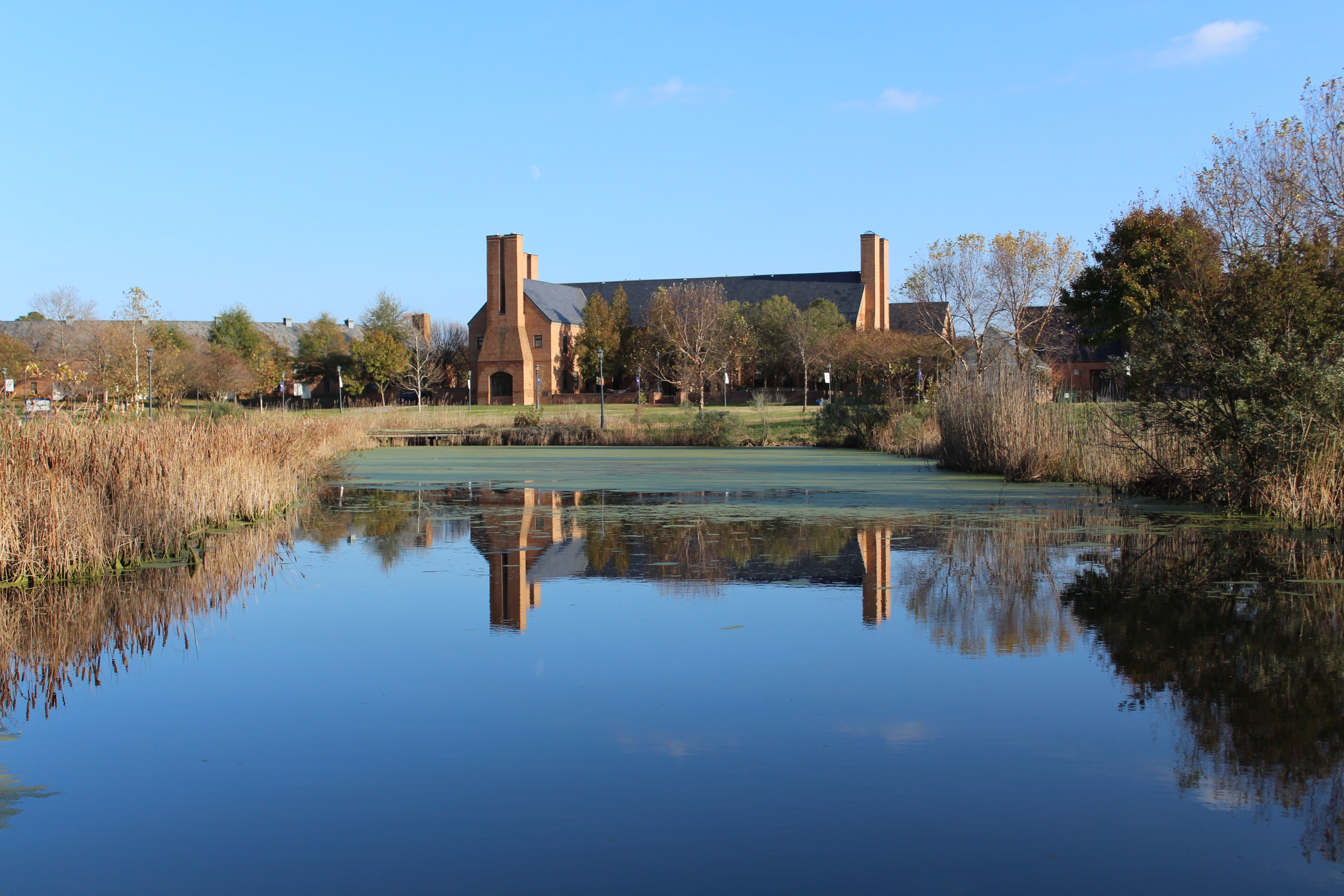
St. Mary’s College of Maryland is committed to constructing a greener campus.
St. Mary’s College of Maryland is proud to have multiple LEED-certified buildings across campus. These buildings conserve energy and water, reduce waste, reduce harmful greenhouse gas emissions, and utilize renewable building materials.

What is LEED?
“LEED, or Leadership in Energy and Environmental Design, is the most widely used green building rating system in the world. Available for virtually all building, community, and home project types, LEED provides a framework to create healthy, highly efficient and cost-saving green buildings. LEED certification is a globally recognized symbol of sustainability achievement. Projects pursuing LEED certification earn points across several categories, including energy use and air quality. Based on the number of points achieved, a project then earns one of four LEED rating levels: Certified, Silver, Gold or Platinum.”

Current Green Builds
- Glendenning – LEED Silver
- Goodpaster Hall – LEED Silver
- Saves 300,000 gallons of water annually!
- 30% of reductions in water use and sewage output are accomplished through the use of waterless urinals, dual-flush toilets, and gray-water systems which recycle water from sinks for flushing.
- Well, Goodpaster, has water bottle fill up stations just for you! By giving students the option to fill water bottles up, they are more likely to reduce and reuse!
- It uses 30-40% less energy than a conventional building due to smart design and use of highly efficient equipment.
- Stormwater management is also a big deal at St. Mary’s. Goodpaster has a fountain that is connected to the gutter system and is supplied solely by rainwater. The building also has a green roof which helps divert stormwater runoff from getting in the St. Mary’s River.
- The James P. Muldoon River Center – LEED Silver
- The River Center uses a geothermal heat pump that reduces 40% of the power it takes to heat and cool the building
- The River Center uses a gray-water system, waterless urinals, and dual-flush toilets
- There is also a living shoreline and oyster reef restoration project at the River Center! St. Mary’s takes environmental issues seriously, shoreline erosion is one of the largest problems facing the college. A living shoreline helps to stabilize the shore and keep it from washing away with the tides. It also provides habitat for many organisms!
- Anne Arundel Hall – LEED Gold
- On top of the North building, the roof is lined with solar panels (19Kw photovoltaic array). The solar panels pull energy from the sun and make it usable by the building in the form of electricity.
- The building was constructed using sustainable materials. The bridges connecting each building have reused wood that is visible from the outside. There are also a lot of efficient materials to keep energy low, like insulated windows and motion sensor lights.
- Anne Arundel also uses the gray-water system, waterless urinals, and dual-flush toilets to save and reuse water when available.
- The outside of the building is equipped with many stormwater management practices like rain gardens and a green roof!
- Admissions Office
- The admission office has a geothermal heat pump that reduces 50% of the power it takes to heat the building and 30% to cool the building.
- It also has reduced electrical consumption and carbon dioxide emissions.
- Hilda C. Landers Library
- The library has low flow toilets and motion sensor lights to save as much energy as possible!
- Tiny House
- The SMCM Tiny House was built by students. While not technically LEED, it has many features that are energy efficient, sustainably sourced, and very educational.
Green Builds In the Works
There are many exciting editions coming to the campus many of which are already in the works! All buildings in St. Mary’s future will be LEED certified, but we will have to wait and see what they create.
- Jamie L. Roberts Stadium
- Maryland Heritage Interpretive Center


Seahawk Athletics
Dodge Performing