By
its very nature, the Department of International Languages and Cultures
values cross-disciplinary approaches to cultural studies. Both faculty
and students in the department are involved in several of the Cross-Disciplinary
Study Areas at St. Mary's College of Maryland, and some ILC faculty
have served as coordinators of these programs.
African
and African Diaspora Studies:
African and African Diaspora Studies is designed to help students
explore, examine, and critically analyze the African presence in
a global context. This presence stretches to antiquity in Europe
and Asia, and for centuries in the Americas, but serious and sustained
efforts to understand the profoundly rich, dynamic, and complex
contributions to the world's civilizations have been lacking. Students
are provided background and tools to investigate the agency, experiences,
and movements of African and African Diaspora people that span time
and place and bridge academic disciplines.
Asian
Studies:
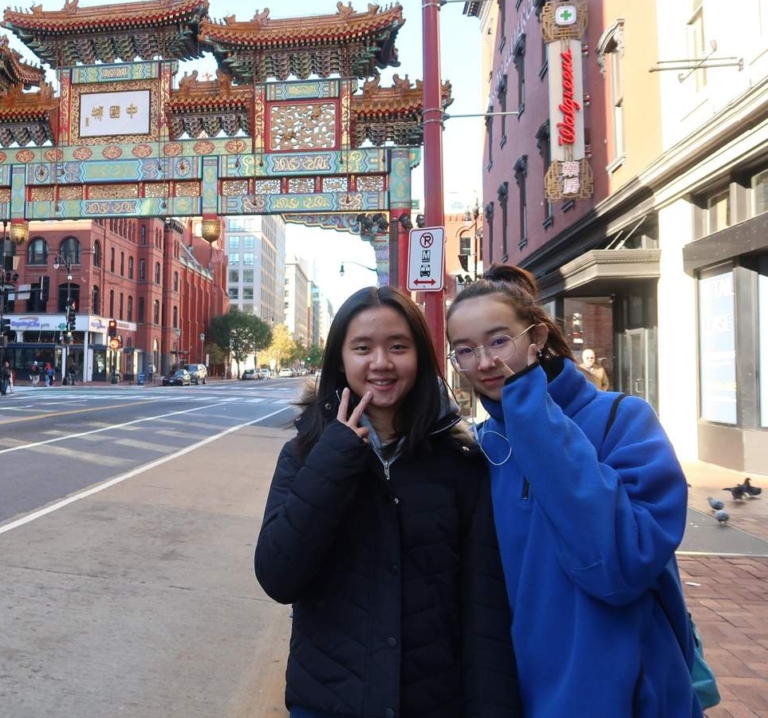
The Asian Studies study area provides language study, course offerings
in art, economics, history, literature, philosophy, and religious
studies, and offers a study abroad program at Fudan University in
Shanghai, one of China's most distinguished universities. Participation
in the study area is possible in any major, and in addition to broadening
student horizons in the liberal arts, it provides excellent preparation
for advanced academic studies and future careers in the U.S. Foreign
Service, in the United Nations or similar international organizations,
and in multinational business.
Women,
Gender, and Sexuality Studies:
Women, Gender and Sexuality Studies is a cross-disciplinary area
of inquiry that investigates the social, psychological, biological,
and cultural construction of gender, as well as the ways women and
men locate themselves within gender systems. Because femeninities
and masculinities vary as a result of cultural, historical, political,
and institutional forces, gender inquiry helps students understand
the multiple ways gender and gender relations are socially constructed,
and how those understandings of gender in turn shape virtually every
aspect of our everyday lives: political institutions, law, the economy,
the family, education, work, literature, the arts, media, philosophy,
religion, and sexuality.
|