
|
International Languages and Cultures
majors , as well as any students of a foreign language, are strongly
encouraged to spend time abroad. Living abroad enables you to gain
fluency and confidence in the foreign language. It also allows you
to develop a familiarity with a particular foreign culture that
comes from the acquaintanceships and friendships formed by sharing
daily living concerns over an extended period of time in one place.
There are several ways in which you
can live and study abroad, either for a year, which is the ideal,
for a semester, or, if you cannot be away for longer, during the
summer or a semester break.
I. You can enroll in short programs
directed by St. Mary's faculty as they are offered, such as the
Berlin Program for students of German (see Dr.
Anne Leblans). Credit is given directly by SMCM in the form
of a grade.
II. You can enroll for a semester
or for a year at a foreign university with which St. Mary's has
an on-going formal exchange of students. St. Mary's has an exchange
program with Fudan University in Shanghai for students of Chinese
(see Dr. Jingqi Fu); with the
University of Heidelberg in Heidelberg, Germany for students of
German (see Dr. Anne Leblans);
with the Institut des Etudes Politiques ("Sciences Po") in Paris,
for students of French and history or one of the social sciences
(see Dr. Laine Doggett);
and with the Institute for Central American Development Studies
(ICADS) (see Dr. Jorge Rogachevsky).
For these programs you pay St. Mary's College tuition and credit
is granted by St. Mary's College in the form of a grade.
III. You can enroll in programs directed
by faculty or staff of another U.S. college or university. There
are hundreds of these programs, but not all of them are of equally
high quality and seriousness. You should first consult with your
International Languages and Cultures advisor/professor. After talking
with your professor, you can research other possibilities with the
Office
of International Education. You pay the tuition of the sponsoring
U.S. college or university, which transfers your credit to St. Mary's
College as credit/no credit rather than a grade.
IV. You can enroll yourself directly
in a foreign university. Most foreign universities have their own
programs especially designed for international students. These programs
usually offer courses in the host country's language and civilization,
and they provide foreign students with housing information, academic
and social advising, social activities and cultural excursions.
By choosing this route you can save yourself the considerable expense
of paying the tuition fees of a U.S. college or university, because
foreign universities, being government supported, usually charge
nominal tuition fees. The disadvantages are that there is nobody
to meet you at the airport and to help you to feel relatively "at
home" right away. Also, to obtain SMCM credit, you must remain in
close contact throughout your stay abroad with your St. Mary's College
faculty sponsor/ professor(s) and submit syllabi and all work and
exams completed abroad for evaluation and assignment of SMCM independent
study credit. You should consult with both your International Languages
and Cultures' advisor/professor, and with the Office of International
Education, while you research these possibilities.
V. You can undertake an internship.
You can gain work experience abroad through an internship and earn
variable academic credit by completing, under the supervision of
a foreign sponsor and a St. Mary's faculty advisor, an academic
project of variable scope. You should consult with both your International
Languages and Cultures' advisor/professor, and with the Internship
Office, while you research these possibilities.
VI. You can engage in au pair
work. This option offers you perhaps the most assured way of becoming
bilingual and of experiencing intimately a foreign culture. It is
also the cheapest solution because you can support yourself financially
during your year abroad. You live with a family (usually one that
values education and exposing its children to people from other
cultures) and in exchange for helping with the care and education
of the children and with light household tasks, you receive transatlantic
travel expenses, room, board, in most cases a small monthly stipend,
and time off in the week for taking classes. The term "au pair"
means that you are regarded not as a servant but "on a par" with
all the family members, and it is understood that you are there
primarily to learn. To receive independent study credit, you must
take a course or courses offered at a nearby university or "community
college" or complete a project. In either case you need to work
long-distance with a St. Mary's faculty advisor if you want to earn
some independent study credit, as opposed to taking a year leave
of absence.
In all of the above cases, before
you study abroad, you need to attend orientation sessions and go
through formal procedures established by the Office
of International Education.

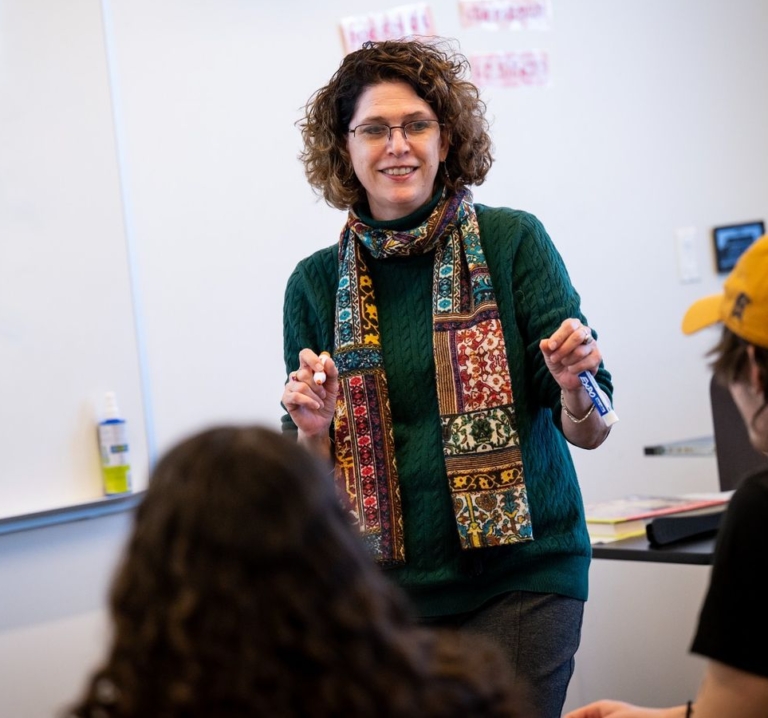
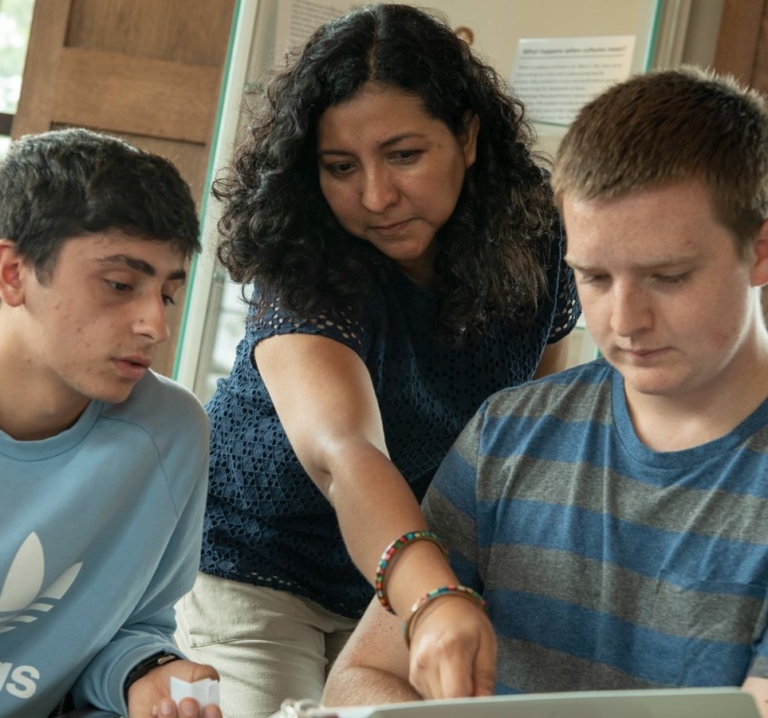
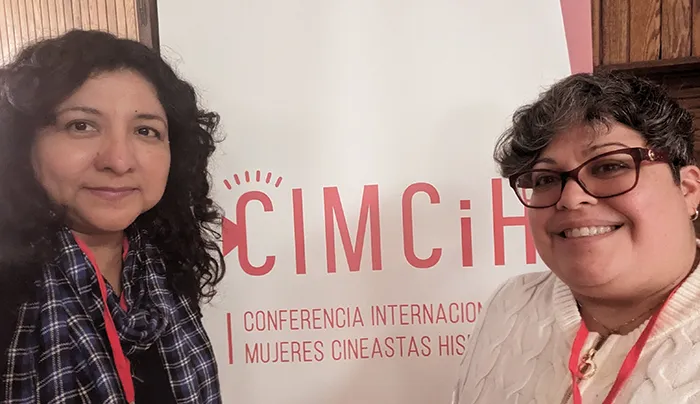
International Languages
and Culture students
at a study abroad orientation.
|