FAQs
If you have questions that are not included here or additional questions about the program in theater, film, and media studies, contact the chair of the department, Merideth Taylor, at mmtaylor@smcm.edu.
Can I get involved in shows and films even if I’m not a major?
Absolutely! Auditions for main stage theater productions are open to the entire campus community, and casts typically include students from a mix of major programs. Many of our key players in shows and films have been historians, biologists, psychologists, and other majors or double-majors. Opportunities for performing on stage, working behind the scenes, or getting involved in film productions are equally available to all students, regardless of their major.
[top]
Do you cast first-year students in shows?
We frequently cast first-year students in main stage shows, even in leading roles. One of the benefits of a small college is that so many opportunities are available to everybody, regardless of class standing. You can become involved in whatever you are qualified to do, almost instantly.
[top]
Can I combine a major in theater, film, and media studies with another subject?
Our students often combine theater, film, and media with a second major. We have had students graduate with double-majors in art, psychology, music, English, history, philosophy, and so on. One student even graduated with a triple-major in theater, political science, and economics! Another attractive opportunity is combining theater, film, and media studies with one of the cross-disciplinary study areas in Asian Studies, African and African Diaspora Studies, Environmental Studies, or Women, Gender, and Sexuality Studies.
[top]
Can I major only in theater studies or only in film and media studies?
The Department of Theater, Film, and Media Studies offers majors in two tracks: 1) theater studies and 2) film and media studies. The two tracks share some course work, but each has its own curriculum. Each track also includes some electives within its requirements so that students may further specialize in areas of their particular interest within the field. Click here for the requirements of the theater studies major. Click here for the requirements of the film and media studies major.
[top]
Do you offer a minor in theater studies or in film and media studies?
Yes, we offer minors both in theater studies and in film and media studies. Minors require 20 semester-hours of course work, which typically means completion of five courses. Some courses are specified and some are electives. Click here for more information about our minors in theater, film, and media studies.
[top]
What opportunities do you offer for students who want to be involved in making films?
Students make films in conjunction with classes, as independent projects, or for the sheer fun of it. Opportunities for becoming involved as performers or behind-the-scenes assistants are plentiful and are publicized on our bulletin boards, Web site, local media, fliers, and through e-mail distribution lists.
[top]
What kinds of films do students make?
Some students make short or even full-length fiction films, some make experimental films, and others make documentaries on a variety of local and international subjects. In the recent past, teams of students, faculty, and staff have collaborated on such projects as a full-length original thriller, two short expressionistic films, a documentary about the local housing crisis, a documentary on children gymnasts, a documentary on campus feminism, and ethnographies on Ghana and Nicaragua.
[top]
What kinds of shows do you do?
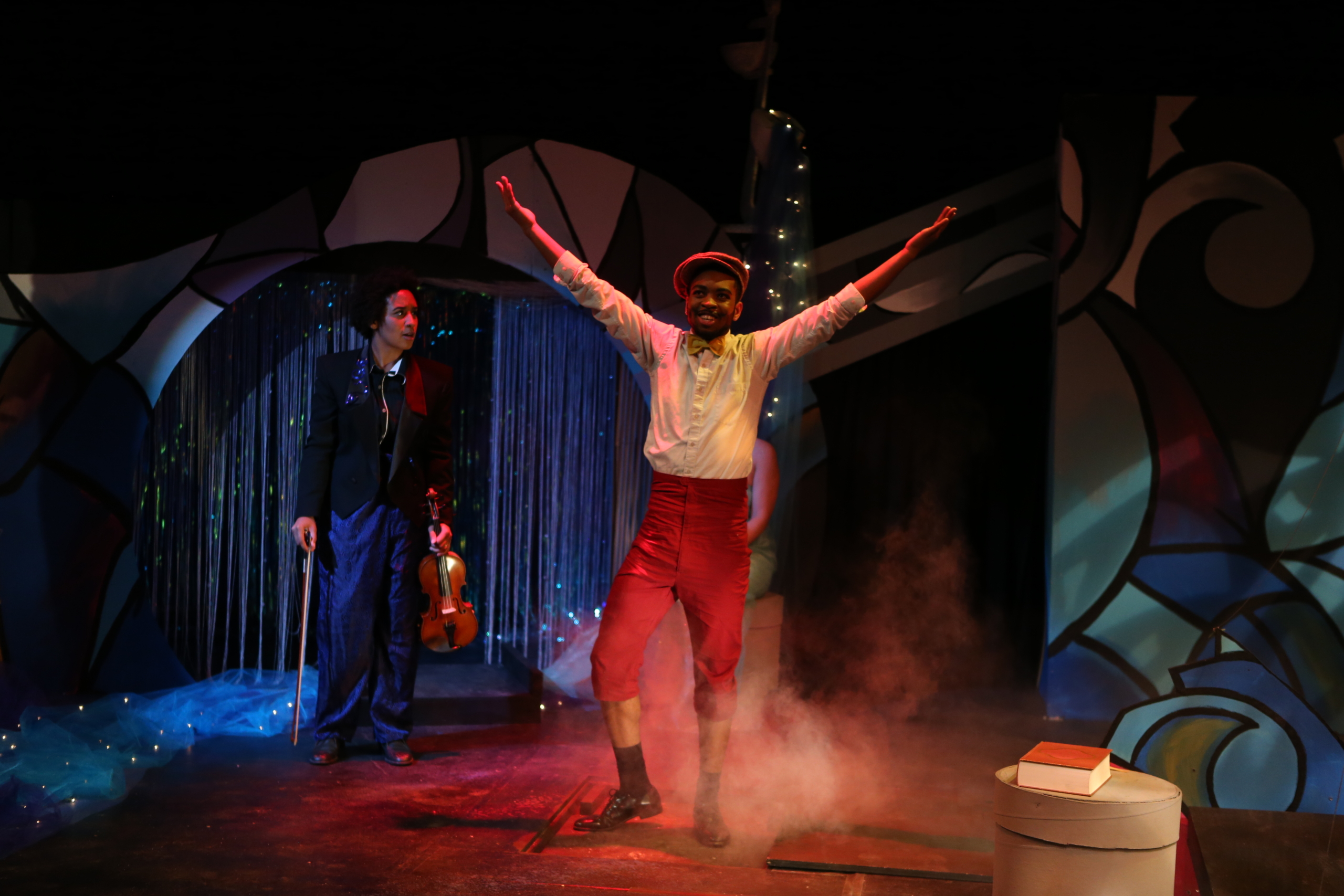
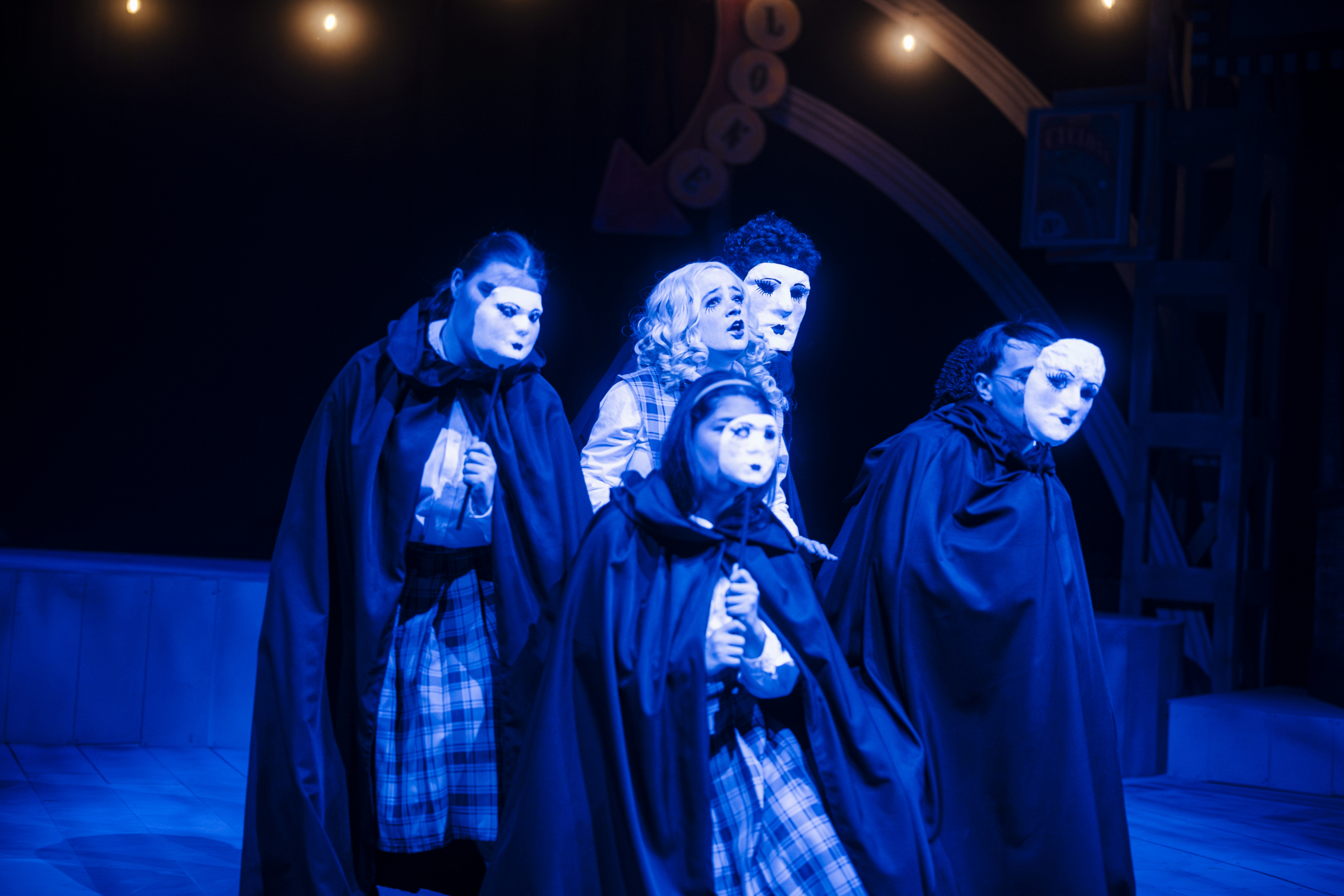
We select the shows for each season in order to produce a wide array of theater from various cultures, time periods, and performance styles. Students have the opportunity to assist with season selection. The department has been widely praised – even by notables such as Pulitzer Prize-winning playwright Tony Kushner – for the quality and ambitiousness of its choices. A typical season of shows (see 2002-2003) might include a Shakespeare, a student-written Japanese noh performance, an American classic, and an outdoor agit-prop extravaganza performed with the world-famous Bread and Puppet troupe. For more examples of our range, click the link to our Gallery.
[top]
Do you ever do musicals?
We collaborate with the Department of Music on a musical every three or four years. Past musicals have included A Funny Thing Happened on the Way to the Forum, Blood Brothers, Happy End, The Threepenny Opera, and The Colored Museum. Our 2005-2006 season included a production of Hair. Students have also produced musicals and musical revues in the student-run theater lab and participated in productions of opera and opera scenes. Click here to link to our Archive.
[top]
Do you have a dance program?
Our dance and movement program thrives on steady offerings of courses in modern dance, African dance, dance composition, jazz dance, dance history, and a variety of movement skills that include clowning, stage combat, mask, period styles, and characterization. Students have formed a dance club that sponsors extra classes and performances. We produce a dance concert as part of the main stage season every three years.
[top]
Do you have a student-run season?
We have a second performance space that is completely run by students, who annually elect a committee to oversee the shows produced in this lab. All students are welcome to serve on the committee and to propose projects that might be student-written, student-directed, and/or student-designed for production in the lab. Some years are more active than others, depending on student initiative, but a typical year would include 4-6 student productions in this space.
[top]
What are your filmmaking facilities like?
There are currently three filmmaking facilities on campus, one located in the Baltimore Hall Library (the Media Center) and the other two located in Montgomery Hall (the Multi-Media Center and ProLab and the Digital Video Lab). Each facility is variously equipped with an array of technology for supporting high-end digital video work, including an audio/video editing and recording studio, editing stations, and utilities for story-boarding and for producing professional-level DVDs. Students have produced a range of creative projects by using these facilities and their technologies, from short-form interview documentaries to full-length movies with special effects. Click here for more information about filmmaking resources on campus.
[top]
Can I get involved behind the scenes?
We offer all kinds of opportunities for students to become involved on crews or in design and technical positions off stage. Regardless of major or class standing, students are welcome to help build and paint scenery, sew costumes, run sound or lights, stage manage shows, manage properties, or even design, if their qualifications are fitting. For more information about these opportunities, click the link to the Majors Handbook.
[top]
Can I direct a show?
We offer several kinds of opportunities to students who would like to direct. Any student can propose to direct a show in the student-run lab. Students also serve as assistant directors in the main stage season and they have the opportunity to propose directing a fully-mounted St. Mary’s Project on the main stage during their senior year.
[top]
Can I design sets, lights, or costumes?
We offer several kinds of opportunities to students who would like to design scenery, lights, and/or costumes. Any student can design a show in the student-run lab. Students also serve as assistant designers and designers in the main stage season and they have the opportunity to propose designing a fully-mounted St. Mary’s Project on the main stage during their senior year.
[top]
What kind of courses in theater studies do you offer?
We pride ourselves on offering a full curriculum of up-to-date courses in theater history, dramatic literature, performance theory, acting, directing, design, technical theater, dance, and movement. In addition to this solid array, we offer courses in Japanese performance, film and media studies, African-American theater, auditioning, and various kinds of performance experiment. Our curriculum supports our belief that a liberal arts education is the best preparation for theater scholars and artists. For more information, click the link to the College Catalog. (You will need Adobe Acrobat Reader to access this information.)
[top]
What kind of courses in film and media studies do you offer?
Film and media studies courses are taught across the College curriculum by faculty in theater, film, and media studies, anthropology, art and art history, English, international languages and cultures, and history. Exemplary courses include study of film history, international cinemas, genres, media, art history, production design technologies, performance, and time-based digital video. Click here for more information about course offerings in the film and media studies major.
[top]
Can I undertake a St. Mary's Project in theater or film/media, even if I'm not a major?
Yes. Students who have majored in biology, chemistry, and sociology, for example, have undertaken creative St. Mary’s Projects in theater as theater festival producers and playwrights; and recently, students have produced both short interview documentaries and full-length films as SMPs. If non-majors would like to do a creative project in theater or in film/media, we strongly encourage them to consult with a faculty member in TFMS before proposing a project.
[top]
Is it possible to collaborate on St. Mary's Projects in theater or film/media?
Absolutely. Recently, students have collaborated on St. Mary’s Projects by producing a theater festival at SMCM that showcased work from local high schools and by directing, performing, and designing for our main stage season. Opportunities abound for collaborative creative projects in theater as producers, designers, directors, performers, or choreographers, as well as in film/media as screenwriters, film directors, or production designers.
[top]
Department of Theater, Film, and Media Studies, 2007 All Rights Reserved